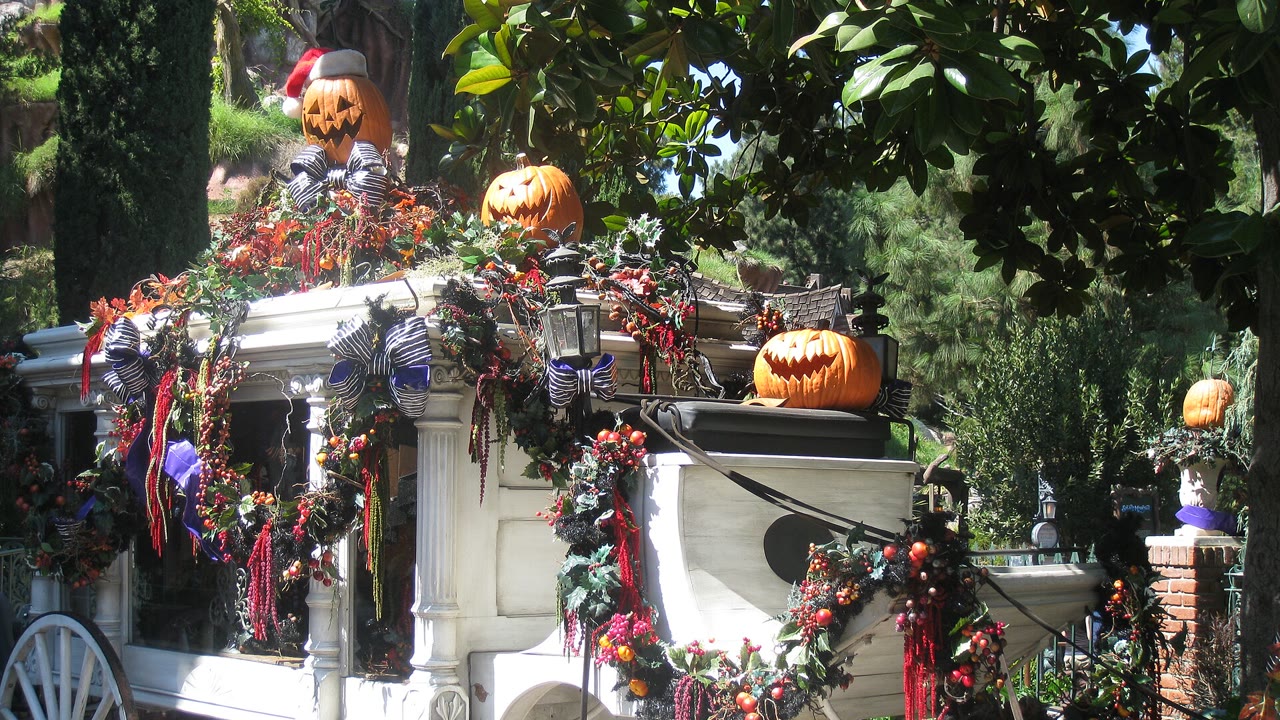
The History of Haunted Attractions, from Ghost House to Walk-Through Theater
Long before the professional haunts of October, people paid to be frightened by wax heads, shaking floors and painted ghosts. The history of haunted attractions runs from a fairground ghost house of about 1915, through amusement-park dark rides and Depression-era Halloween parties, to Disneyland’s Haunted Mansion and the charity haunts of the 1970s. It ends with the theater critics who walked through Antenna Theater’s mazes and thought of funhouses.
Quick answer
Where do haunted attractions come from?
Haunted attractions grew out of fairground ghost houses such as the Orton & Spooner house of about 1915, amusement-park dark rides and funhouses of the 1920s and 1930s, and Depression-era Halloween parties. Disneyland’s Haunted Mansion, opened in 1969, and the Jaycees charity haunts of the 1970s turned them into an industry.
Before the haunted house: wax, Grand Guignol and Coney Island
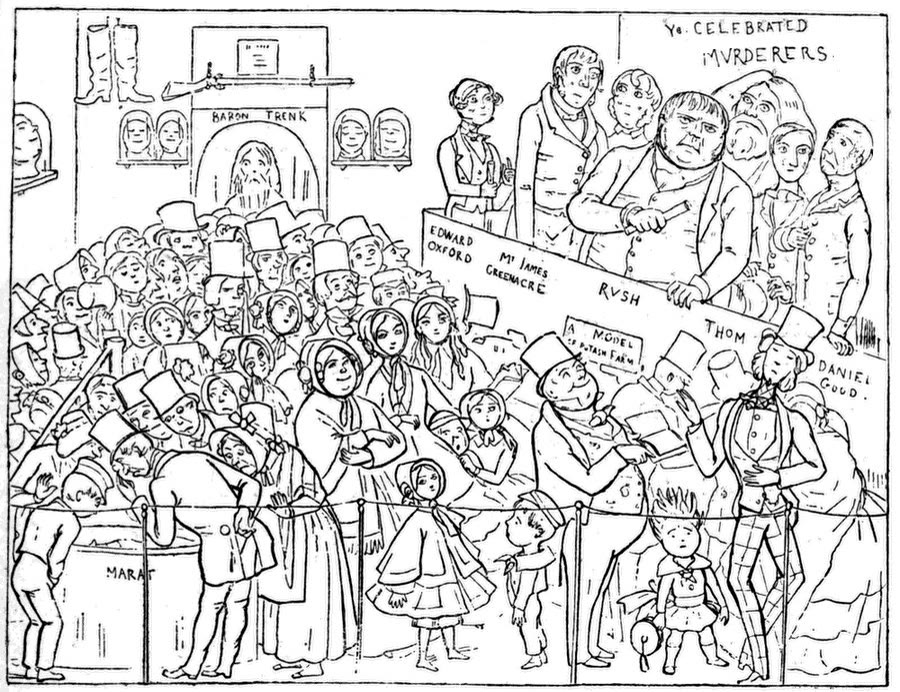
The appetite came before the attraction. Smithsonian magazine’s brief history of the haunted house begins in London: “In 1802, Marie Tussaud scandalized British audiences with an exhibition of wax sculptures of decapitated French figures.” In Paris, it adds, “the Grand Guignol theater became notorious for its on-stage depictions of graphic dismemberment.”
Coney Island supplied the setting. The Coney Island History Project records that “In 1897 George Tilyou moved his rides into an enclosed park at West Sixteenth Street and Surf Avenue.” That was Steeplechase Park, and after fire destroyed half of it in 1907, Tilyou “built an enclosed glass and steel structure called the Pavilion of Fun that provided shelter in inclement weather.”
The fairground ghost house, around 1915
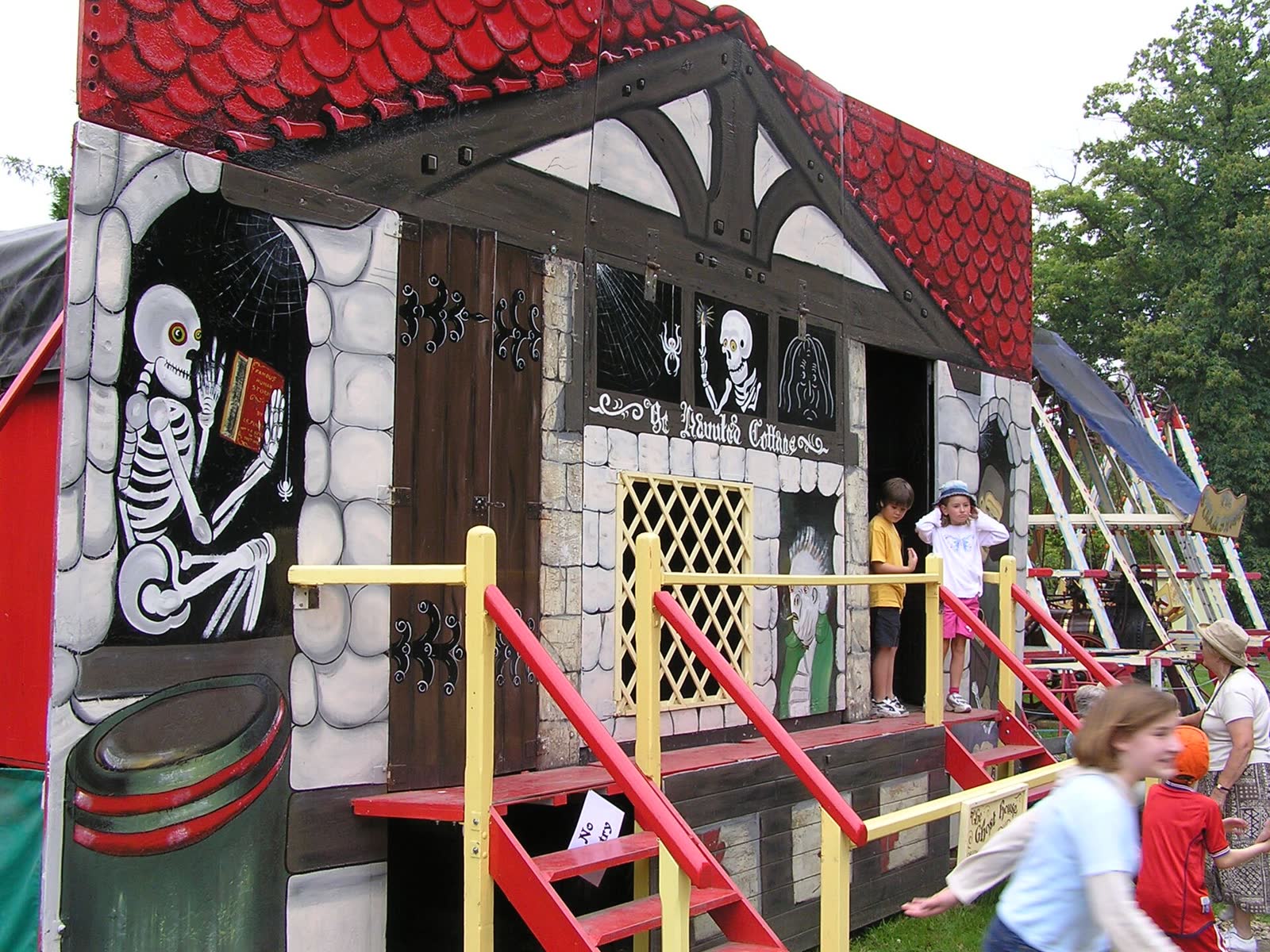
The attraction most often named as the first true haunted house was a travelling fairground show. Hollycombe Steam in the Country, which owns it today, says “The Haunted House was built by Orton & Spooner about 1915, probably for Flora Collins.” Smithsonian calls it “one of the first” ghost houses, debuted at an English fairground in Liphook, and NBC San Diego calls it “what may be the first, true haunt.”
NBC described it as “a dimly lit funhouse, where floors shook.” Hollycombe acquired it in 1991 and returned it, restored, to the fairground in 2017. Hollycombe bills it as “The world’s oldest haunted house,” and the safest summary is that it was built around 1915 and is often called the oldest surviving haunted house.
Dark rides and funhouses
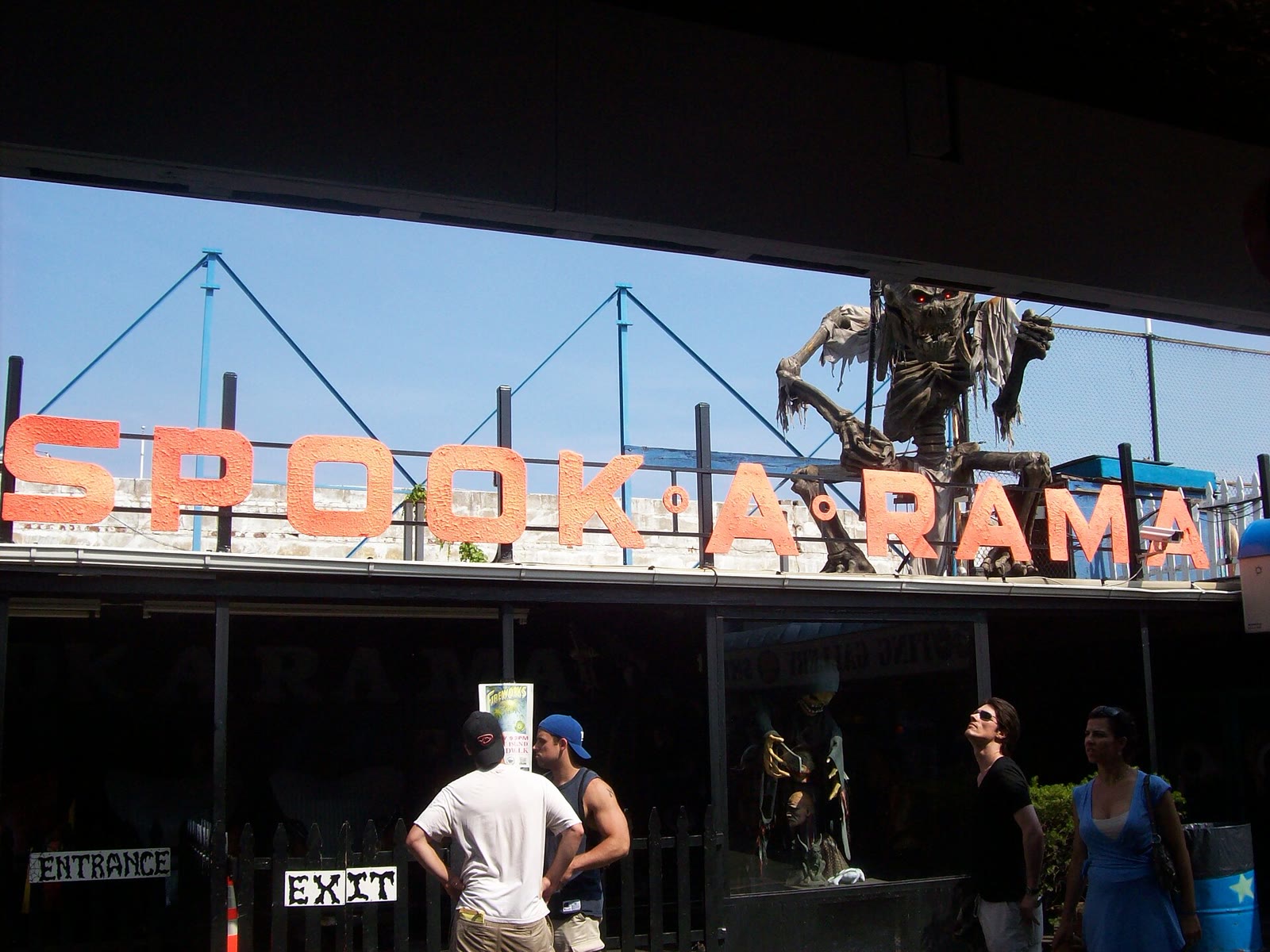
A dark ride carries its riders in a car through darkness and sudden figures, while a funhouse is walked on foot, past tricks such as shaking floors. The Laff in the Dark archive dates both at one Pennsylvania park: “The first dark ride Hersheypark installed was Mill Chute, in 1929,” and “The first funhouse was built in 1930, designed by James A. Fields, and was aptly named Funhouse.”
Coney Island kept pace. The Coney Island History Project’s notes on the Dragon’s Cave dark ride describe a dragon above Norman and Sporty Kaufman’s 1955 ride Fun in the Dark, “which was later re-named the Dragon’s Cave.”
| Aspect | Dark ride | Funhouse | Walk-through haunt |
|---|---|---|---|
| How you move | In a car on a track | On foot, through tricks | On foot, through scenes |
| Typical tricks | Darkness, sudden figures | Shaking floors, air jets, mirrors | Actors, props, sound, darkness |
| Early example | Mill Chute, Hersheypark, 1929 | Funhouse, Hersheypark, 1930 | Orton & Spooner ghost house, about 1915 |
| Later landmark | Fun in the Dark, Coney Island, 1955 | No later date in these sources | Disneyland’s Haunted Mansion, 1969 |
Halloween comes home: Depression parties and “trails of terror”
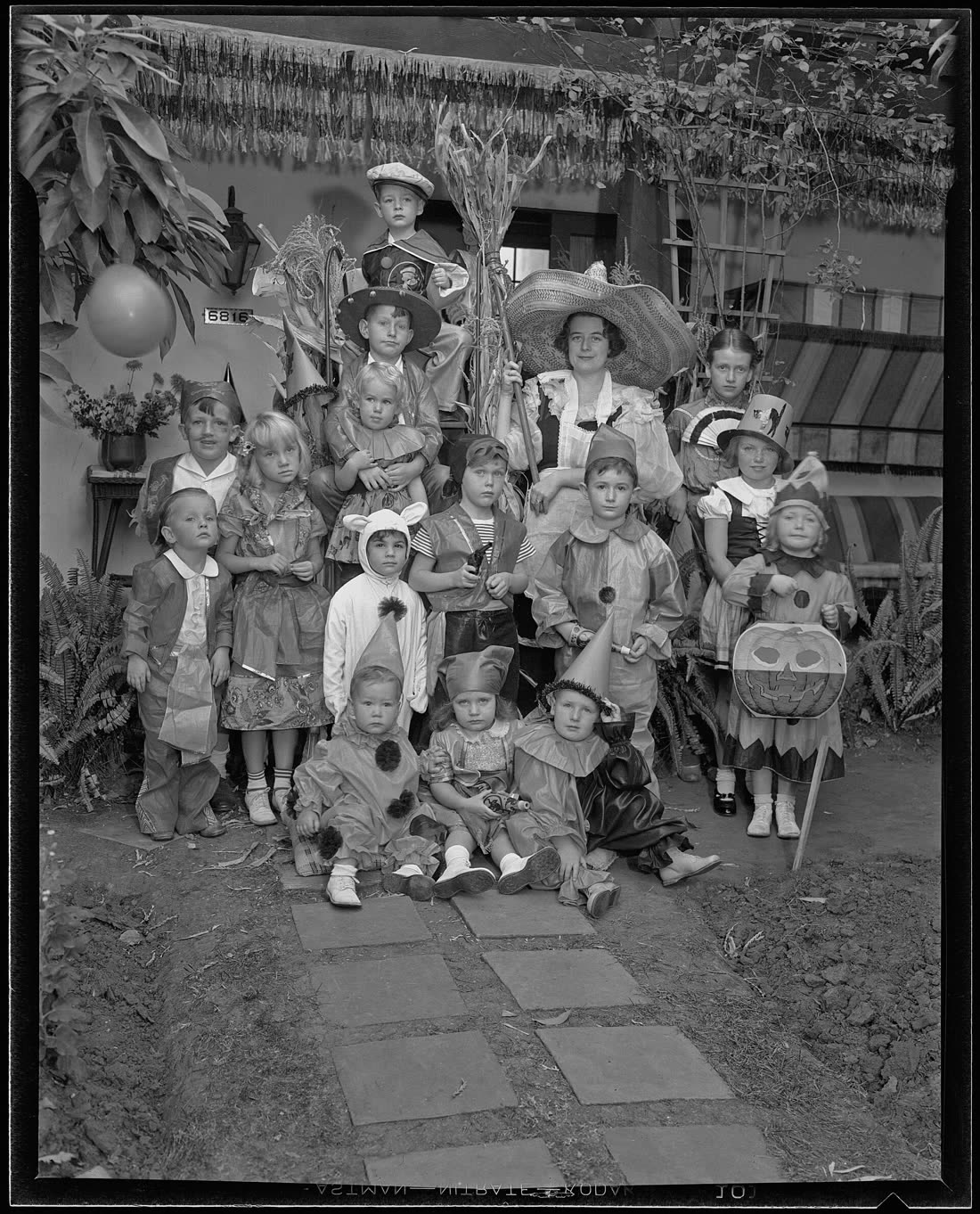
The haunted house as a Halloween ritual began in American homes. Smithsonian, drawing on the Halloween historian Lisa Morton, says these houses “first emerged during the Great Depression” as parents looked for ways to distract young pranksters. “They came in about the same time as trick-or-treat did,” Morton said. “Cities looked for ways to buy these kids off, essentially.”
A 1937 party pamphlet quoted by the magazine gives the recipe: “Hang old fur, strips of raw liver on walls, where one feels his way to dark steps.” It goes on: “Doorways are blockaded so that guests must crawl through a long dark tunnel.” The walk-through was there from the start.
1969 and after: the Haunted Mansion, the Jaycees and Knott’s
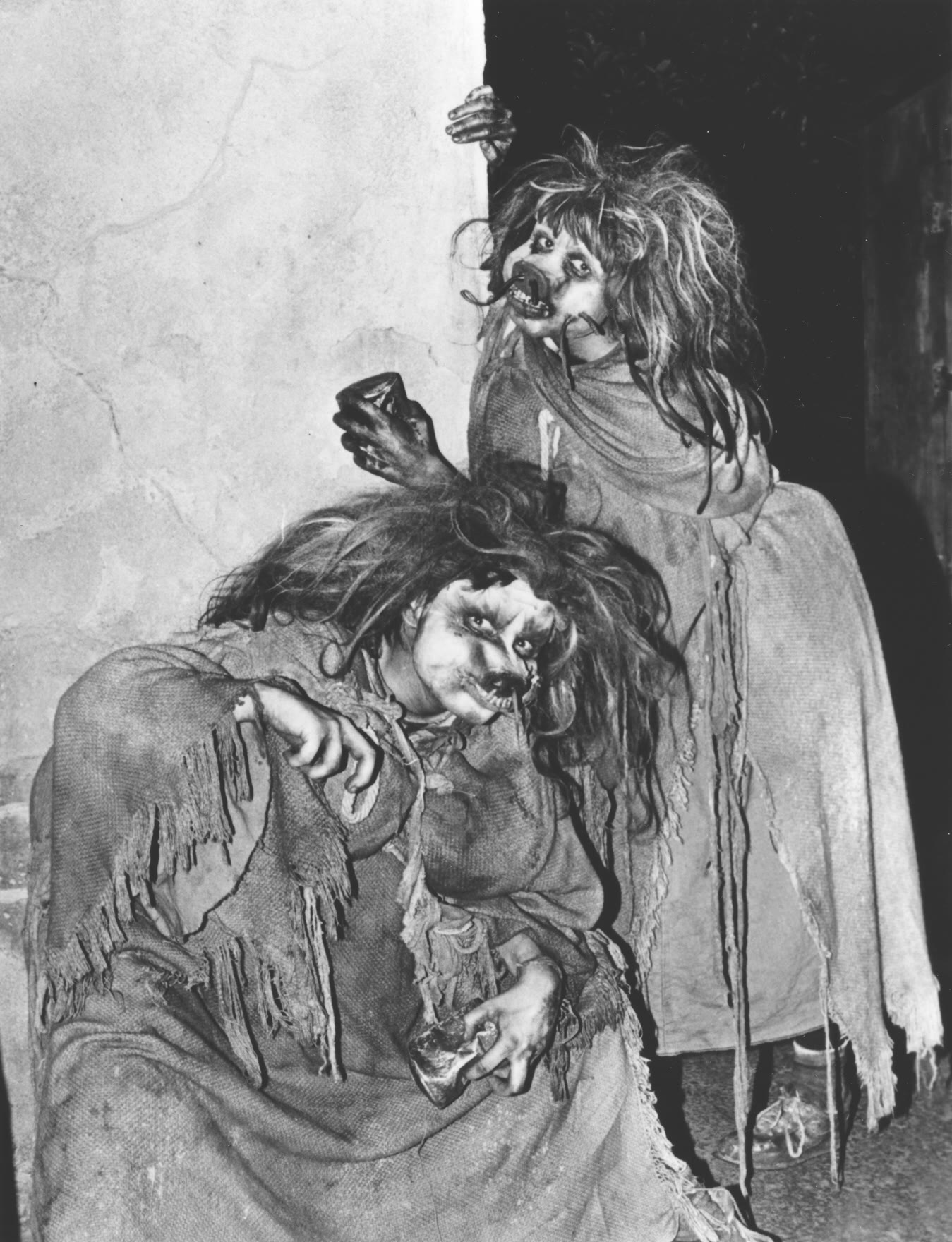
The turning point was a theme-park ride. “Disneyland’s Haunted Mansion opened in 1969, nearly two decades after Disney first approved the beleaguered project,” Smithsonian writes, and “In a single day shortly after its debut, more than 82,000 people passed through the Haunted Mansion.” Its effects included the illusion known as Pepper’s ghost.
Morton’s verdict is blunt: “A lot of the professional haunters will point to one thing, and that’s Disneyland’s Haunted Mansion. It’s the start of the haunted attraction industry.”
Through the 1970s the haunt became a fundraiser. “The United States Junior Chamber, also known as Jaycees, became famous for raising money through its haunted houses,” says Smithsonian. In California, “Knott’s Berry Farm began hosting its own Halloween night attractions, which soon transformed into a multi-week slate of events.”
From charity haunt to industry
Safety changed the business. In 1984, “A fire at a haunted house in New Jersey trapped and killed eight teenagers,” Smithsonian reports, and attractions were shut while “stronger safety regulations” followed. Larry Kirchner of the Haunted House Association told the magazine that “The haunted house industry really followed the movie industry at that time,” and that “The Jaycees got pushed out because their haunted houses were fairly basic.”
When theater walked through the haunted house
A fun house on Coney Island
Antenna’s founder, Chris Hardman, had worked inside the form. Esquire reported in 1986 that he “revamped the Dragon’s Cave, a moribund fun house consisting of a couple of black doors and a red light; Hardman’s job was to haunt it.” That story belongs to Hardman’s Coney Island funhouse years, told in our guide to one-to-one theater.
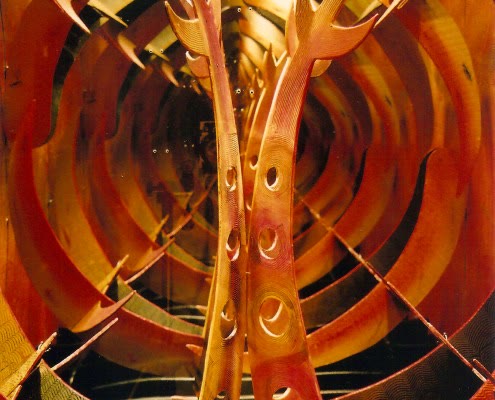
From 2004, decades after Coney Island, Antenna’s chronology says Hardman described his exhibition Transforming Art, with its infinite mirrors, “as an experimental funhouse where scientific understanding of perception is manipulated.” The infinite mirror pictured here comes from that show.
“A real-life horror house nightmare”
Critics made the comparison for him. Steven Winn of the San Francisco Chronicle called Etiquette of the Undercaste, the 13-room maze of 1988, “a real-life horror house nightmare.” Bernard Weiner, in the same paper in 1987, found Radio Interference “a blend of taped museum tour and eerie funhouse.”
Winn returned to the image in 1994 for Enola/Alone, the World War II bomber maze at the Presidio: “a kind of solo house of horrors,” with “Davis and Dan Collard’s spooky lighting” adding to the effect. American Theatre noted that the walk-through maze “may, as in Enola Alone, have no actors,” an idea followed further in our look at theater without actors and what replaces them.
London critics were warier. Terri Paddock of What’s On Stage asked of Euphor!um in 2002, “Could this be much more than overextended haunted house trickery? Well, yes actually.”
Frequently asked questions
What was the first haunted house attraction?
A fairground ghost house built by Orton & Spooner around 1915, now at Hollycombe in England, which calls it “The world’s oldest haunted house.”
When did Halloween haunted houses start in the US?
During the Great Depression, as home parties meant to keep children away from pranks, according to the Halloween historian Lisa Morton in Smithsonian magazine.
Why is Disneyland’s Haunted Mansion important?
Lisa Morton calls it “the start of the haunted attraction industry,” and more than 82,000 people went through it in a single day soon after it opened in 1969.
Did theater borrow from haunted houses?
Critics thought so. The San Francisco Chronicle called Antenna Theater’s Etiquette of the Undercaste “a real-life horror house nightmare” and Enola/Alone “a kind of solo house of horrors.”
For the theater side of the story, see Antenna’s carnival and maze productions, Antenna’s mirror illusions and Pepper’s Ghost exhibits, and Pandemonium, a headphone walk among 35-foot puppets.