
San Francisco Performance Art History: The 1970s Scene Behind Snake Theater
Most accounts of San Francisco performance art history stop at the gallery door, and most theater histories list the city’s experimental companies by name only. In the 1970s the two worlds overlapped. Artists treated a beer with friends as art, a museum ran above a bar on Third Street, and a masked theater company called Snake was reviewed in Artforum.
Quick answer
What was the San Francisco performance art scene of the 1970s?
It grew in artist-run spaces: Tom Marioni’s Museum of Conceptual Art (1970), The Farm (1974) and La Mamelle (1975). Artists favored actions and the body over New York’s language-based art. Theater groups such as Snake Theater worked alongside them, and critics read their masked, site-based plays as visual art.
A city about the body

Tom Marioni, who founded the Museum of Conceptual Art, described the difference in a 2012 interview. “That’s California art to me,” he said, “experiential art. We don’t have that much of a literary tradition, so it’s more about the body in California.” He added: “In San Francisco it’s always been about the body, pretty much.”
New York saw things differently. “In New York they didn’t consider performance art as conceptual art, they were very narrow about their definition,” Marioni recalled. His own view was broader: “I always think of conceptual art as having three arms; language, system, and action.”
San Francisco performance art history in five spaces
Bay Area performance art lived in a handful of rooms, a farm and a converted factory.
| Space | Opened | Who ran it | What happened there |
|---|---|---|---|
| Museum of Conceptual Art | 1970 (closed 1984) | Tom Marioni | Actions, sound sculpture and beer salons, at 75 3rd Street above Breen’s |
| Project Artaud | 1970s | Resident artists | A live/work “playground” that later became Theater Artaud |
| The Farm | 1974 (to 1987) | Bonnie Ora Sherk and Jack Wickert | Animals, gardens, a preschool, a library and an art gallery |
| La Mamelle | 1975 (Art Com from 1980) | Carl Loeffler | Performance, video, mail art and conceptual photography |
| Snake Theater | 1972 (Venice), Bay Area by the late 1970s | Farabough, Hardman, Graber, Lewis | Masked “location theatre” in real places |
MOCA above Breen’s Bar
“In 1970, Tom Marioni founded the Museum of Conceptual Art (MOCA) in San Francisco.” This MOCA, San Francisco’s Museum of Conceptual Art, sat at 75 3rd Street, above Breen’s Bar and Restaurant, “which functioned as a reception centre and artists’ saloon.” It closed in 1984. Paul Kos, Chris Burden, Bruce Nauman, Terry Fox and Linda Montano all exhibited there.
Marioni’s best-known work was social. For the first beer salon, at the Oakland Museum in 1970, “I invited sixteen friends and we came there and we had the experience of the beer, and then the debris was left on exhibit.” His explanation: “I considered the act the art: the act of that social interaction.”
La Mamelle and the video archive
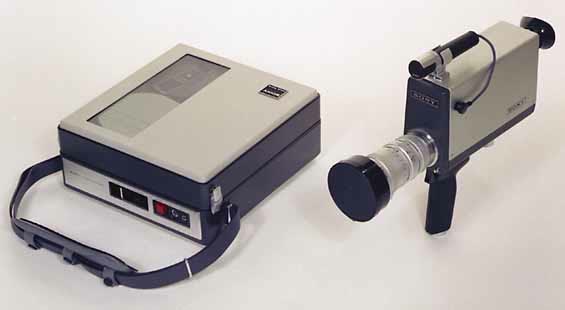
Carl Loeffler founded “La Mamelle/Art Com in San Francisco, established in 1975.” He “established the first video art collection in Northern California,” and his archives “are now held at Stanford University and the Pacific Film Archives.” In 1976 La Mamelle opened a large space on 12th Street for performance, video, mail art and conceptual photography.
Ryan David Tacata’s Stanford thesis on La Mamelle sets out to “redress the dominant focus on New York and European neo-avant gardes in performance art history through an inclusion of West Coast conceptualists.”
The Farm and Project Artaud

The Farm was “founded by Bonnie Ora Sherk and Jack Wickert in 1974” at Army Street and Potrero Avenue. It ran until 1987 and held animals, gardens, a preschool, “a library and an art gallery.”
Project Artaud was a different kind of space: in the 1970s the building “became one of the first zoned “Live/Work” spaces in San Francisco.” Its theater was a wide-open “playground” for the artists who lived there. In the 1980s Theater Artaud Incorporated was formed.
Where a theater company fit in
From Bread and Puppet to Venice to the Bay
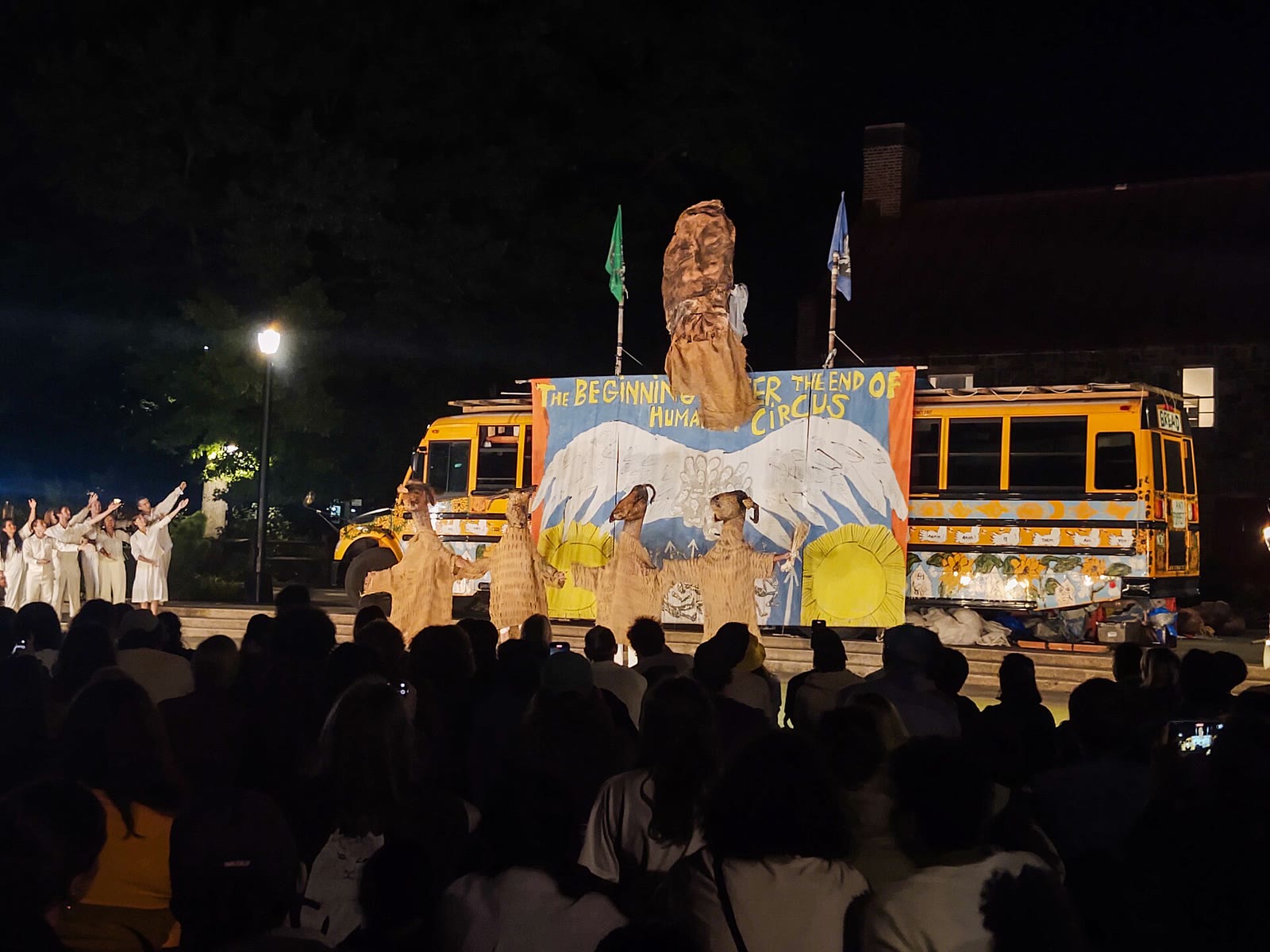
Chris Hardman came to theater as a visual artist. At Goddard College in Vermont he met Peter Schumann’s Bread and Puppet Theatre: “once I saw Bread and Puppet I realized that theatre had moved out of its existential mode.” He started working with the visual artist Laura Farabough around 1971, and by Antenna’s account Snake Theater was founded in Venice, California, in 1972.
“Imagine telling an L.A. actor to put on a mask,” Hardman said later. By the late 1970s Snake was based on the Sausalito waterfront, and from 1977 it had four artistic directors: Farabough, Hardman, the composer Lary Graber and Evie Lewis. Their productions are listed in Snake Theater’s productions, 1972 to 1980.
“Location theatre” versus site-specific art
Hardman had his own term. “I called it ‘location theatre’,” he told Robert Hurwitt in 1985: “you took the audience to a place that was part of their existing environment and theatrically altered it into another experience for them, leaving the area sort of humming with that new meaning.”
He set it against the gallery world. “At that time there was a lot of interest in site-specific art,” he said, but it “could have a much more abstract reason why an installation was in a particular place. We were trying to bring out an essential story that could be inherent in that space.” The plays themselves are covered in the Bay Area’s site-specific theater, place by place.
Critics in the Chronicle and Artforum

The Chronicle’s Bernard Weiner reviewed Somewhere in the Pacific on March 29, 1978, calling it “an environmental theater piece” and “a piece perfectly attuned to its cliff-beach-ocean environment.” That year Snake won a Bay Area Drama Critics Circle award for “New Directions In Theater.”
The art press took notice too. Hal Fischer’s Artforum review of Snake Theater, in February 1979, found in 24th Hour Cafe “an enticing grotesqueness reminiscent of Red Grooms or Jim Nutt.” The piece, he wrote, “successfully transposes visual art motifs into theatrical form.”
| Year | Critic and outlet | Work | Words |
|---|---|---|---|
| 1978 | Bernard Weiner, San Francisco Chronicle | Somewhere in the Pacific | “a unique play, brilliantly staged” |
| 1979 | Hal Fischer, Artforum | 24th Hour Cafe | “a compelling visual idiom” |
| 1985 | Robert Hurwitt | Retrospective | “the now-legendary Snake Theatre” |
| 1986 | Steve Erickson, Esquire | Retrospective | “Snake Theater culminated most spectacularly with Somewhere in the Pacific” |
1980: Snake splits into Antenna and Nightfire

Esquire told the ending in 1986: “All this ended in the spring of 1980 with the sudden death of the theater’s composer, Lary Graber, and the final eruption of festering aesthetic differences between Hardman and Snake cofounder Laura Farabough.” Snake became two companies, Farabough’s Nightfire Theater and Hardman’s Antenna.
The art world thread carried on. Annette Rose came to Snake after working at the San Francisco Museum of Modern Art, where she met Hardman on a graphics project; see Chris Hardman and Annette Rose. Antenna’s early stage work included Vacuum, a play built from interviews about door-to-door salesmen.
Site-specific work came back too. On Sight in Sausalito, the 1993 show that used the whole town as its stage, took it to the company’s home streets. For a very different lineage of walk-through entertainment, see the history of haunted attractions, and for Antenna’s later forms, Walkmanology and Antenna’s other new theater forms.
Frequently asked questions
What was the Museum of Conceptual Art in San Francisco?
It was an artist-run museum that Tom Marioni founded in 1970 at 75 3rd Street, above Breen’s Bar. It closed in 1984.
What was La Mamelle in San Francisco?
It was an artist-run organization founded by Carl Loeffler in 1975, known for performance and video art. It took the name Art Com in 1980.
Was Snake Theater performance art or theater?
Critics saw both. The Chronicle called Somewhere in the Pacific an environmental theater piece, and Artforum said 24th Hour Cafe turned visual art motifs into theatrical form.
What happened to Snake Theater?
It ended in 1980 after the death of its composer, Lary Graber, and split into Antenna Theater and Laura Farabough’s Nightfire Theater.