
What Is Museum Theatre? Actors, Interpreters and Exhibits That Talk Back
You walk into a historic village and a woman in period dress talks to you as if her century were still running. That is one answer to what is museum theatre. Another came in 1992, when the Smithsonian handed visitors a tape player and sent them through a theatre piece about homelessness.
Quick answer
What is museum theatre?
Museum theatre is live performance used to interpret a museum, zoo or historic site: actors or interpreters play historical characters, stage short scripted scenes, run demonstrations or re-enact events. Its aim, in the words of the International Museum Theatre Alliance, is to enhance visitors’ learning through “the willing suspension of disbelief.”
What is museum theatre?
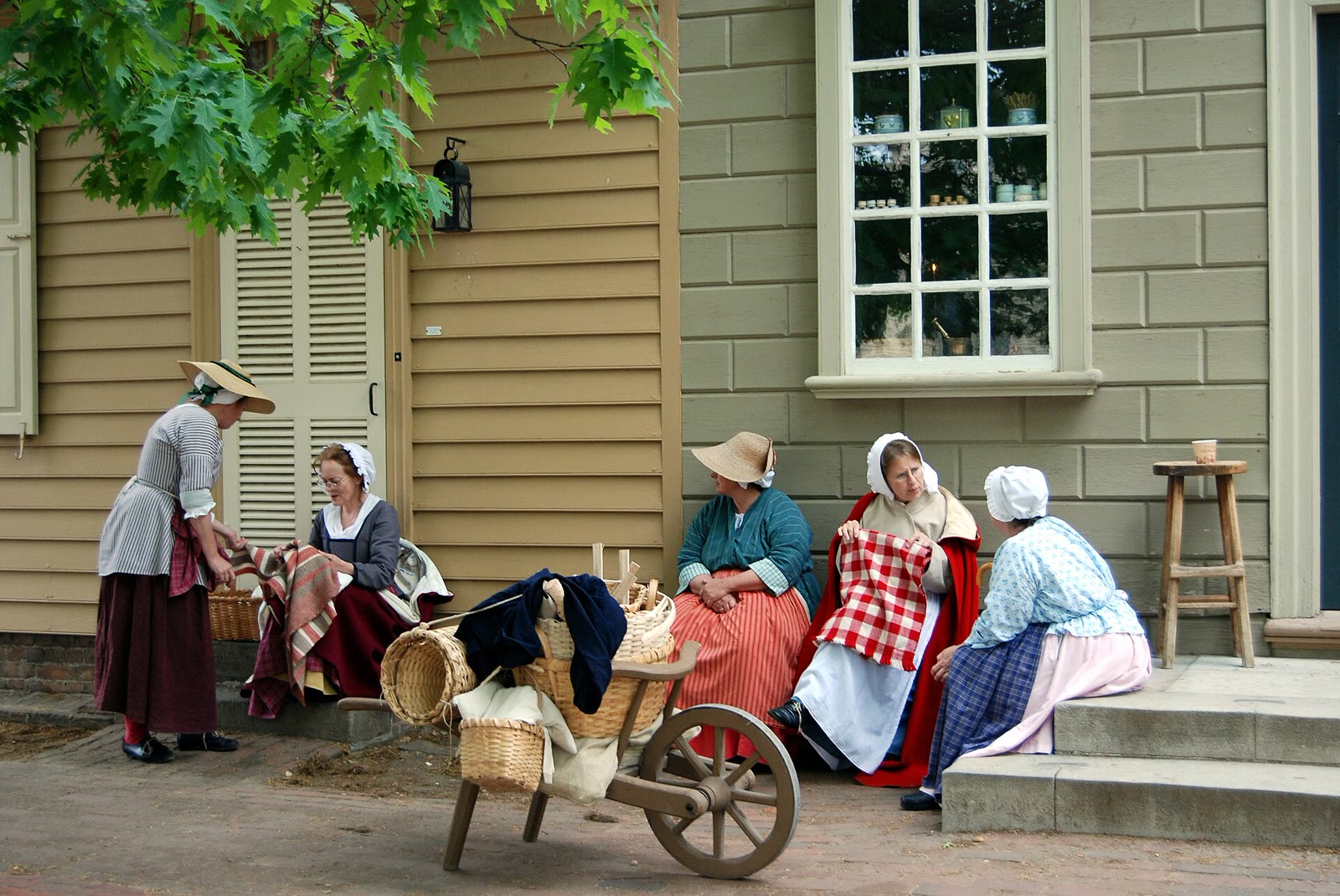
The International Museum Theatre Alliance (IMTAL) says that “Museum theatre involves engaging visitors in the willing suspension of disbelief” in order “to enhance the educational experience that happens within a museum.” It “includes first or third-person interpretation, scripted shows or scenes, and historic re-enactments,” along with storytelling, puppetry and mime.
Tessa Bridal’s 2004 book Exploring Museum Theatre, as quoted by The Drama Teacher, calls it “content-based educational performances, typically shorter than those in theatre venues and frequently interactive.” Catherine Hughes, in her 1998 book Museum Theatre, put the premise simply: “No one is immune to learning in a museum.” IMTAL counts both actors and interpreters among its members, and it treats living history as “simply a kind of museum theatre.”
The forms: first-person, third-person and more

The best-known form is first-person interpretation. At Plimoth, as The Magazine describes it, such interpreters “not only wear costumes but also speak as though they themselves were historical figures.” Other staff are “costumed guides who speak from a modern perspective,” which is third-person interpretation.
The educator George Buss, as cited by The Drama Teacher, adds three performance types: demonstration, character-based and plot-based. Some writers also use “second-person interpretation” for visitors who take roles themselves.
| Form | What the visitor meets | Example |
|---|---|---|
| First-person interpretation | A performer speaking as a historical person | Plimoth’s living history interpreters |
| Third-person interpretation | A costumed guide speaking from the present | Plimoth’s costumed guides |
| Demonstration | An experiment or craft shown live | Buss’s demonstration type |
| Character or plot piece | A short scripted play | Buss’s character and plot types |
| Re-enactment | Staged, costumed historical events | Listed by IMTAL |
| Immersive installation | The visitor as protagonist, guided by recorded voices | Etiquette of the Undercaste, Smithsonian, 1992 |
A short museum theatre history

Museum theatre history is younger than the costumes suggest. IMTAL puts it simply: “First used by only a few pioneering institutions, theatre in museums has grown into a full-fledged movement.”
Minnesota’s acting company and Plimoth’s village

The Science Museum of Minnesota’s timeline claims an American first for 1971: “The museum’s live theater program was established, the first permanent acting company in a United States museum.” That is the museum’s own claim.
At Plimoth, “it was not until the 1970s that first-person interpretation made its way there.” In 1983 its press director told Yankee magazine: “the interpreter actually plays the role of a specific person,” and “We were the first museum to do this on a grand scale.” Interpreters were matched to real people by age and appearance, then trained for three weeks.
IMTAL and an international field (1990-1999)
The International Museum Theatre Alliance’s history of IMTAL records that “IMTAL was founded in 1990.” It held the “first international conference on the use of theatre in museums in Bradford, Yorkshire (UK)” in 1993 and became an affiliate of the American Association of Museums in 1994. In 1999 it held its first international festival, hosted by the Museum of Science in Boston, and supported the founding of IMTAL-Europe.
| Year | Milestone |
|---|---|
| 1971 | Science Museum of Minnesota’s acting company (its own claim of a first) |
| 1970s | First-person interpretation reaches Plimoth |
| 1990 | IMTAL founded |
| 1992 | Smithsonian’s Experimental Gallery shows Etiquette of the Undercaste |
| 1993 | First international conference on theatre in museums, Bradford |
| 1994 | IMTAL becomes an AAM affiliate; Antenna’s Making Waves at Falkirk |
| 1998 | Catherine Hughes, Museum Theatre |
| 2004 | Tessa Bridal, Exploring Museum Theatre |
| 2005-2008 | University of Manchester’s Performance, Learning and Heritage research |
When a theatre company walks into the museum
Most museum theatre runs one way: a museum hires performers. Antenna Theater, from Sausalito, often came in the other door. In 1989 Mother Jones reported that its audio tours were “available at museums and historical sites around the country,” including one for “the German U-505 submarine at the Chicago Museum of Science and Industry.” That side of the story belongs to the history of museum audio guides.
The Smithsonian’s Experimental Gallery, 1992

In February 1992, the New York Times reported, “the Smithsonian Institution is presenting a museum exhibition intended to explain homelessness.” It was Etiquette of the Undercaste, Antenna’s walk-through. Tom Freudenheim, the Smithsonian’s assistant secretary for museums, said: “Etiquette of the Undercaste pushes the fine line between theater and art exhibits.”
The Times noted that the cassette players “in another museum might provide information on Rembrandt’s use of light.” The Philadelphia Inquirer found that “visitors are purposely denied the detachment of a gallery-goer,” and the gallery director, Kimberly Camp, was clear about what was being tested: “The content is not the experiment.”
The gallery was built as “a laboratory for museums and galleries around the country.” In its first year it had hosted exhibits on AIDS, the Brazilian rain forest and the principles of flight. Camp said she could imagine approaches like Antenna’s in Washington’s Holocaust Museum, then under construction, and the National Museum of the American Indian.
Making Waves: a retrospective on a Walkman (1994)

In 1994 the Falkirk Cultural Center in San Rafael commissioned Making Waves, marking Chris Hardman’s LifeWork award. The Pacific Sun reported that “Hardman issues Walkmans to audience members, designated as ‘audients,’ and has them traveling backward through his theatrical past.” Artweek compared the tape to “the guided tours of blockbuster exhibitions that can be rented in the lobbies of major museums.”
The show filled “all of the rooms on the upper floor of Falkirk’s grand Victorian mansion.” Visitors wore plastic glasses with “a unique quasi-periscopic lens” to read signs set backwards on the ceilings, and Artweek singled out “the collection of expressionistic masks that have been used in various past productions.”
Later exhibitions included Transforming Art, Antenna’s perception exhibition, and the rest are gathered on Antenna’s exhibitions and artifacts page.
Museum theatre vs the audio guide
An audio guide informs; museum theatre asks you to believe, for a while, in a person or a world. Antenna’s museum work sat between the two, using the guide’s tape for theatre’s ends. Its outdoor ecological pieces, covered in what ecotheatre is, and its other new theater forms, from Walkmanology to walk-throughs grew from the same instinct.
Frequently asked questions
What is first-person interpretation?
A performer speaks as though they themselves were a historical figure. Third-person interpreters are costumed guides who speak from a modern perspective.
When did museums start using theatre?
The Science Museum of Minnesota says it set up the first permanent acting company in a United States museum in 1971. IMTAL was founded in 1990.
Is living history the same as museum theatre?
IMTAL calls living history simply a kind of museum theatre.
Does museum theatre work?
IMTAL says evaluation studies have confirmed its effectiveness, and the University of Manchester studied its impact from 2005 to 2008.