What Is Object Theatre? Everyday Things as Performers
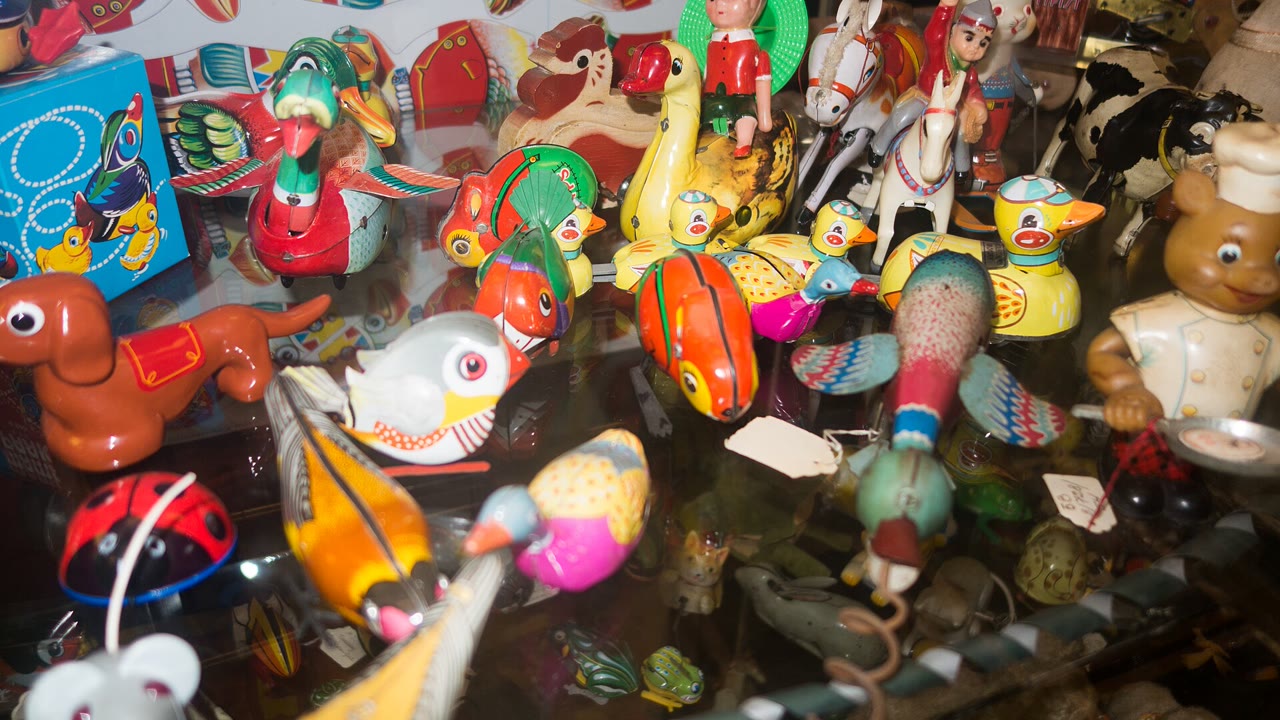
Picture a teacup playing a queen, or a tin toy playing a soldier. If you met the phrase in a festival programme and are wondering what is object theatre, the short version is that ordinary things do the acting, and you are meant to recognise them as the things they are.
Quick answer
What is object theatre?
Object theatre is performance in which everyday, found objects (cups, toys, tools, packaging) play the characters, usually left recognisable and moved in full view. It grew out of puppetry but rejects purpose-made puppets. French companies including Théâtre de Cuisine named it around 1980; Paul Zaloom pioneered it in the United States.
Object theatre in one sentence
Singapore’s Esplanade arts centre calls it “an artform in which stories are told with ordinary objects playing the main characters.” The key word is ordinary. “One of the hallmarks of object theatre is its use of found objects as they are.”
Even when objects are combined, “the individual objects are still recognisable and untouched.” That is where the meaning comes from: “The performance then grafts a new layer of meaning onto the object.” You watch a fork and a fork-shaped character at the same time.
Object theatre vs puppetry
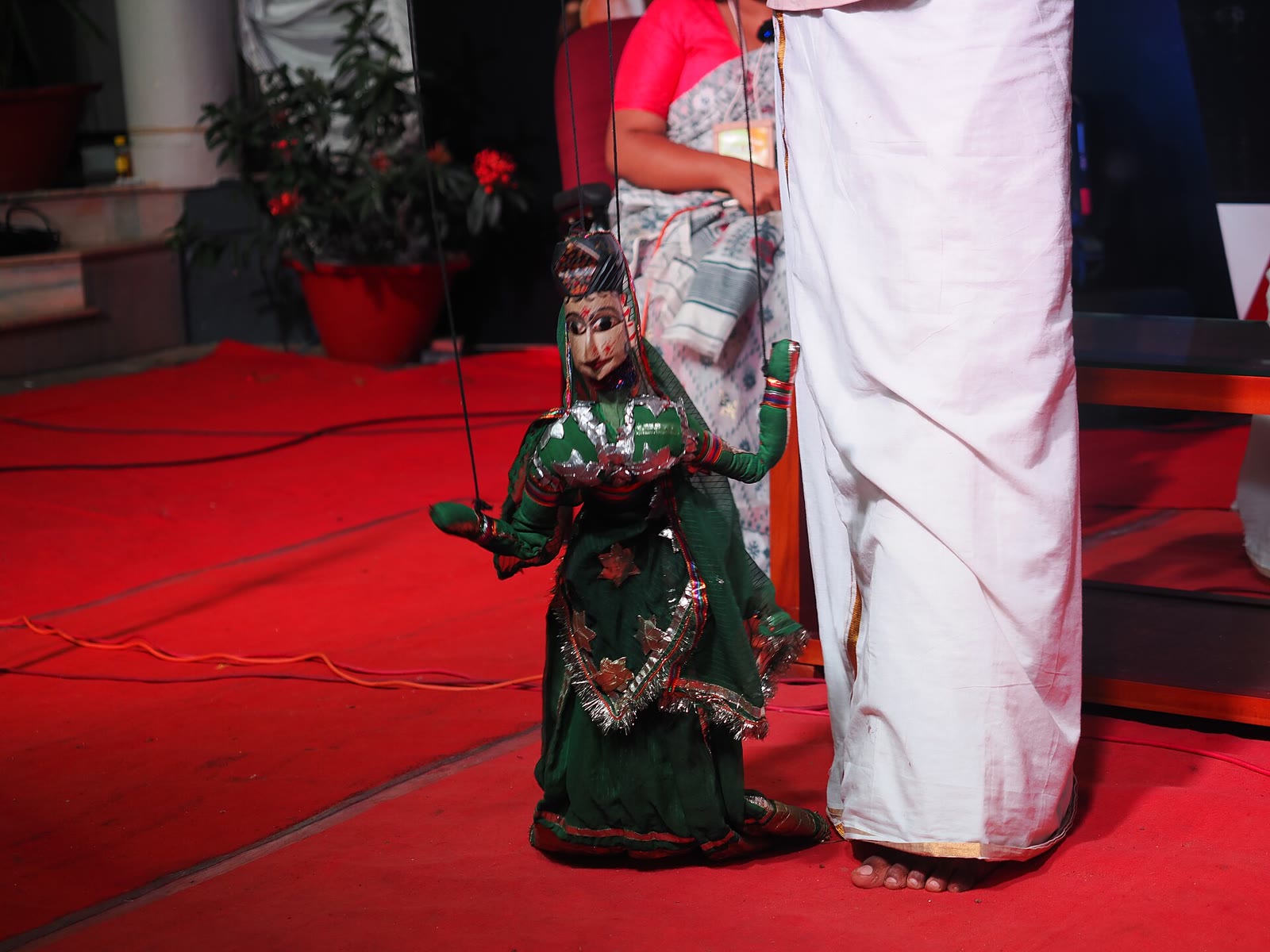
Marionettes, hand puppets and rod puppets “rely on purpose-made, often humanoid puppets,” Esplanade notes. So do the figures in our history of shadow puppetry. Object theatre starts from things nobody made for the stage.
Whether it is still puppetry is debated. The scholar Richard Allen writes that “The term ‘object theatre’ emerges from the world of puppets,” and that in it “‘objects’ become puppets.” Its French founders, by contrast, described a practice freed from “les conventions de la marionnette” (the conventions of the puppet).
| Aspect | Object theatre | Puppetry | Theatre without actors |
|---|---|---|---|
| What performs | Found, everyday objects, left recognisable | Figures made for the purpose, often humanoid | Light, sound, machines or the audience |
| How it means | By metaphor and recognition | By the illusion of life | By absence |
| Scale | Often a tabletop, for small audiences | Any | Any |
| Named | Around 1980, France | Ancient | No single date |
| Example | L’Opéra Bouffe (1980); The World of Plastic (1978) | Marionettes, rod and hand puppets | See our separate guide |
The third column is a different idea again: performance with no performer at all, where light and sound replace the actor.
How a kitchen table named a genre
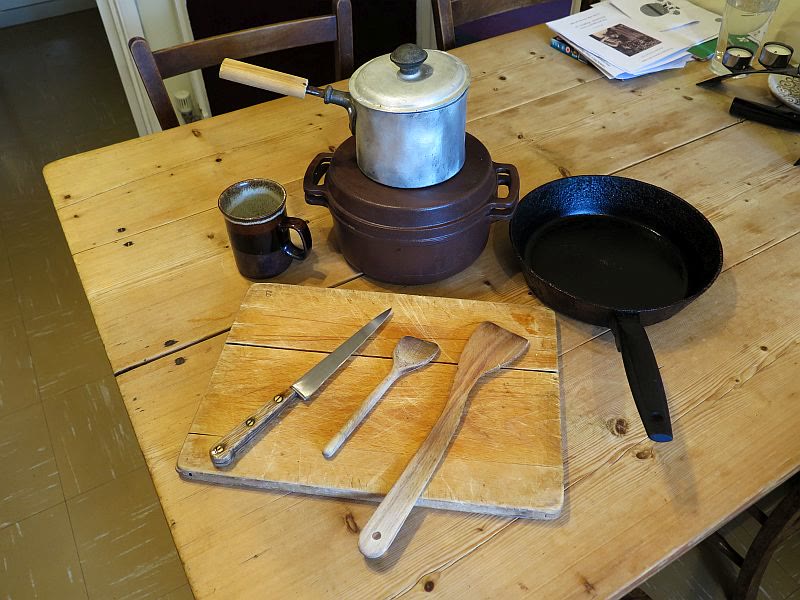
The founders tell the story on Théâtre de Cuisine’s page on the birth of théâtre d’objet. The term “fut prononcé pour la première fois à l’aube des années 80” (was spoken for the first time at the dawn of the 1980s), when Théâtre de Cuisine, Vélo Théâtre and Théâtre Manarf looked for a shared name.
The phrase “est tombée sur la table de la cuisine. Sans fracas. Ni majuscule.” (it fell onto the kitchen table, without a crash or a capital letter)
Each company brought a small show: Vélo Théâtre’s Le Pêcheur (1978), Théâtre Manarf’s Paris Bonjour (1979) and Théâtre de Cuisine’s L’Opéra Bouffe (1980), made by Katy Deville and Christian Carrignon. These were shows for about 50 people. Accounts of the exact date differ, so around 1980 is the safest answer.
Why 1980: cheap objects everywhere
The founders link the timing to France’s economy: “1980, c’est la fin des Trente Glorieuses et le début du théâtre d’objet : ce n’est pas un hasard.” In our translation, the end of the postwar boom and the start of object theatre were no coincidence. The ideal object fits in the hand, is “manufacturé à des milliers d’exemplaires” (made in thousands of copies), and “On le reconnaît parce qu’on l’a tous eu chez nous” (we recognise it because we all had one at home).
The chosen ancestors: Duchamp, Brecht, Kantor
The founders list their family tree as “Bertolt Brecht, Tadeusz Kantor, Marcel Duchamp, Max Ernst et les surréalistes, Franquin, Hergé, sans oublier Gaston Bachelard.”
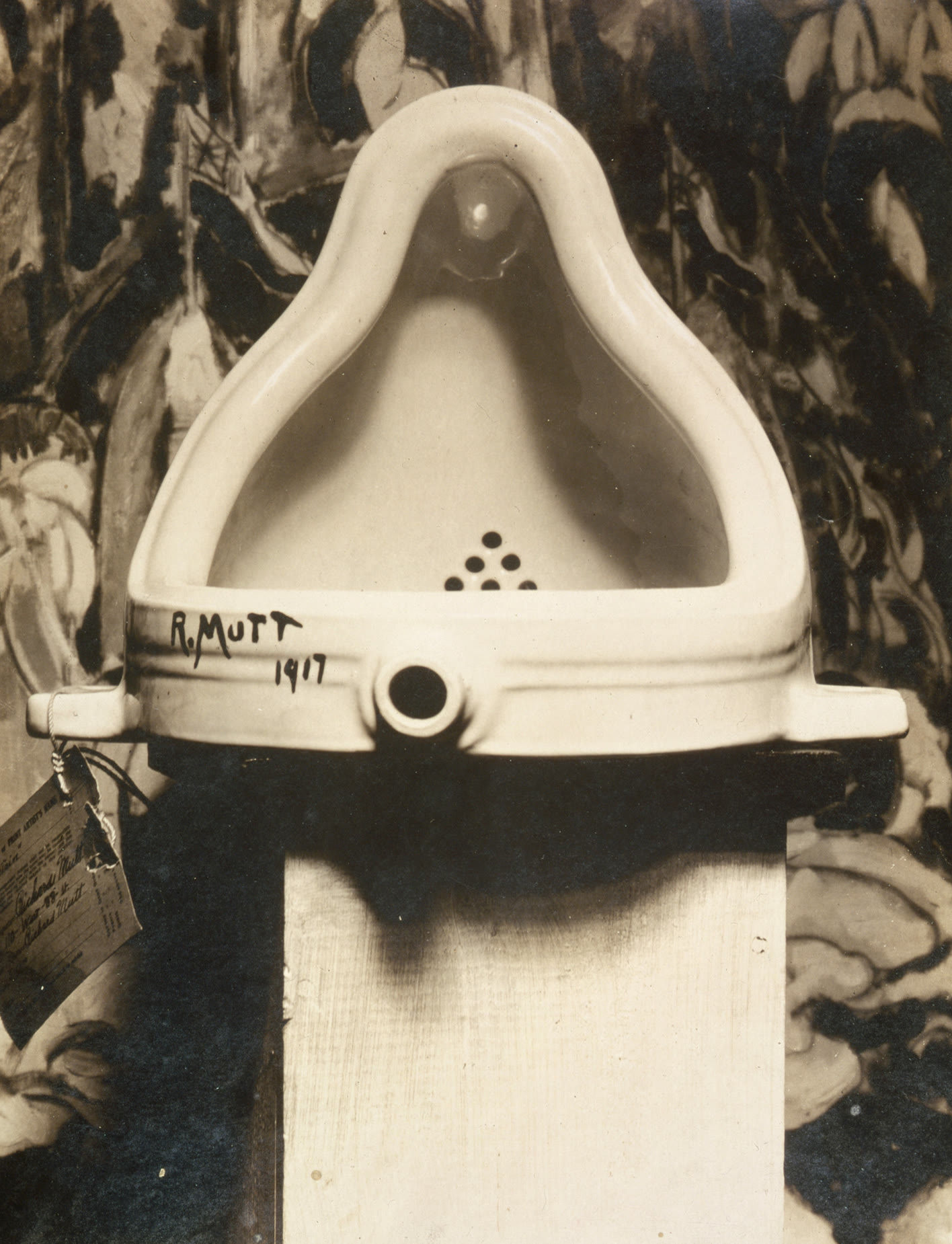
Esplanade traces the form to Fountain (1917): “Duchamp called it a ‘readymade’ sculpture.” The founders’ own summary is blunt: “Dans notre théâtre d’objet, on parle des gens. Pas d’autre chose.” (In our object theatre, we talk about people. Nothing else.)
Found object puppetry in America: Paul Zaloom
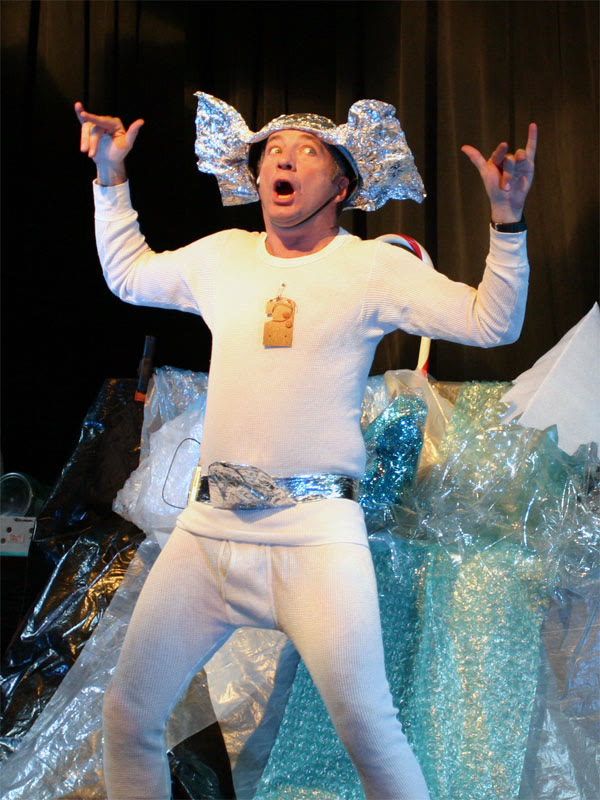
In the United States the pioneer is Paul Zaloom. According to Paul Zaloom’s own biography, “At age 19, while still in college, Zaloom joined the Bread and Puppet Theater.” His first solo puppet piece, The World of Plastic (1978), “utilized various found objects”: toys, tools, appliances, packaging materials and “other assorted junk.”
Found objects have opinions, he suggests. Speaking to Esplanade about working with them, Zaloom said: “You don’t really get to tell them what to do so much.”
Genty, Quade and object theatre today
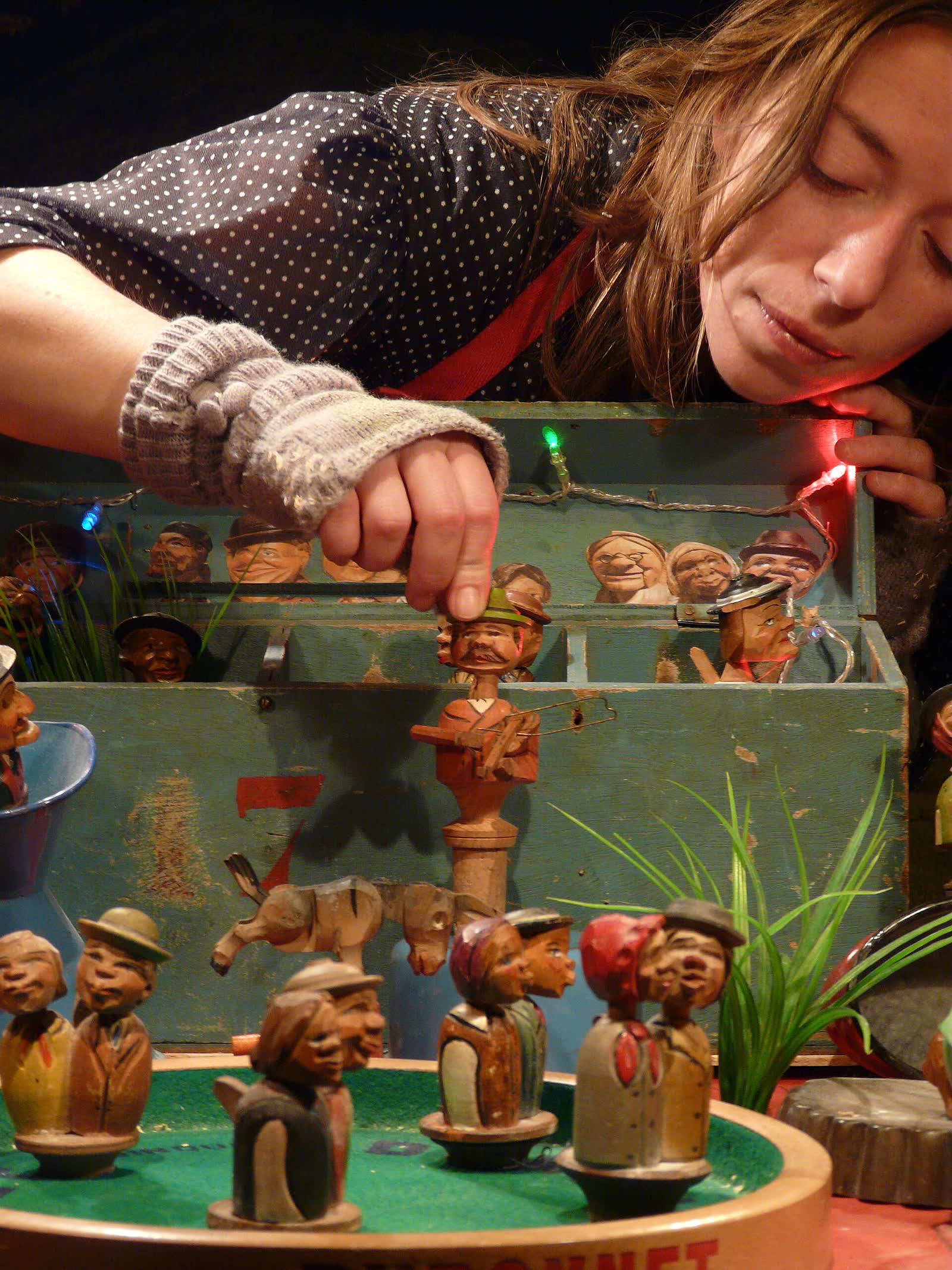
Neighbouring artists blur the edges. Philippe Genty started his company in 1968, mixing “puppetry, dance, optical illusions and mime,” with images such as “a pair of legs that become scissor blades.” In Amsterdam, Ulrike Quade’s company works “with the performance of puppets and objects as the main common denominator.”
Esplanade suggests puppeteers turned to found objects in the 1980s “possibly as a reaction to the surge in consumerism and material wealth characterising the period.” During the 2020 lockdowns, Australia’s Spare Parts Puppet Theatre made object puppetry videos.
| Year | Event |
|---|---|
| 1917 | Duchamp’s Fountain, a readymade, later cited as a root |
| 1968 | Philippe Genty founds his company |
| 1978 | Vélo Théâtre’s Le Pêcheur; Zaloom’s The World of Plastic |
| 1979 | Théâtre Manarf’s Paris Bonjour |
| 1980 | Théâtre de Cuisine’s L’Opéra Bouffe; the name coined around this time |
| 1981 | Antenna’s Vacuum in Sausalito (a parallel, not the genre) |
| 2020 | Lockdown object puppetry videos by Spare Parts Puppet Theatre |
A Sausalito parallel: Antenna’s Vacuum
Antenna Theater never used the label, but in April 1981, at about the same time as the French companies, it opened a play in which objects carried much of the story. Vacuum, Antenna’s first play, was “a theater piece about the symbolic meaning of vacuum cleaners in our lives,” with a vacuum cleaner laying white tracks and boards that turned into door frames.
Bernard Weiner of the San Francisco Chronicle praised its “innovative and economic use of ordinary materials.” The Mill Valley Record found “the props so inventive and ingeniously demonstrative, that our feeling for what is going on approximates deja vu.” Unlike French object theatre, though, Vacuum blended its objects with dance, taped narrative and silent prop movers.
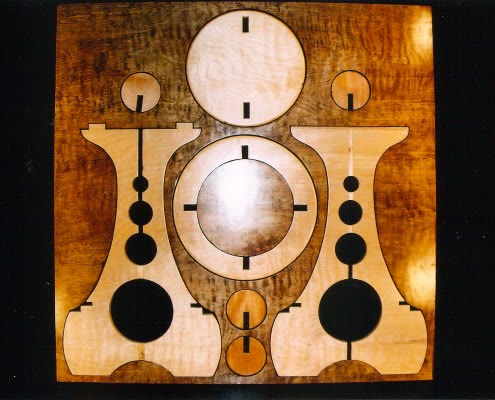
Ordinary materials stayed central. In 1982 “Plywood figures of local residents appeared over the course of a few months,” the story of Moving Sculptures, the plywood look-alikes. Later, Chris Hardman designed Slotology, in which “Flat pieces of birch slot together to make 3D furniture,” shown in Transforming Art, his 2006 solo show.
Frequently asked questions
Is object theatre puppetry?
Scholars disagree. Richard Allen describes it as a form of puppetry using found objects, while its French founders saw it as freed from the conventions of the puppet.
Who invented object theatre?
No single person. Théâtre de Cuisine (Katy Deville and Christian Carrignon), Vélo Théâtre and Théâtre Manarf named it together around 1980.
What objects are used in object theatre?
Small, mass-produced things that fit in the hand and that everyone owns. Paul Zaloom used toys, tools, appliances and packaging materials.
Who is a famous American object theatre artist?
Paul Zaloom, a Bread and Puppet veteran, whose found-object piece The World of Plastic dates from 1978.
For the other forms Antenna explored, see Walkmanology and Antenna’s other new theater forms.