
A History of Giant Puppets, from Processional Giants to Little Amal
A puppet twice the height of a person changes a street. Crowds look up, children follow, traffic stops. The history of giant puppets is a story of towns, churches, protesters and theatre companies all discovering that effect, from a Portuguese procession in 1265 to a twelve-foot refugee girl walking across Europe.
Quick answer
Where do giant puppets come from?
Giant puppets began in religious and civic processions: a giant appears in a procession at Évora, Portugal, as early as 1265, and towns in Flanders, France, Spain and England still parade their giants. In the twentieth century Bread and Puppet, Royal de Luxe and Handspring’s Little Amal brought giant puppets into theatre and street protest.
What counts as a giant puppet
Size is relative. The UNIMA World Encyclopedia of Puppetry Arts entry on giant figures puts it simply: “The definition of a giant is a matter of scale, either in relation to other figures or to live performers.” It also notes that “Giants, gigantes, gigantones are widespread in Europe.”
Most giants were made to be walked, not acted. “In most cases their use is more processional than dramatic,” the encyclopedia says, “and it is not uncommon for figures to be mounted on floats.”
Processional giants: Évora, London, Douai
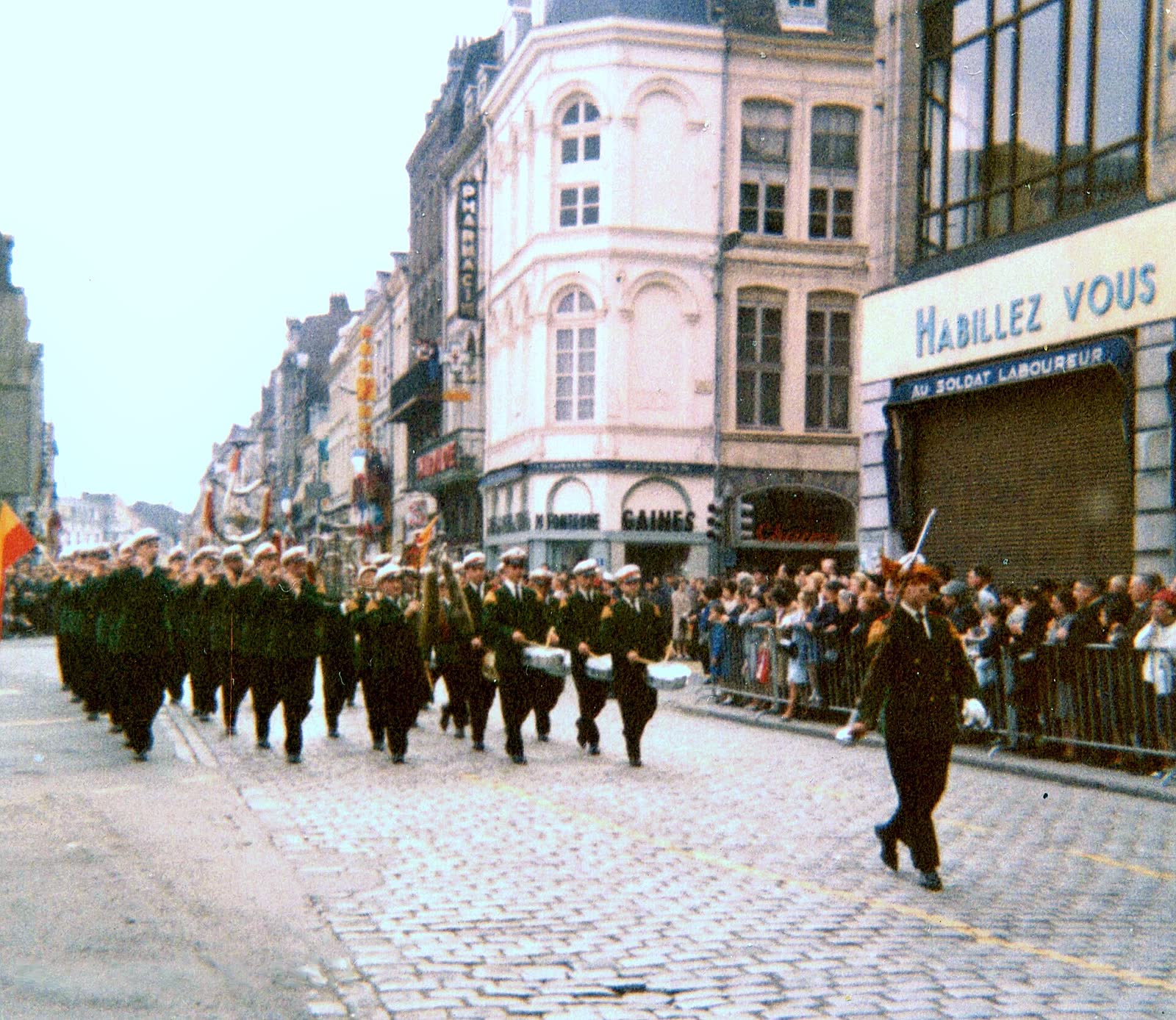
The earliest dated giant in the encyclopedia is religious: “In Portugal there are references as early as 1265 to the use of a gigantone in a religious procession in Evora symbolizing one of the evils conquered by Christ.” In London, “the giant figures of Gog and Magog, guardians of the city, have been paraded through the streets since the time of King Henry V.”
Douai’s giants date back at least to the late Middle Ages; the encyclopedia’s two entries give 1480 and the 16th century. “Today the main figure is over 8 metres tall, weighs over 300 kilos and requires eight bearers.” The processional giants and dragons of Belgium and France have been on UNESCO’s list since 2008, with figures “measuring up to nine metres in height and weighing as much as 350 kilos.”
| Date | Where | Figure | Size |
|---|---|---|---|
| 1265 | Évora, Portugal | Gigantone in a religious procession | Not stated |
| Henry V’s reign | London | Gog and Magog | Not stated |
| 1480 or 1500s | Douai, France | Gayant and family | Over 8 m, eight bearers |
| Annual | Simla, India | Dussehra effigies, burnt | 15 m |
| 1969 | United States | Bread and Puppet’s Cry of the People for Meat | 5 m rod puppets |
| 1993 | France | Royal de Luxe’s giant fallen from the sky | 9 m string puppet |
| 1997 | Marin Headlands | Antenna’s Pandemonium | 35 feet |
| 2021 on | Europe, US and beyond | Little Amal | 12 feet |
Effigies and rituals beyond Europe

Giants are not only European. For Dussehra in India, “Vividly painted puppets 15 metres high, made with a bamboo framework covered in paper, are dressed and carried through the town and then burnt ten days into the festival.” In Central Africa, the Pende “carries a mbambi puppet 6 to 10 metres high deep into the bush at the end of a masked dance.”
Chinese New Year dragons need “three, five, even ten carriers that use rods.” Many of these figures are built to be destroyed, as are the fallas of Valencia, which “are burnt at the conclusion of the festivities.”
How giants are built and carried

The simplest giant is “no more than a head mounted on a pole, with a long costume falling from the shoulders to conceal the operator.” Larger ones “may be built on lightweight frames or even made of wicker or basketwork,” often on a harness “so as to diminish the risk of damage to the back.”
Then come the tricks for very big figures. Because they must be seen “by a large number of spectators and from afar,” puppeteers may work on stilts, and “Due to their weight, giant puppets are often placed on hidden chariots.”
The twentieth century: theatre takes the giant
Bread and Puppet
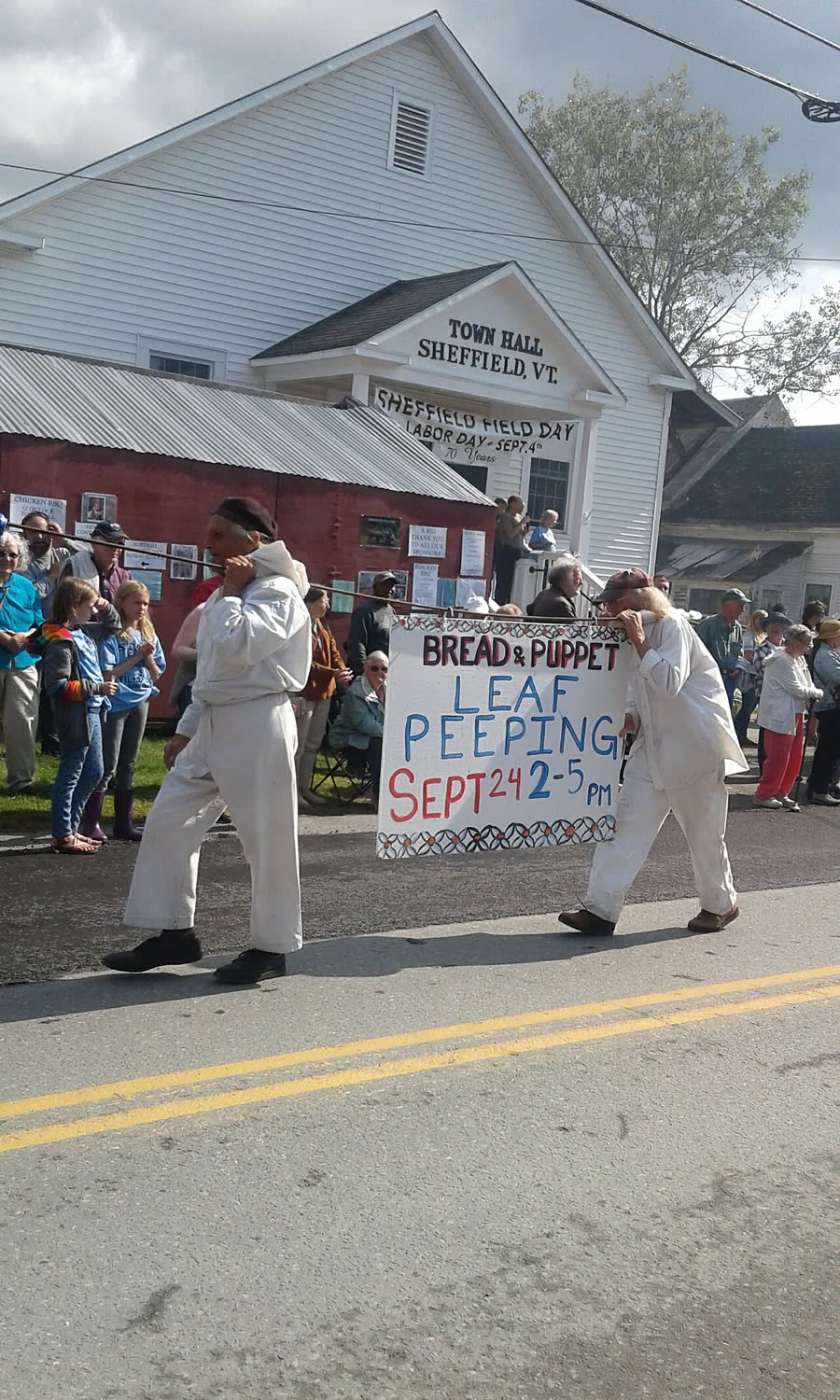
In most accounts of giant puppet theater history, the turning point comes in New York. The encyclopedia is direct: “Giant puppets really came into their own in the West with the Bread and Puppet Theater, one of the most influential and inspirational groups of the 20th century.” Bread and Puppet’s own 60-year history dates the name to 1963 in New York, and in 1970 the company moved to Vermont.
In the summers of 1965 and 1966 it staged “large scale outdoor pageants in some of the poorest neighborhoods of New York City.” By 1967 it was protesting the Vietnam War “with rod puppets of impressive size,” and its 1969 show used puppets with “a crew of six manipulators.” Bread and Puppet’s masks belong to what mask theatre is and how masks work; its giants belong here.
Théâtre du Soleil and Royal de Luxe

In 1970 Ariane Mnouchkine’s Théâtre du Soleil “played certain scenes from 1789 with giant rod puppets that required a collective effort of elevated manipulation.” Royal de Luxe, founded in 1979, built Le Géant tombé du ciel (1993), “a string puppet 9 metres high,” and later a giraffe 12 metres tall “needing twenty manipulators.”
Puppets in the street, and Little Amal
Protest groups took up the form. The organizer David Solnit made his first “at a workshop preparing for a 1989 Hiroshima Day demonstration at Livermore,” and later wrote that “giant puppets escalated the scale of our presence at street actions.”
Little Amal, “the 12 foot puppet of a 10 year old Syrian refugee child,” was built by Handspring Puppet Company, makers of the War Horse puppets. As of October 2026, The Walk Productions says she has travelled to 181 towns and cities in 18 countries since July 2021.
A Bay Area thread: Snake and Antenna’s giants
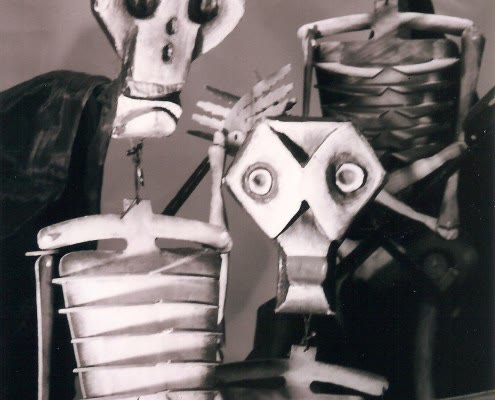
Chris Hardman met Bread and Puppet in Vermont in the late 1960s. Its “giant puppets and huge, stark generic masks” stayed with him, and in the Bay Area he made giants for three decades, first with Snake Theater’s location plays and protests, then with Antenna Theater.
| Year | Work or event | Place | Figures |
|---|---|---|---|
| 1977 | Houseboat protest (Snake) | Sausalito waterfront | “massive puppets”; Cardboard People |
| 1978 | Somewhere in the Pacific (Snake) | Fort Cronkhite beach | A giant street puppet in a red dress |
| 1991 | Bay Day procession | Fort Mason to Aquatic Park | Giant endangered species |
| 1992 | The Appearance of Civilization | Rodeo Beach | Giant Columbus and Las Casas |
| 1995 | Skin & Bones/Flesh & Blood | San Rafael recycling center | “enormous rod puppets” |
| 1997 | Pandemonium | Fort Barry, Marin Headlands | “35-foot-tall puppets” |
| 2006 | Fire and Ice benefit | Sausalito | “puppet parades” |
The 1977 puppets were Snake Theater’s, made to confront the developers of Waldo Point Harbor. Antenna’s 1991 Bay Day procession was planned to be led by “giant puppets of endangered and extinct species,” the start of its ecotheatre for Bay Day. In 1992, The Appearance of Civilization’s giant Columbus and Las Casas crossed Rodeo Beach at night.
In 1995 a “chorus line of enormous black-lit skeleton puppets” danced at a recycling center, and in 1997 Pandemonium’s 35-foot puppets filled the Headlands. Sausalito’s millennium celebration, the Big Bang, had giant puppets too. Antenna’s wider new theater forms, from Walkmanology to processions, grew from the same street instinct.
Frequently asked questions
How old are giant puppets?
The World Encyclopedia of Puppetry Arts cites references as early as 1265 to a giant in a religious procession at Évora, Portugal.
How are giant puppets carried?
The simplest is a head on a pole with a long costume hiding the operator. Larger ones use light frames, harnesses, stilts or hidden chariots.
How tall is Little Amal?
Twelve feet. She is a puppet of a ten-year-old Syrian refugee child, built by Handspring Puppet Company.
Did Antenna Theater use giant puppets?
Yes, from Snake Theater’s 1977 waterfront puppets to the 35-foot puppets of Pandemonium in 1997 and the puppet parades of the 2006 Fire and Ice benefit.