Caveat Emptor! Buyer Beware!: Antenna Theater’s Masked Pageant of Security (1991)
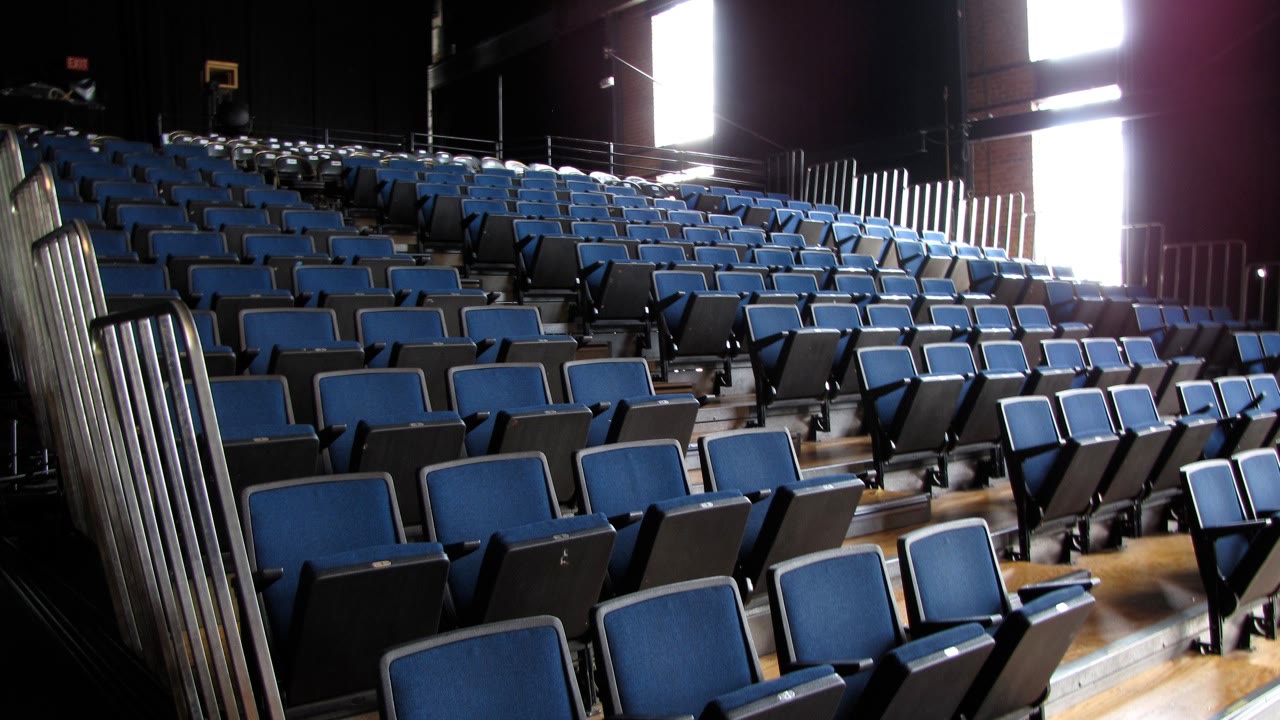
Antenna Theater was known for sending people out alone with a Walkman. In early November 1991 it did the opposite, seating an audience at Theater Artaud in San Francisco for a masked stage play about the price of feeling safe. Two reviews from that week, reprinted on the company’s former website, are the main sources here.
Quick answer
What was Caveat Emptor! Buyer Beware!?
Caveat Emptor! Buyer Beware! was a 1991 stage play by Antenna Theater at Theater Artaud in San Francisco. Masked actors, lip-syncing to a recorded soundtrack, played three alternating stories (ancient Rome and Napoleon, an insured Bubbleland, a frightened couple with a guard dog) about people sold the idea of security.
A stage play from the Walkman company
The San Francisco Examiner’s Scott Rosenberg noticed the change at once. Antenna, he wrote, had “specialized in intimate interactive installations that use Walkman tape players and other devices to give the theatergoer a one-on-one experience with their creations.” Now “they’ve gone in the opposite direction, producing an imposing pageant of symbols, phrases and fragmentary scenes that leave the individual as a pawn in the hands of larger-than-life historical forces.”
The Marin Independent Journal’s Nancy Steidtmann agreed that it “looks more like a George Coates’ extravaganza than an Antenna-trademark walkman audience-participation piece.” That makes it the counter-case to how Antenna usually broke with the seated audience. The tape still ruled, though: the actors mostly lip-synced to a recorded soundtrack, as in Vacuum, Antenna’s earlier stage play built on a taped soundtrack.
The title is the old legal warning. Cornell’s Legal Information Institute defines caveat emptor as “a common law doctrine that places the burden on buyers to reasonably examine property before making a purchase.” The version of Caveat Emptor Antenna Theater put on stage applied that warning to whole civilizations.
Three stories on one stage
Antenna’s chronology describes “three alternating stories dealing with the historical exploitation of the unsuspecting masses by those who sell the idea of security.” The play “proceeds down three tracks, hopping frequently from one to another,” wrote Rosenberg, on a stage “divided into two rows of three square frames.”
Caesar, Napoleon and Caroline

In the first track, “oversize figureheads of Caesar and Napoleon (wheeled around on wagons) orate and rally their troops for battle against nameless enemies.” Beside them stood Caroline, “a kind of spirit of civilization,” played by Lisa Peers, who sings laments.
Bubbleland
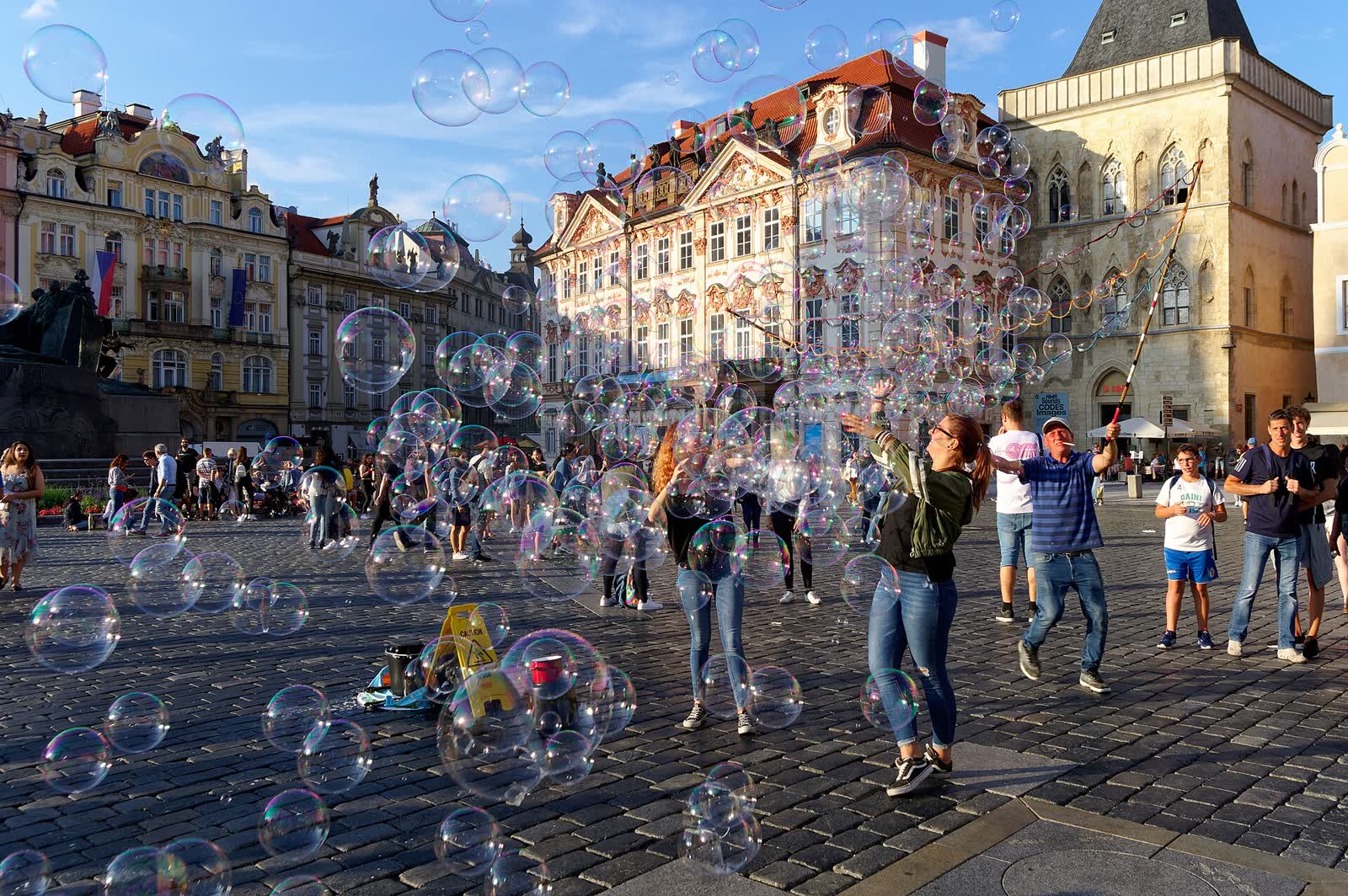
The second track belonged to Ed Holmes as an emcee “in a cutaway formal jacket made of plastic bubble-pack,” amid “inflatable armchairs and TV sets and its fog banks of soap bubbles.” Two Bubbleheads, played by Letitia Bartlett and Bob Taxin, smash their dishes: “Who cares? They’re fully covered.” Steidtmann saw a land where “ever-escalating insurance premiums keep plastic blow-up people safe from fatal punctures.”
The apartment and the guard dog
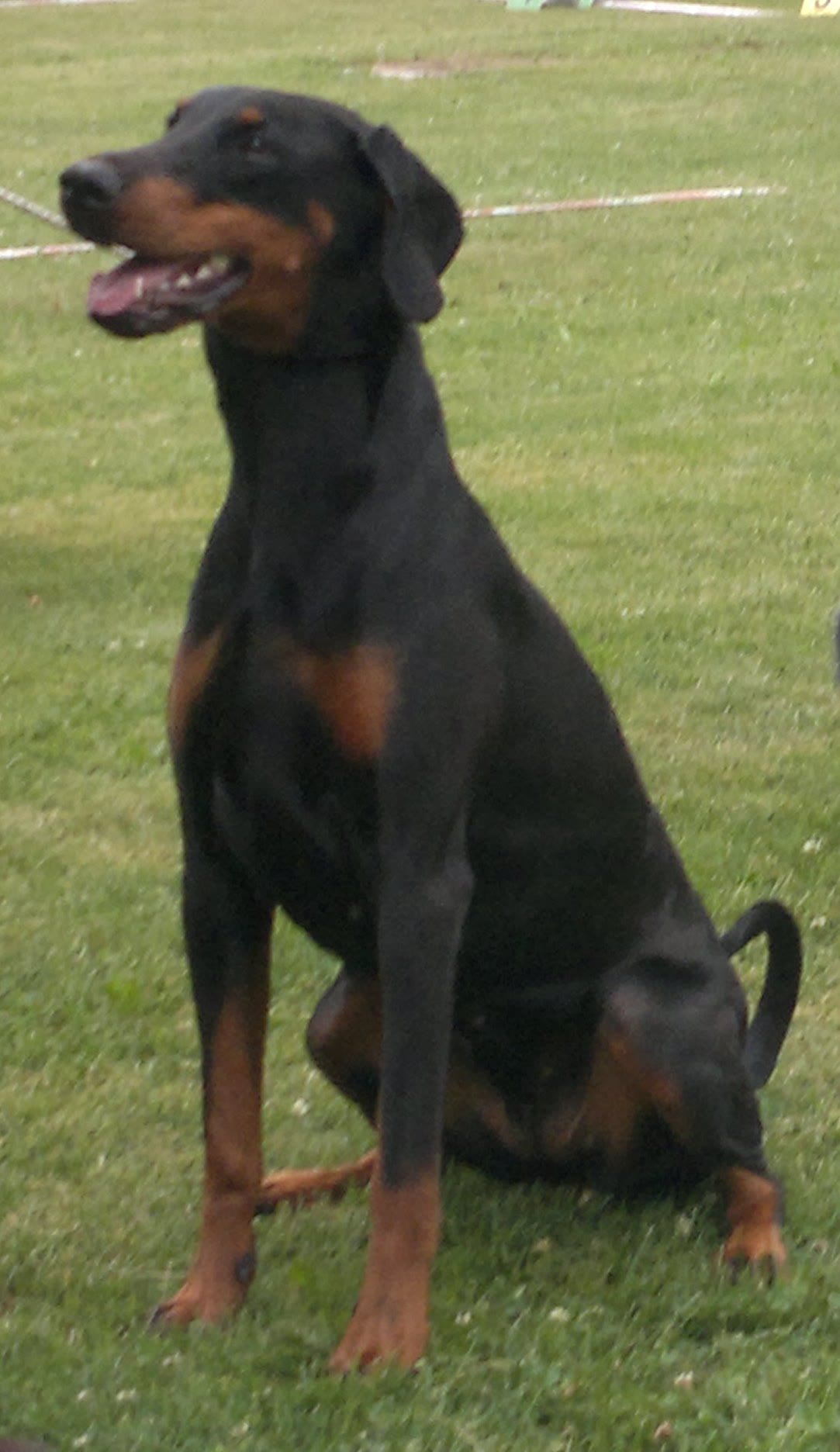
In the third, “A woman’s sleep is disturbed by news reports of random shootings; she gets a guard-dog (in Hardman’s toothy mask design, a comically vulpine pooch), who seems alternately to protect and terrorize her.” Rosenberg called it the “third (and sketchiest) element.” In Steidtmann’s account the couple are both radio reporters, and “they get a Doberman.”
| Track | Security sold | Characters | What happens |
|---|---|---|---|
| Rome and France | The militia | Caesar, Napoleon, Caroline | Giant figureheads rally troops; Caroline sings laments |
| Bubbleland | Insurance policies | The emcee, the Bubbleheads | Fully covered, they smash their dishes |
| The apartment | Guard dogs | A woman (a couple, in one review) and their dog | The dog both protects and terrorizes |
Masks, wings and a hat made from an eagle
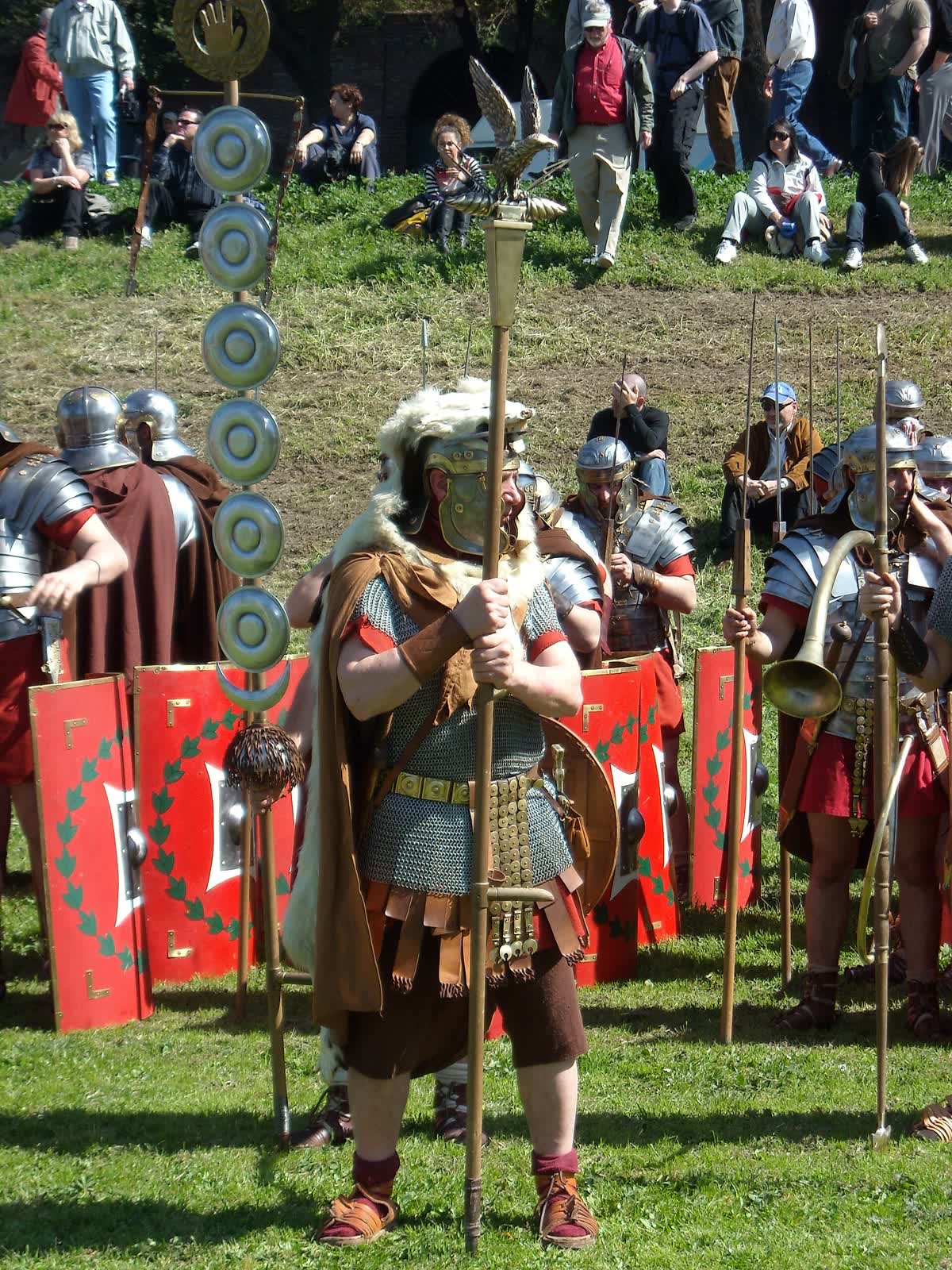
Rosenberg singled out one image: “the long, stiff train of Caroline’s satiny gown opens up to become a pair of white wings, with which she flies up to unite with the dark, wooden-slatted figure of the Roman eagle.” It was an unholy union, and “only later does she realize the price.” The Bubbleheads, too, “must pay for their total coverage when their balloon child is drafted for service in an ‘insurance war.’”
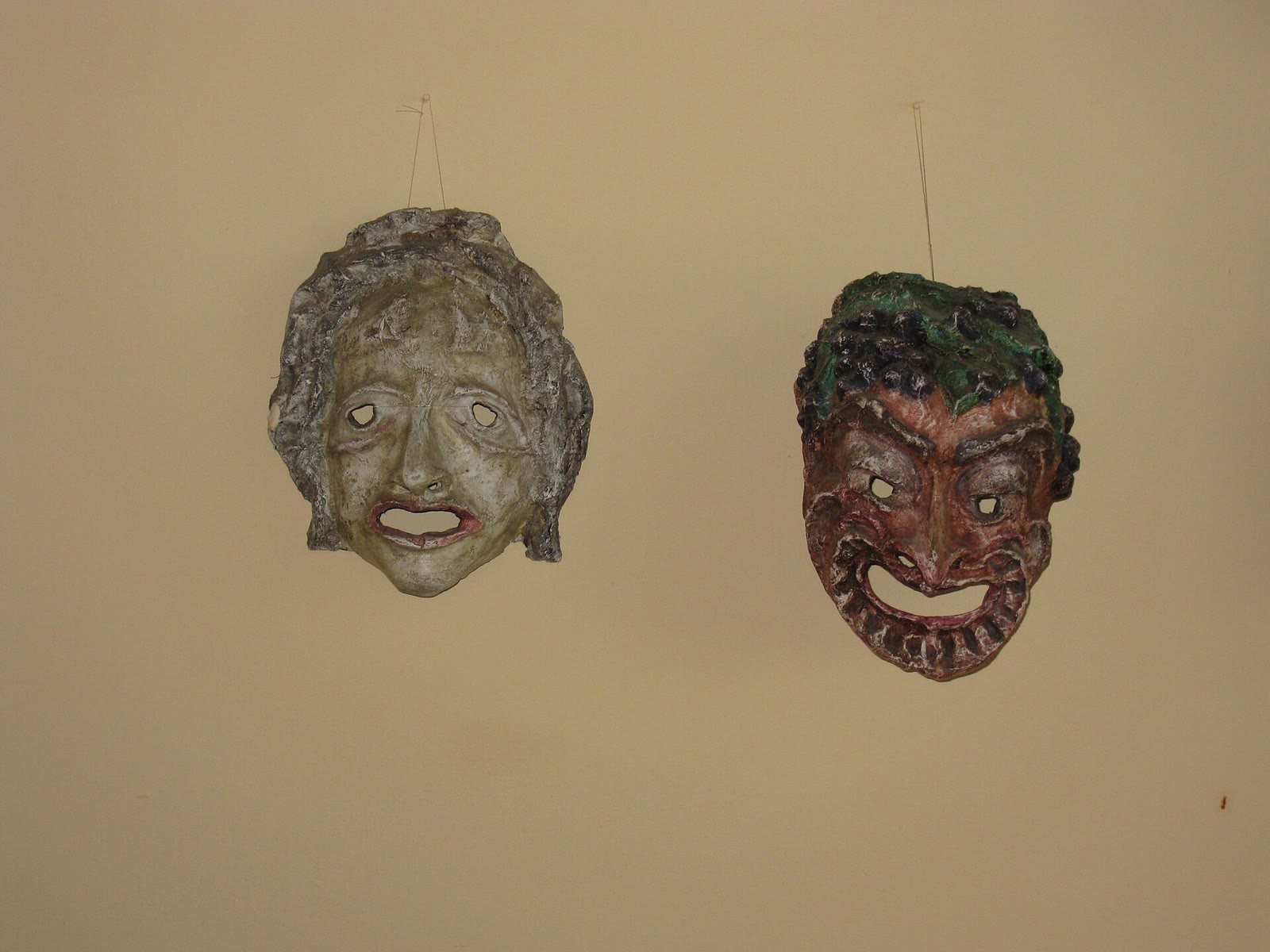
A triangular Roman eagle standard bobbed above the stage before settling on Napoleon’s forehead as his famous hat. Steidtmann wrote: “Hardman teams up with Ronald M. Davis to create a fluid, ensemble show of dramatically different masks, costumes and props.” For how such faces work on a stage, see what mask theatre is and why masks change a performance.
Antenna’s own mask page later listed the play beside The Appearance of Civilization, its masked beach procession of 1992.
Security in the autumn of 1991
Rosenberg named the subject directly: “Hardman’s theme is the paradox of ‘security’, how our desire for absolute freedom from fear and threat always seems to conjure deeper fears and more potent dangers.”
Steidtmann opened with the mood of the season: “Who feels safe anymore? Given the recent Oakland fire, the looming economic crisis, continued war skirmishes in the Middle East and rising random violence throughout the U.S., what can you do to protect your family and possessions?”
For Rosenberg, “Caveat Emptor presents all of human history as a giant protection racket that has extorted blood, sweat and tears from people by conjuring bogeymen to spook them.” He traced it from the Pax Romana to the “new world order” and quoted its moral: “love your enemies, for you are nothing without them.” He compared its reach to Daniel Yergin’s Shattered Peace, a history of national security after the Second World War, joined to “the attentive creativity of a kid playing with some very ingenious toys.”
Who made it
| Role | Name |
|---|---|
| Created by, masks | Chris Hardman |
| Set | Chris Hardman with Ronald M. Davis |
| Original score | Roy Marcom |
| Sound collage | David Torgersen |
| Lighting | Jim Schelstrate |
| Cast | Ed Holmes, Lisa Peers, Thomas Connors, Ken Black, Rena Derezin, Letitia Bartlett, Bob Taxin |
| Opening | Early November 1991, Theater Artaud, San Francisco |
| Running time | 75 minutes (Examiner); 90 minutes (Marin Independent Journal) |
The Examiner prints Theater Artaud and the Marin paper Theatre Artaud. The building is now home to Z Space, which moved into the former Theatre Artaud in 2009, and it holds a place in San Francisco’s performance art history. Marcom went on to write music for On Sight, Antenna’s 1993 Sausalito show.
What the critics said
“‘Caveat Emptor’ gives you plenty to look at and plenty to chew on,” Rosenberg wrote, praising Jim Schelstrate’s lighting “cutting tunnels and arcs through the stage’s murk.” He found “tableaux of sheer beauty here that also carry metaphorical heft” and wrote: “Still, Hardman has hit a nerve, and his material couldn’t be more timely.”
Steidtmann forgave “the at-times too shrill sound and abrupt ending” because the images lasted: “And the pieces do fit together, in their own way. It just requires the theatergoer to rewind and replay the strong visual moments in one’s mind.” No other review, closing date or performance count has been found.
Frequently asked questions
Where was Caveat Emptor performed?
At Theater Artaud in San Francisco, opening in early November 1991.
Why was it unusual for Antenna?
Antenna was known for one-person Walkman walk-throughs. The Examiner wrote that this seated pageant went “in the opposite direction.”
How long was it?
75 minutes according to the San Francisco Examiner, and 90 minutes according to the Marin Independent Journal.
The play is listed in Antenna Theater’s production chronology, and the company’s wider coverage is collected in press coverage of Antenna Theater.