What Is Site-Responsive Theatre? The Words for Theatre Made for a Place
Drama students soon meet a cluster of labels: site-specific, site-generic, site-sympathetic and the newer site-responsive. They sound interchangeable, but each marks a different bond between a show and its place. This guide answers what is site responsive theatre, traces where the vocabulary came from, and uses it to sort real productions.
Quick answer
What is site-responsive theatre?
Site-responsive theatre is theatre made in answer to a particular place, its architecture, history or people. It is a looser term than site-specific, which is reserved for work made for one site that cannot tour. Site-generic work suits a type of place, and site-sympathetic work sets an existing play in a chosen location.
Site-responsive theatre, defined
There is no official definition. The Encyclopaedia of South African Theatre lists site-responsive performance as a related name for site-specific work, and notes that the older term “is often used in a wider sense as well, simply to refer to all works performed in a non-theatrical venue.”
Companies use the newer word for work that answers a place. The Brooklyn Rail, profiling The Motor Company in 2018, described “site-responsive theater: a type of theater that is written especially for, and because of, the space in which the play will be performed.” The English company dreamthinkspeak is known for “innovative site-responsive theatre that takes audiences on extraordinary journeys.”
Scholars like the word for its looseness. Writing about sound art in 2017, Lauren Hayes discussed “the ambiguity of the term site-specific” and suggested “that site-responsive performance might be a more helpful way of describing this type of activity.” In short, site-responsive theater covers work made in answer to a place, whether or not it could be re-made elsewhere.
Where the vocabulary comes from
From the gallery to the theatre
The older word came from art. Fiona Wilkie notes that “it was not until the 1980s that the term ‘site-specific’, already well established in the visual arts, was first consistently applied to a growing body of theatre practices in Britain.”
Wrights & Sites’ continuum, 2001
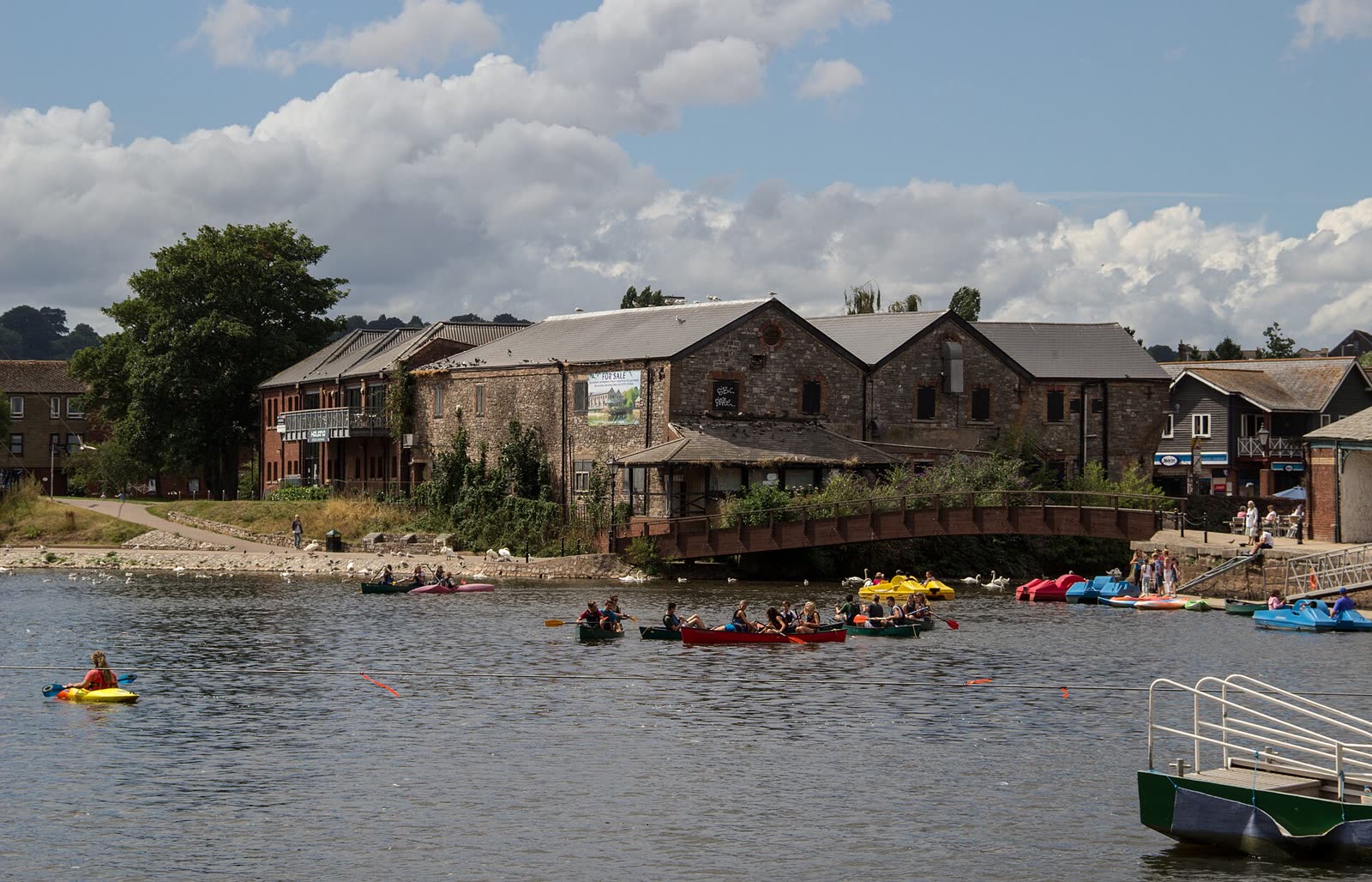
Wrights & Sites, a collective of four artist-researchers, formed in the UK in 1997. Its first project, The Quay Thing, “comprised two seasons of site-specific performance relating to Exeter’s Quay throughout the summer of 1998.”
Wilkie’s open-access thesis Out of Place, at the University of Surrey, records where the scale began: “The continuum was proposed by company member Stephen Hodge during a presentation given by Wrights & Sites at the Performance of Place conference, University of Birmingham, May 2001.” It runs from “inside the theatre building” to work “specifically generated from/for one selected site.”
Can a site-specific show tour?
The scale “reserves the label ‘site-specific’ only for performances in which a profound engagement with one site is absolutely central to both the creation and execution of the work.” Yet Wilkie’s survey responses “are divided almost exactly in half” on whether such work can tour. Her question was simple: “does ‘site-specific’ imply ‘site-exclusive’?”
Her answer was a middle category: work “not so much toured as relocated: re-worked to fit each new site.” Clifford McLucas, of the Welsh company Brith Gof, thought genuine site-specific work almost impossible to reproduce.
The terms one by one: site responsive vs site specific
Here is the Wrights & Sites scale, from the theatre building outward, with Wilkie’s relocated category and today’s umbrella term added. The examples are this journal’s, not the scale’s.
| Term | What it means | Example |
|---|---|---|
| Inside the theatre building | A show in a theatre | Adjusting the Idle at Theater Artaud, 1985 |
| Outside the theatre building | A show moved to a non-theatre space, such as Shakespeare in the park | Etiquette of the Undercaste in galleries, 1988 to 1992 |
| Site-sympathetic | An existing performance text physicalised in a selected site | A classic play staged in a castle |
| Site-generic | Performance generated for a series of like sites, such as car parks or swimming pools | Sands of Time on Bay Area beaches |
| Relocated | Not so much toured as re-worked to fit each new site | The High School Project, unique to each school |
| Site-specific | Performance generated from or for one selected site | Skin & Bones at the Marin Recycling Center |
| Site-responsive | A looser umbrella for work made in answer to a place | dreamthinkspeak; The Motor Company |
So site-sympathetic theatre takes a script that already exists and sets it somewhere chosen, while site-generic theatre is made for a kind of place rather than one address. A classroom guide sums up the contrast: site-specific work “differs from ‘site-responsive’ or ‘site-sympathetic’ work, which may recognise its environment but could be transferred to other venues.”
Host, ghost and witness

McLucas offered another model. He became joint artistic director of Brith Gof in 1988, and his idea of “the host the ghost and the witness” “subsequently became an influential concept in the field of theatre studies,” according to the Dictionary of Welsh Biography.
In an interview with Wilkie he explained that “the Host is the place where the thing is taking place.” The show is a Ghost that “haunts that place for maybe two months if you’re lucky,” and “like all ghosts you can see through it.” Finally, “the thing doesn’t exist as an event until you have a Witness – an audience – coming to see it.”
Brith Gof’s Gododdin (1988) began in the old Rover car factory in Cardiff, then played a sand quarry in Italy, a crane factory in Hamburg and a tram repair workshop in Glasgow. As McLucas put it, “what the performers did was exactly the same, the soundtrack was exactly the same, so in a sense it was the host and it was the witness that changed.”
Putting the terms to work: Antenna on the scale
Antenna Theater only ever called its work site-specific. Using the continuum’s terms, though, its productions spread across the scale, from a touring theatre installation that visitors walk into to shows tied to one address.
One school at a time: the High School Project
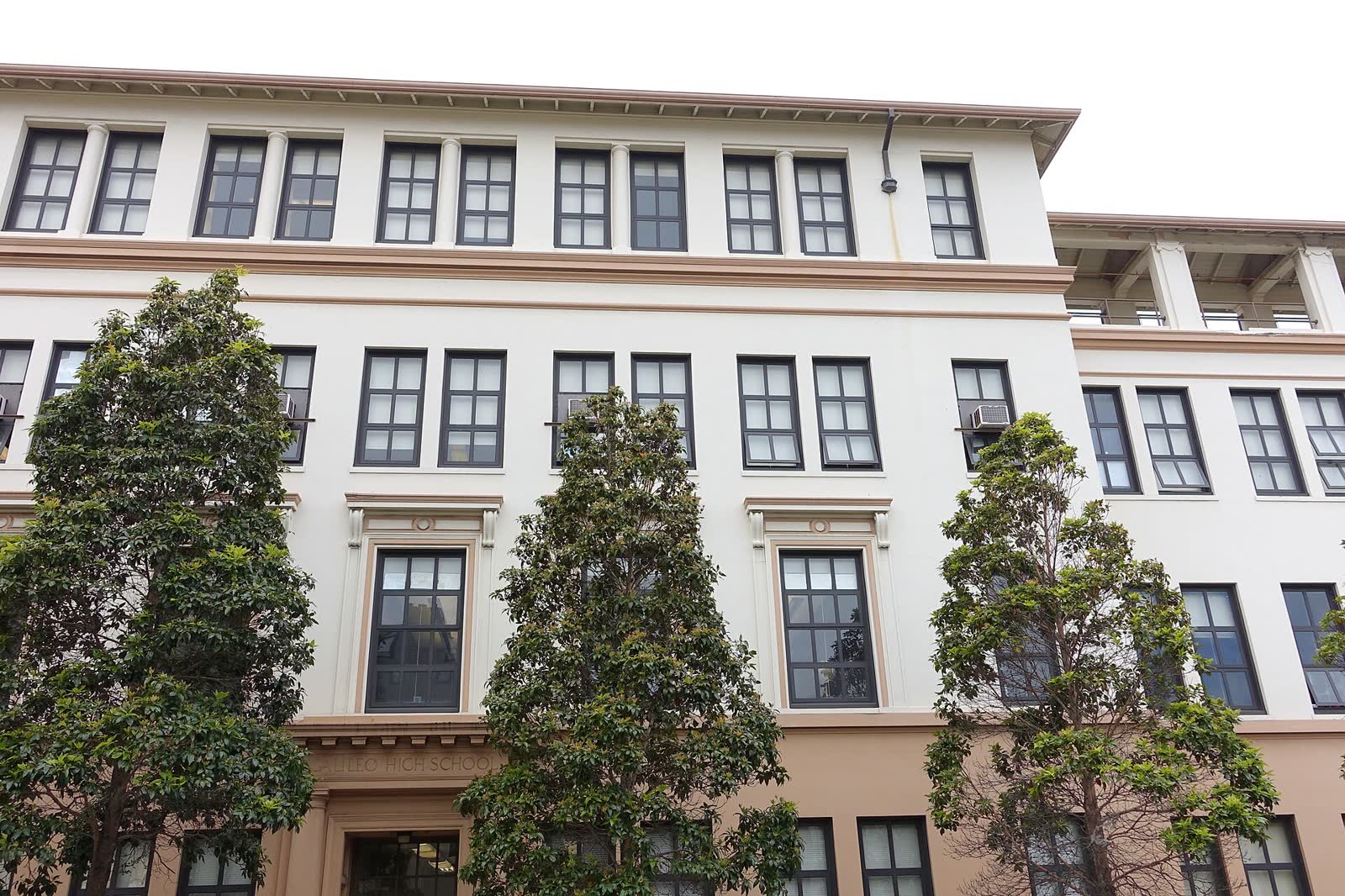
Antenna’s 2004 press release described “a series of residencies in Bay Area schools where students come together with the artists of ANTENNA to create an experiential theater work unique to each school.” The chronology adds: “Each path, sculptural set, and soundtrack were unique to the school.” That is Wilkie’s relocated category, with the same idea re-made at Tamalpais High, Galileo and Berkeley High.
The story of the High School walk-throughs, from 1981 to 2006, has its own post, and work made with students sits beside theatre for young audiences and its history.
A show about its own site: Skin & Bones
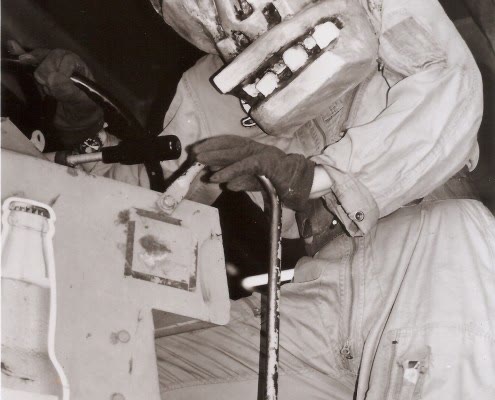
Skin & Bones (1995) is site-specific in the strictest sense. Steven Winn of the San Francisco Chronicle said the piece “brings audience members face-to-face with masked actors and enormous rod puppets among the heaps of crushed cans.” Antenna’s summary has the audience follow “a Marin County matron through the Marin Recycling Center,” where her parts are “sorted into various recycling bins.”
Other works sit elsewhere. Sands of Time, “Carved into 1,000 yards of beachfront,” moved between beaches. For the places themselves, see a history of site-specific theater in the Bay Area, and for the American theory, Schechner’s environmental theater.
Frequently asked questions
What is the difference between site-specific and site-responsive?
On the Wrights & Sites scale, site-specific is reserved for work made from or for one selected site that does not tour. Site-responsive is a looser term that also covers work re-made for each new place.
What is site-sympathetic theatre?
It is an existing performance text physicalised in a selected site, such as a classic play staged in a historic building.
What is site-generic theatre?
It is performance generated for a series of like sites, such as car parks or swimming pools.
Who came up with these terms?
Stephen Hodge of Wrights & Sites presented the continuum in May 2001, and Fiona Wilkie published it in her research on site-specific performance in Britain.
For Antenna’s own inventions, see Walkmanology and Antenna’s other new theater forms.