
History of the Diorama: From Daguerre’s Light Theatre to the Museum Case
Most people meet the diorama as a school project: a shoebox scene with a painted sky. The history of the diorama starts somewhere grander, in a dark Paris theatre of 1822 where huge paintings changed with the light and no actor ever appeared. Within a century the word had moved into natural history museums, where it still names the glass-fronted habitat case.
Quick answer
What is a diorama?
A diorama is a scene built to be looked into, today usually a three-dimensional model in front of a painted background. The word began in 1822 with Louis Daguerre’s Diorama in Paris, a theatre where huge painted transparencies changed with light. Museums adopted the name for habitat displays in the 1890s.
A theatre with no actors: Daguerre’s Diorama, 1822
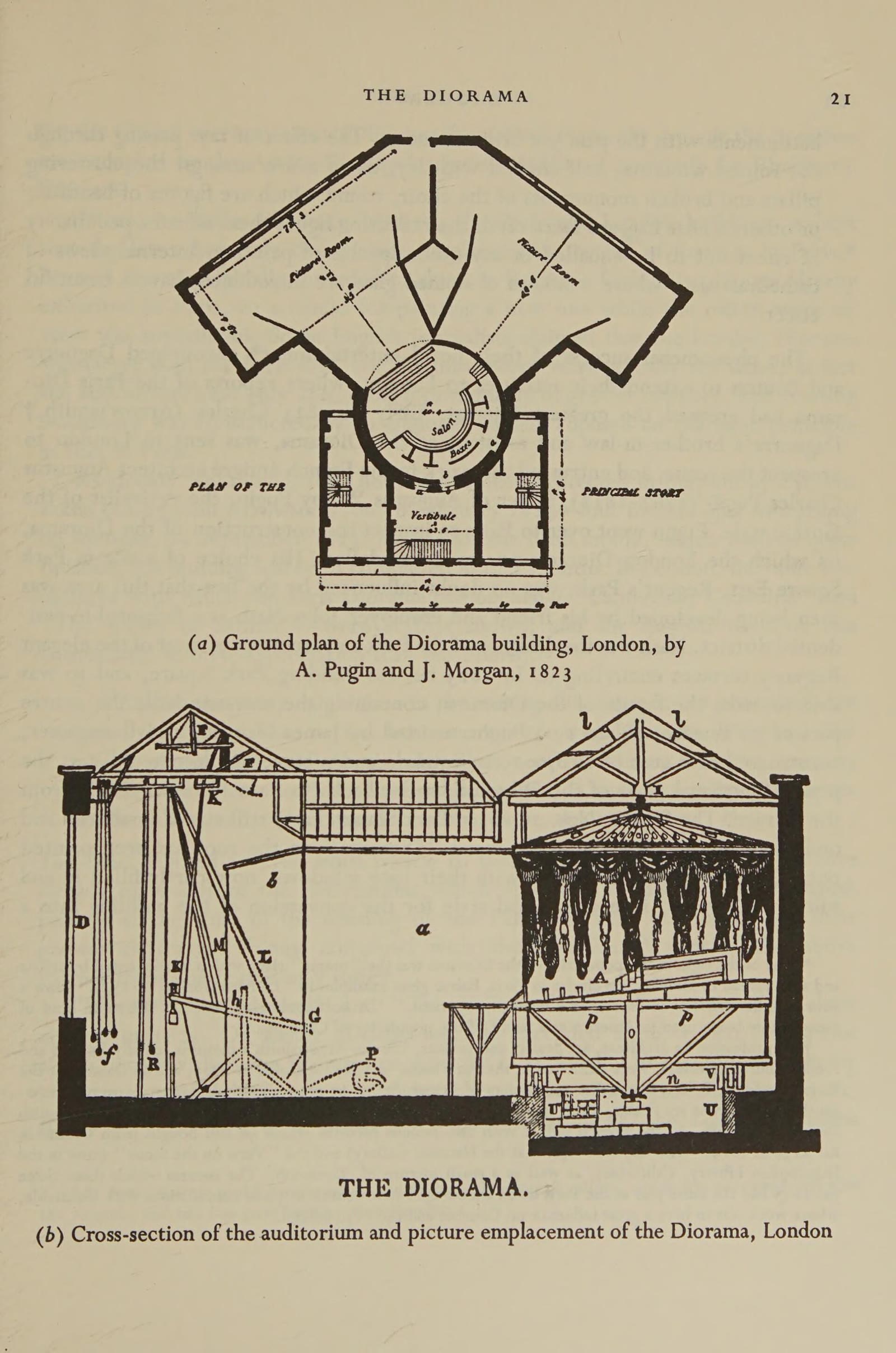
The word was coined by Louis Daguerre, from the Greek for “through” and “as is seen”. He “created the Diorama with the help of the architectural painter Charles Marie Bouton (1781-1853)”, and Princeton’s Graphic Arts Collection on Daguerre’s Diorama records that it “opened in Paris during the summer of 1822 and was an immediate success.”
The building was made “to present a life-size painting moving past spectators with constantly changing light effects that gave the illusion of changing times of days, or weather or seasons”. Each picture was a semi-transparent painted canvas with light behind it, and Balzac called the result “the marvel of the century”.
A show held two paintings, about 15 minutes each. Up to 350 people, most of them standing, watched the first; then the whole auditorium turned on a turntable to face the second. The scene stayed still and the audience moved, which makes the Diorama an early case of theatre without actors.
London’s Diorama and the last surviving picture
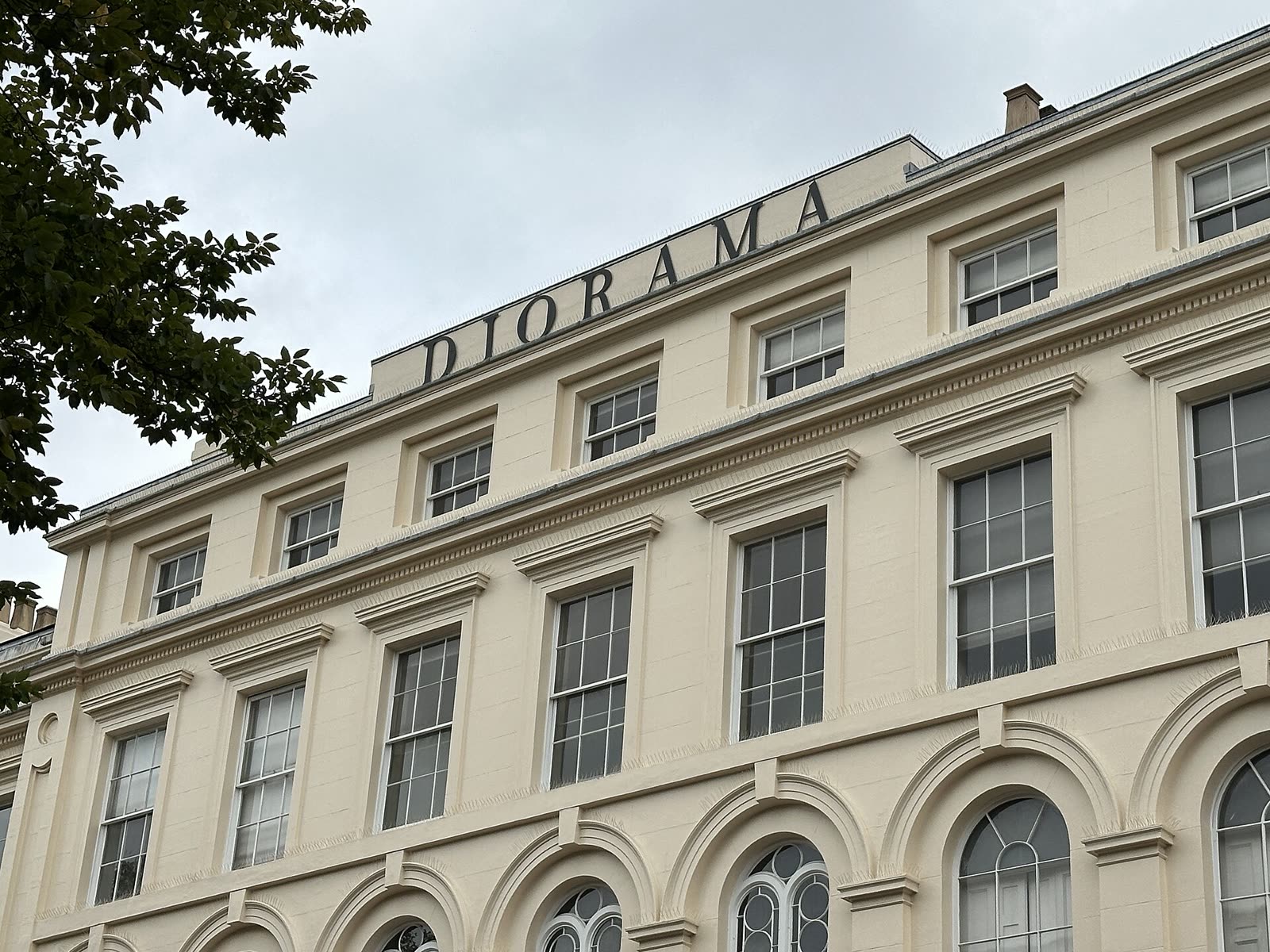
A London Diorama opened in Regent’s Park on September 29, 1823, with the Paris paintings. The London Museum says “it used lighting effects and painted translucent screens on two stages (between which the audience could be switched as their auditorium was turned through 70 degrees)”. Up to 200 people sat in the dark.
At the opening, the painter John Constable wrote: “It is in part a transparency, the spectator is in a dark chamber, and it is very pleasing and has great illusion.” The London house closed “commercially unsuccessful” and was a Baptist chapel by the 1850s. “The three-storey glass-roofed octagonal lighting dome remains.”
Only one of Daguerre’s dioramas survives: his last, installed in 1839 in the church at Bry-sur-Marne, near Paris. Hyperallergic reports that it “measures over 18 feet tall and 20 feet wide” and was declared a historical monument in 1913. Daguerre went on to perfect the daguerreotype and died at Bry in 1851.
From the stage to the museum case

The Powell-Cotton Museum explains the turning point in the history of the diorama: “The term diorama originally described techniques borrowed from the theatre to create 3D effects and scenes when viewing paintings and other artwork.” Later in the century, it says, “when combined with taxidermy (the mounting of animal skins), dioramas were a great way of replicating habitats and nature scenes, and the natural history diorama was born.”
The theatre never quite left: “The painted background most closely resembles the original theatrical dioramas.” Who built the first habitat diorama is disputed. Carl Akeley’s muskrat group of about 1890 in Milwaukee is often named, though taxidermists had built habitat scenes before, and Gustaf Kolthoff’s Stockholm museum of 1893 did the same in Europe, with backgrounds by Bruno Liljefors.
Akeley and the great habitat halls

Milwaukee Public Museum’s chief executive, Ellen Censky, told WUWM that Akeley “was the first one who actually created this 3D environment with a curved background, 3D images in the front.” His striped hyena group at the Field Museum “was unveiled in 1899”, and in 1909 he joined New York’s American Museum of Natural History.
There he worked out ways of “replicating botany using crepe paper and wax”. He died on expedition in the Belgian Congo in 1926, and the African hall that bears his name opened in the 1930s. William R. Leigh, who began painting backgrounds at 60, made eight for the museum.
After about 1950 dioramas fell from fashion in American museums, and many were dismantled. The Field Museum’s story of remaking Akeley’s striped hyenas marks the turn back: the 2016 scene was “the Museum’s first full-scale habitat diorama in more than 60 years”, paid for when “around 1,500 contributors helped raise more than $150,000 in just six weeks”.
San Francisco’s African Hall
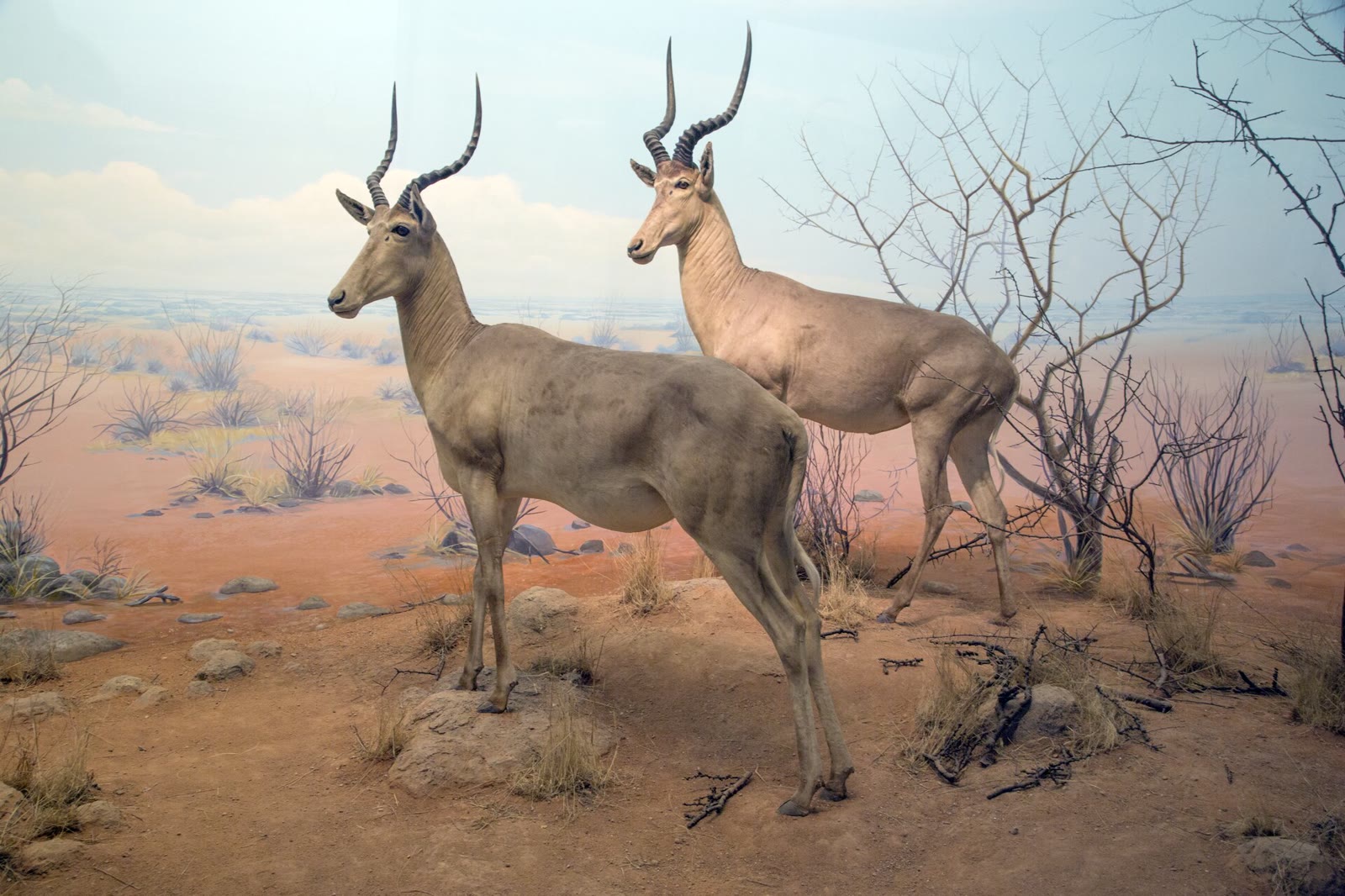
The California Academy of Sciences opened its African Hall in 1934. Its library blog shows a 1929 scale model of the lion diorama, a reminder that “Scale models were used to sketch out ideas for large dioramas before building the real thing.” Frank Tose, then head of exhibits, did the taxidermy, installation and mural himself.
“The lion diorama was unchanged from 1934 until the closure of the Academy’s original buildings in 2004.” The murals were documented, colour-matched and painted again in the new building, where the hall recreates 12 original dioramas and adds nine.
Miniatures, shoeboxes and photographs
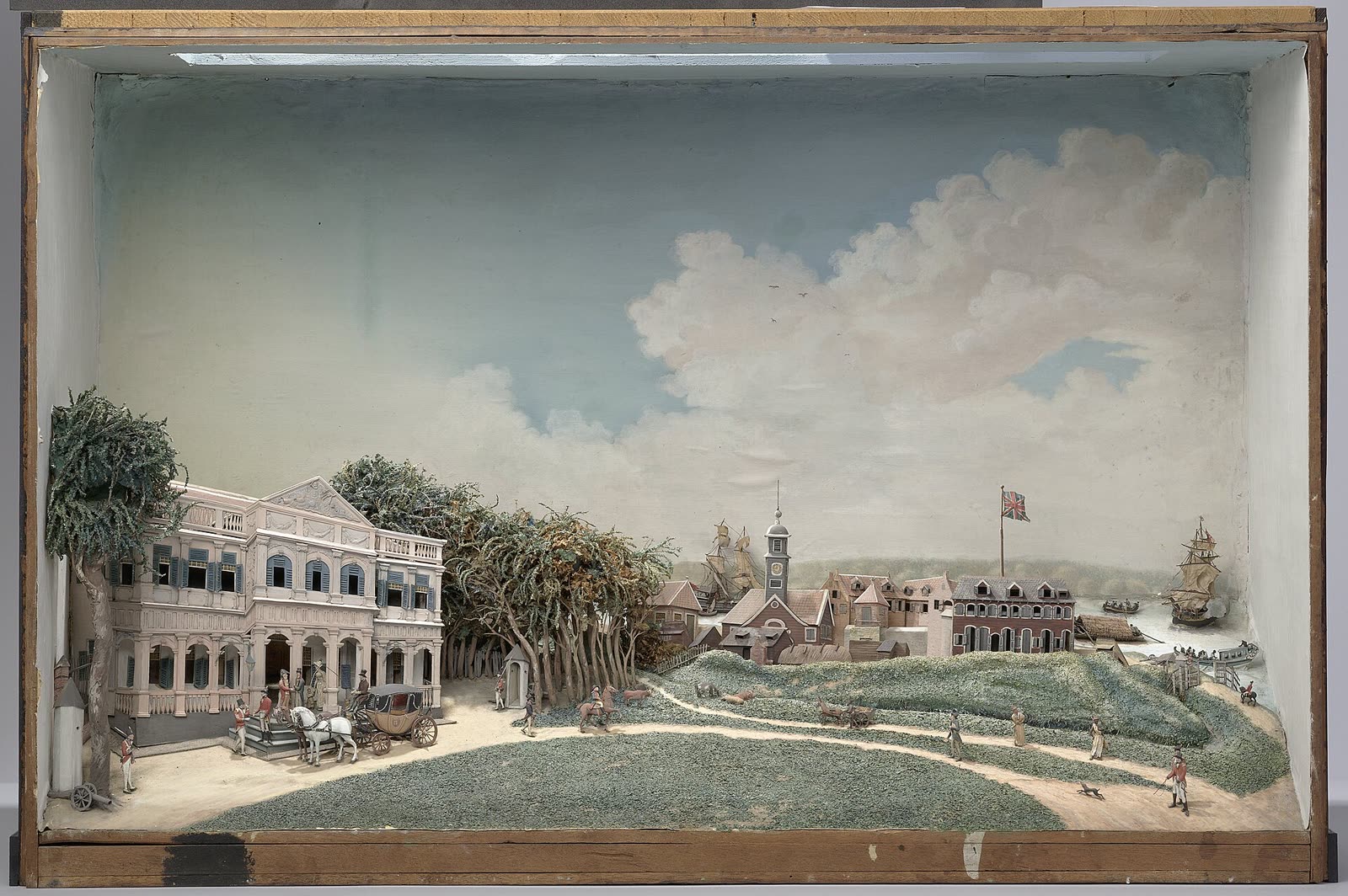
The diorama also shrank. William Siborne spent 1830 to 1838 building a model of Waterloo with about 70,000 soldiers, and EBSCO notes that “In the twentieth century, diorama making became a popular activity among primary school students”. Hobbyists still build them for model railways and military scenes.
Since 1976 the photographer Hiroshi Sugimoto has made a series called Dioramas, photographs that “draw attention not to the natural world itself but to how it is represented in museums.” “However fake the subject, once photographed, it’s as good as real,” he said.
A diorama you walk through: Enola/Alone
In October 1994 the San Francisco Chronicle’s Steven Winn wrote that Antenna Theater’s “‘Enola Alone’ conducts audience members, one-by-one, through a stylized diorama and 40-minute audio headset tour of World War II.” The word was the critic’s, not the company’s. American Theatre described “a series of scale models (little plastic toys representing a dollhouse and toy soldiers) that decrease in size”.
Chris Hardman explained the contrast: “In other walkthroughs, you’re dealing with people and images that are life-size”. Enola/Alone, the bomber maze a critic called a stylized diorama, played in an Army warehouse during the Presidio’s handover from post to park. Like the habitat halls, it belongs with museum theatre and its exhibits that perform.
The same article noted that Antenna’s CD-ROM “Antenna Gallery Guide” had just opened at New York’s Museum of Natural History, home of the Akeley Hall, a chapter in the history of the museum audio guide. For another scene you look into, see the history of infinity mirror rooms, and for the company’s wider range, the new theater forms Antenna explored.
The history of the diorama in dates
| Year | Event | Kind |
|---|---|---|
| 1822 | Daguerre and Bouton open the Diorama in Paris | Light theatre |
| 1823 | London Diorama opens in Regent’s Park | Light theatre |
| 1839 | Daguerre’s last diorama installed at Bry-sur-Marne | Light theatre |
| About 1890 | Akeley’s muskrat group, Milwaukee | Habitat group |
| 1893 | Kolthoff’s museum, Stockholm | Habitat group |
| 1899 | Akeley’s striped hyenas, Field Museum | Habitat group |
| 1934 | African Hall, California Academy of Sciences | Habitat group |
| 1976 | Sugimoto begins his Dioramas photographs | Art |
| 2016 | Field Museum’s first new habitat diorama in 60 years | Habitat group |
Frequently asked questions
Who invented the diorama?
Louis Daguerre, with the painter Charles Marie Bouton, in Paris in 1822.
What does diorama mean?
The word was coined by Daguerre from the Greek for “through” and “as is seen”.
What was the first museum habitat diorama?
Carl Akeley’s muskrat group of about 1890 in Milwaukee is usually named, though earlier taxidermy scenes and Gustaf Kolthoff’s Stockholm museum of 1893 have claims too.
Does any Daguerre diorama survive?
One does: his last, installed in 1839 in the church at Bry-sur-Marne, near Paris.