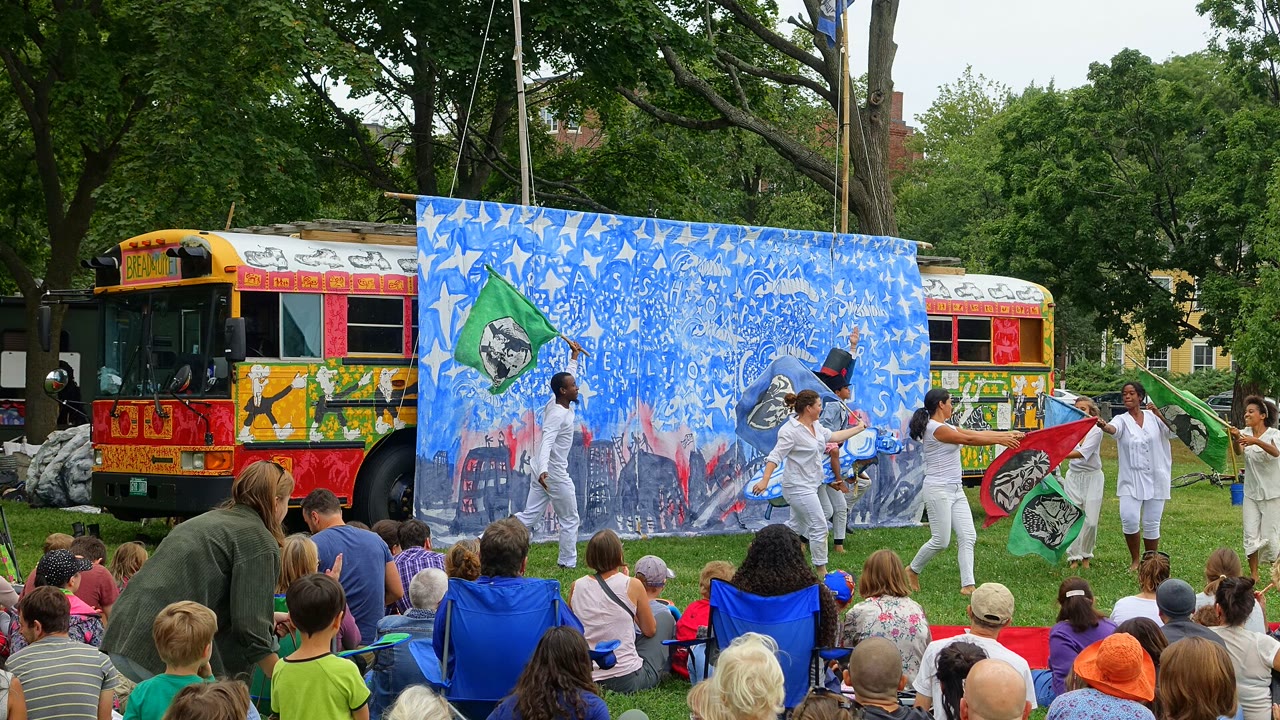
Bread and Puppet Theater History: Bread, Pageants and a Vermont Farm
Few theater companies hand the audience a slice of bread. Bread and Puppet Theater history runs from a rented loft on New York’s Lower East Side to a dairy farm in Vermont’s Northeast Kingdom, by way of antiwar marches, an acclaimed show in France, a free summer circus that drew tens of thousands, and paintings sold off a school bus.
Quick answer
How did Bread and Puppet Theater begin?
Bread and Puppet Theater took its name in 1963 in a Lower East Side loft, where Peter Schumann handed out bread at puppet shows. It marched against the Vietnam War, moved to Vermont in 1970, settled on a Glover farm in the mid-1970s, and ran its huge free Domestic Resurrection Circus until 1998.
A loft on Delancey Street (1963)
Peter Schumann, a sculptor and dancer from Germany, came to the United States in 1961. The company’s own history describes “a group of scruffy troubadours” who “rented out a small loft on Delancey Street in New York’s Lower East side, and began putting on weekly performances.”
“Peter and Elka decided on the name Bread and Puppet Theater. The name stuck. The year was 1963.” The company says so in its own history.
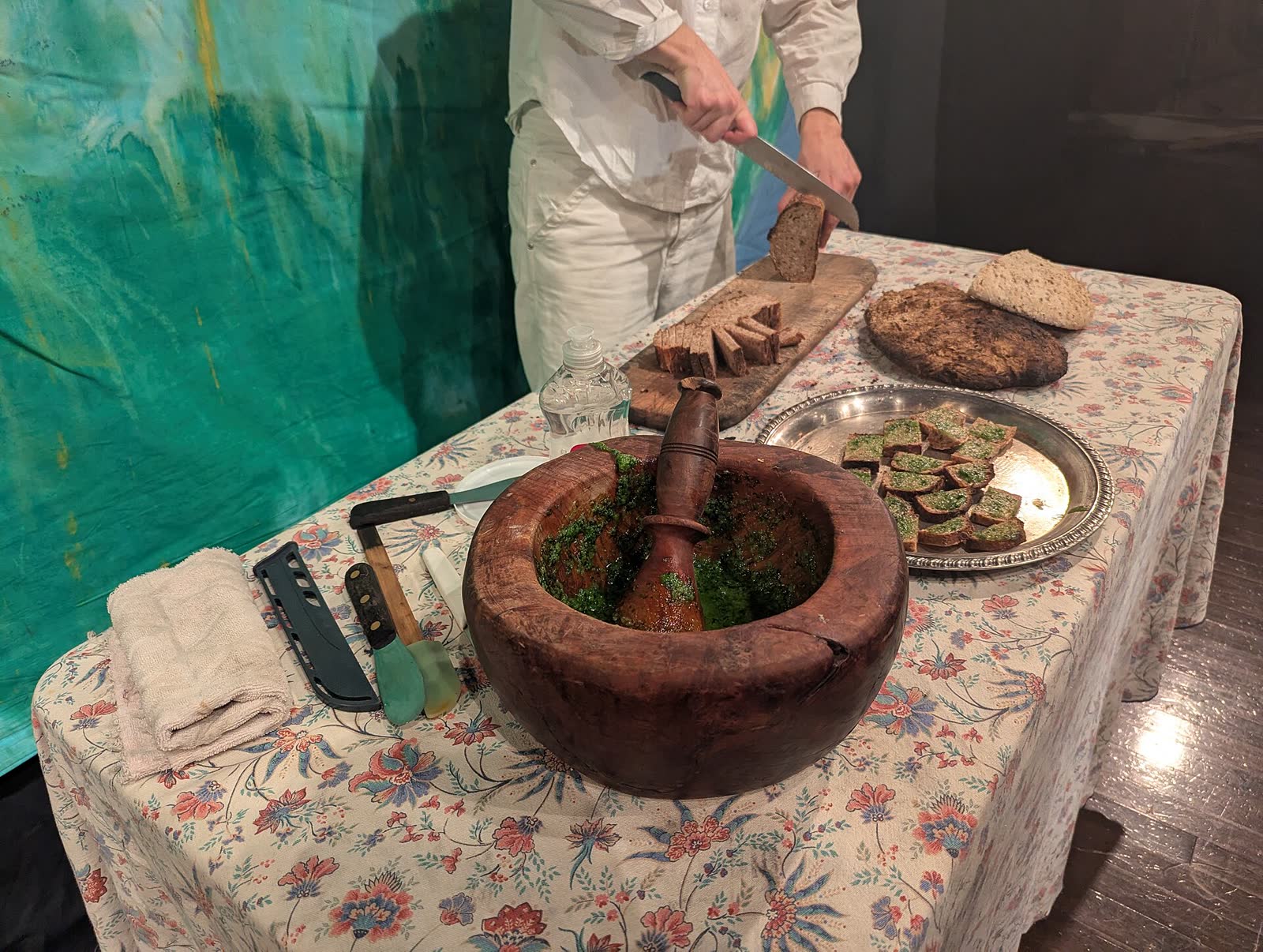
At each show the audience would “slowly chew the coarse sourdough as the puppet performance ensued.” Schumann’s statement explains why: “We give you a piece of bread with the puppet show because our bread and theater belong together.”
Vietnam, Fire and the New American Theater (1964-1968)
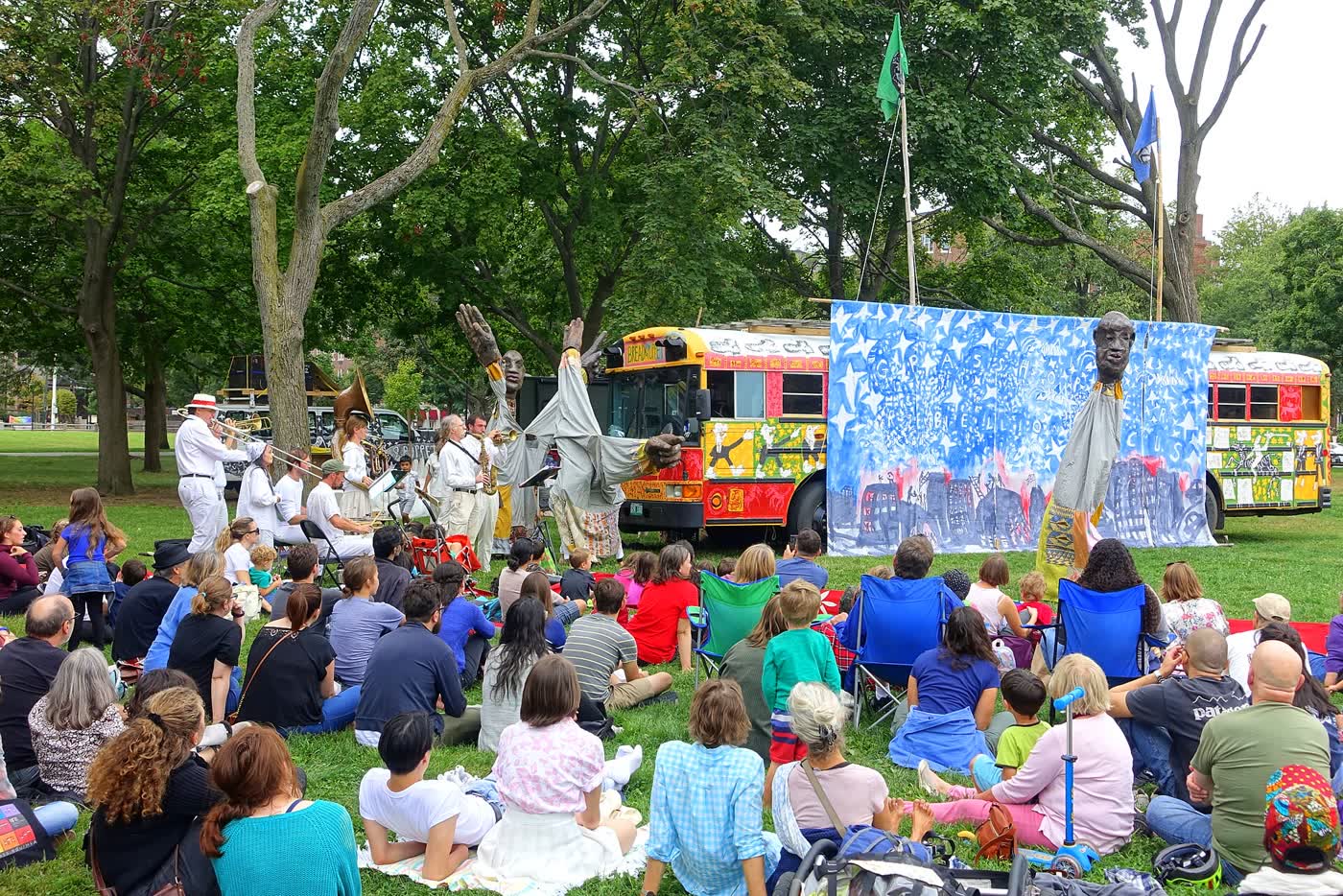
From 1964, with some of the earliest protests against American involvement in Southeast Asia, the company became a fixture of the antiwar movement. “During the Vietnam War, Bread and puppet staged block-long processions and pageants involving hundreds of people.” In the summers of 1965 and 1966 it built outdoor pageants in poor New York neighborhoods, with figures such as Uncle Fatso and Mother Earth made with local children.
Those processions explain the giant puppets Bread and Puppet made famous, built from “papermache, burlap, twine, and staples”. Indoors, the company made Fire, an understated piece about the war that won acclaim at the Nancy festival in France in 1968 (its own chronology lists Fire under 1966).
The same year Schumann went west. The historians Paul Buhle and Joel Schechter write that “In 1968, Schumann participated in a ‘radical theatre festival’ held in San Francisco with the San Francisco Mime Troupe and El Teatro Campesino”. Those two companies belong to the story of the Mime Troupe, El Teatro Campesino and street theatre.
Goddard, Cate Farm and the move to Glover

“In 1970 Bread and Puppet moved to Vermont, first to a residency at Goddard College”. Jules Rabin, a Goddard professor, had urged the Schumanns to leave New York, and the family and theater settled at Cate Farm, next to the campus.
The next move was to a farm in Glover that Elka’s parents had bought as a possible retirement home. The company’s pages give both 1974 and 1975; 1975 is the date in most accounts. The memorial to Elka adds that Peter had just disbanded the theater, so the family arrived “with a much diminished Bread and Puppet group in tow”.
Our Domestic Resurrection Circus (1970-1998)

The company dates Our Domestic Resurrection Circus to 1970, and in Glover it grew, “using the pastoral landscape to stage large scale outdoor productions.” It became the company’s central event, “produced by over one hundred volunteers and drawing audiences in the tens of thousands.” A 1981 poster promised “admission free”.
Buhle and Schechter add that “The New York Times compared it to Woodstock”. The form behind it is the outdoor pageant, explained in what a pageant play is and how it works.
The end came in 1998. The company says “Peter decided to end Circus in 1998, after the tragic death of an audience member in one of the teeming campgrounds that had evolved adjacent to the Theater.” The Verso entry puts it more bluntly: “After a fight broke out in 1998, resulting in a death, this magnum event disappeared from their repertoire”. Weekly, smaller summer shows took its place.
Bread and Puppet Cheap Art and the Press
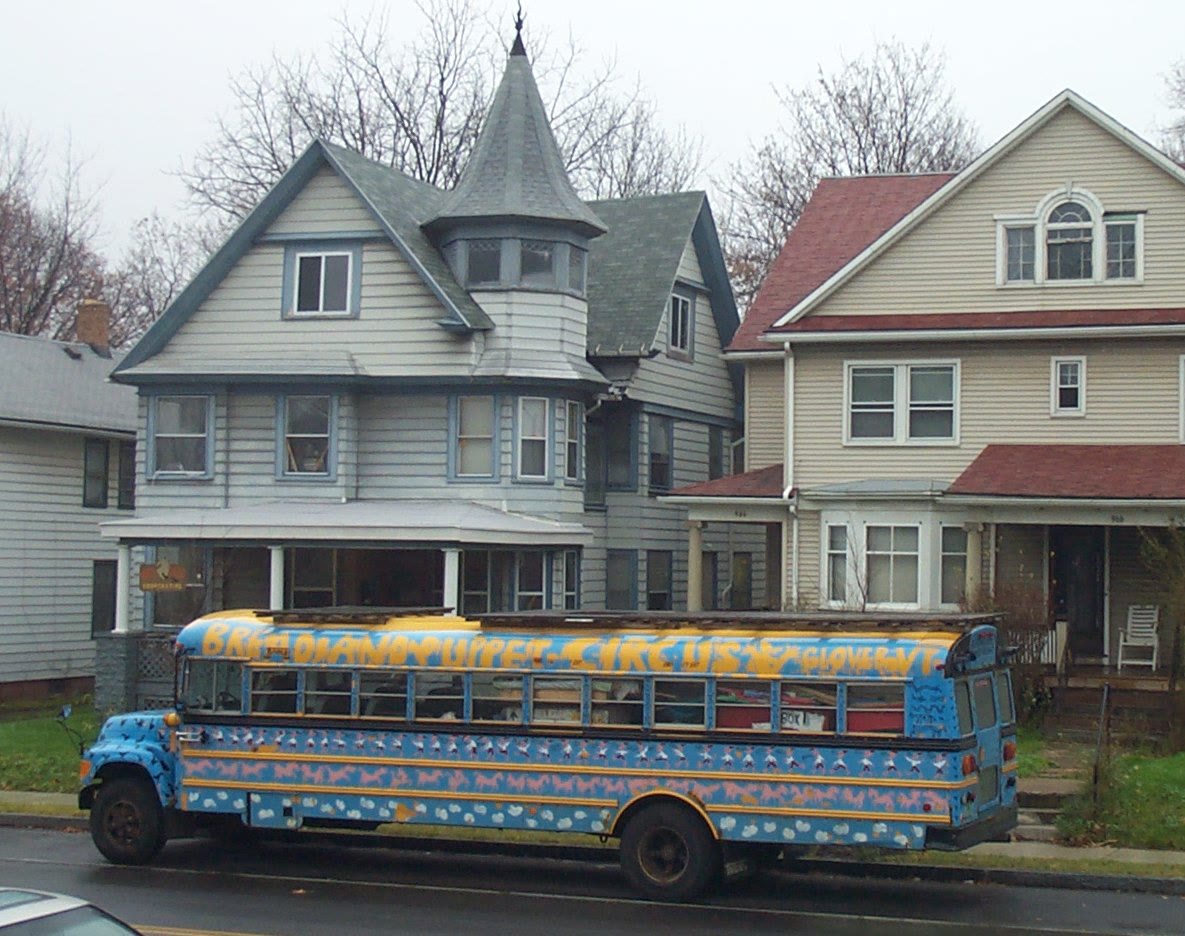
Cheap Art “was born in 1979 when Peter Schumann and his company and friends filled their old schoolbus with hundreds of small pictures painted on scraps of masonite, cardboard and newspaper”. They drove it to nearby towns and sold the work “for 10 cents to 10 dollars.”
In 1987 Schumann told an audience at SUNY Purchase: “What we produce has no ambition to be high art. Low art is what we make and what we want.” In 1984 Elka named the Bread and Puppet Press, which “grew to become a staple of the theater’s income.”
| Income | What it was |
|---|---|
| Touring | New and old productions in America and abroad |
| The Press | Posters, pamphlets and books, a staple of income from 1984 |
| Cheap Art | Small paintings sold from 10 cents to 10 dollars (historical, from 1979) |
| The farm | A cattle and maple-sugar business |
| Not taken | No direct government or corporate funding |
The barn museum and Elka Schumann
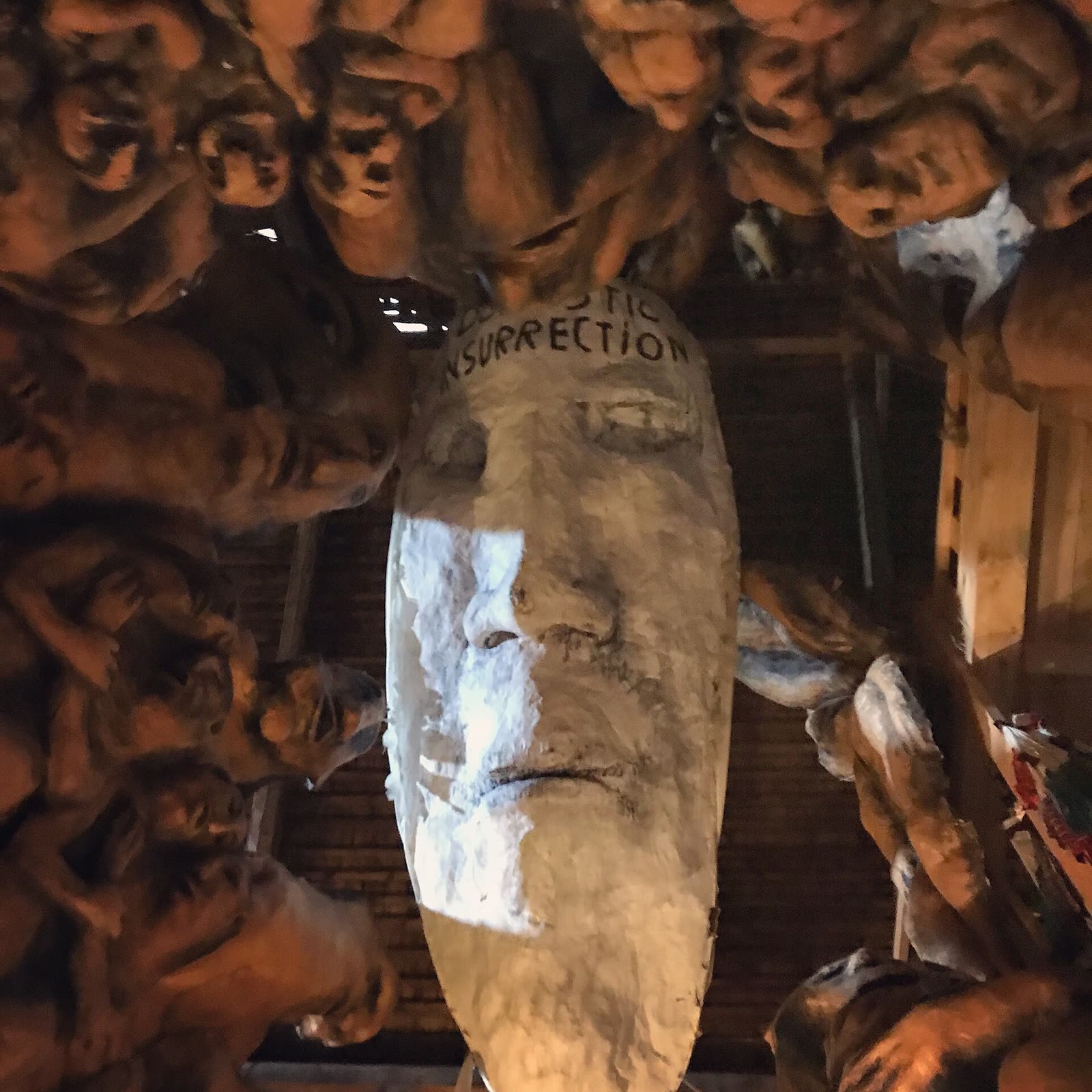
The farm’s 19th-century barn became the Bread and Puppet Museum, “a massive accumulation of the puppets, masks, paintings and graphics” of the company, 25 miles south of the Canadian border. Many of its figures are the masks of Bread and Puppet’s mask theatre.
Elka Schumann, born in 1935 and a granddaughter of Scott Nearing, ran the museum and kept the archive. The company’s memorial says “she was the glue that held the whole enterprise together behind the scenes of Peter’s manic creative energy.” VTDigger’s 2021 obituary of Elka Schumann quotes the puppetry scholar John Bell calling her Peter’s “first and best critic and adviser”. She died on August 1, 2021.
Peter Schumann’s Bread and Puppet and the Bay Area
Chris Hardman met the company at Goddard around 1970. By Robert Hurwitt’s 1985 account, “Hardman dropped out of college and worked with Bread and Puppet for the next year, following the company to Coney Island, where he spent the summer as a carny, painting and designing a funhouse.” Esquire in 1986 was more modest, calling it a “peripheral involvement”.
Hardman carried masks and pageants west to Snake Theater’s masked productions, and Snake’s other half became Laura Farabough’s Nightfire Theatre.
| Year | Event |
|---|---|
| 1963 | Name adopted for the Delancey Street loft company, New York |
| 1968 | Fire acclaimed at Nancy, France; Schumann at a radical theatre festival in San Francisco |
| 1970 | Residency at Goddard College and Cate Farm; first Domestic Resurrection Circus |
| 1974 or 1975 | Move to the Glover farm; the barn becomes the museum |
| 1979 | The Cheap Art bus |
| 1984 | Bread and Puppet Press named |
| 1998 | Last Domestic Resurrection Circus |
| 2021 | Elka Schumann dies, August 1 |
The fullest short history is the Verso encyclopedia entry on Bread and Puppet, which notes that the company “continued into at least the third decade of the twenty-first century as one of the oldest non-profit theater groups in the United States.” For the forms it helped shape, see Antenna’s guide to new theater forms.
Frequently asked questions
Why is it called Bread and Puppet?
The company handed out Peter Schumann’s sourdough bread at its puppet shows, because, in his words, “our bread and theater belong together.”
What was the Domestic Resurrection Circus?
A free two-day outdoor pageant and circus held each summer from 1970, in Glover, Vermont, from the mid-1970s, through 1998, drawing audiences in the tens of thousands.
Why did the circus end?
Schumann ended it in 1998 after an audience member died in one of the crowded campgrounds next to the farm. Smaller weekly summer shows replaced it.
What is Bread and Puppet Cheap Art?
A practice begun in 1979, when the company filled an old school bus with small paintings on scrap materials and sold them in nearby towns for 10 cents to 10 dollars.