The History of the San Francisco Mime Troupe, from 1959 to Today
For more than sixty years, crowds in San Francisco’s parks have watched a company called the Mime Troupe talk, sing and argue. The history of the San Francisco Mime Troupe runs from silent late-night pieces in 1959 to a free touring musical in 2026, by way of an arrest, a Tony Award and a long experiment in running a theatre as a collective.
Quick answer
Why is it called the Mime Troupe if the actors talk?
Because it began silent. R.G. Davis founded it in 1959 as “an experimental project of the Actors’ workshop,” and its first works were “silent, (but not pantomime) avant-garde pieces.” By the early 1960s it had turned to spoken commedia in the city’s parks, and it has been a talking, singing company of political satire ever since.
Silent beginnings (1959-1961)
SFist describes the first shows in ordinary indoor theaters “at the 11 p.m. Sunday night slot, when ‘respectable’ shows had already finished.” The troupe’s own history says those early pieces are what “today would be called performance art,” part of the wider scene in the history of San Francisco performance art.
Commedia in the parks (1962-1964)

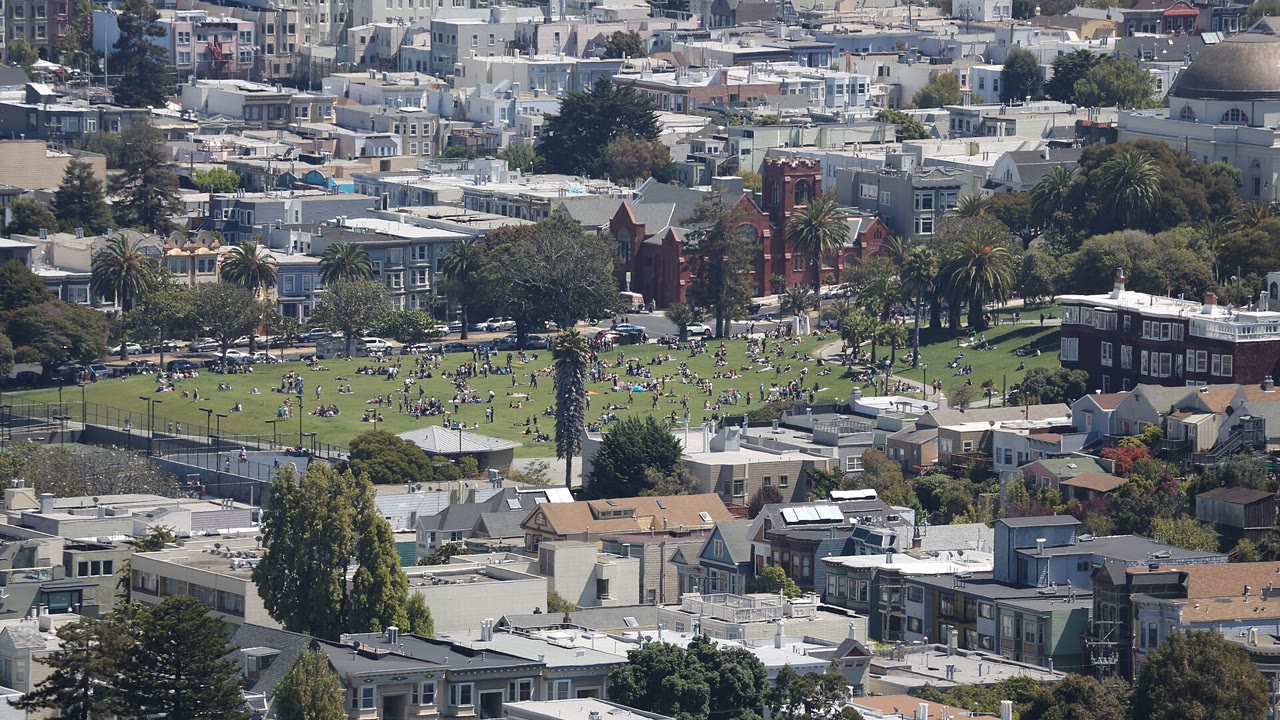
“By the early sixties, the SF Mime Troupe began performing spoken plays with character archetypes drawn directly from the Commedia dell’Arte.” In 1962, SFist says, the company “started performing outdoors in Washington Square Park with their 1962 production of The Dowry and took on the name San Francisco Mime Troupe.” Other accounts place its first park show elsewhere that year.
The parks department “had to read and approve the scripts,” and in August 1963, as Mission Local’s history of the troupe at fifty recalls from the Chronicle, the Recreation and Park Commission had to decide whether the troupe “might not be a little too sexy.” It “voted unanimously to let the show go on, with the proviso that if spiciness ever drifted unhappily into sexiness the Mime Troupe would be silenced.”
1965: an arrest, a benefit, a touring show
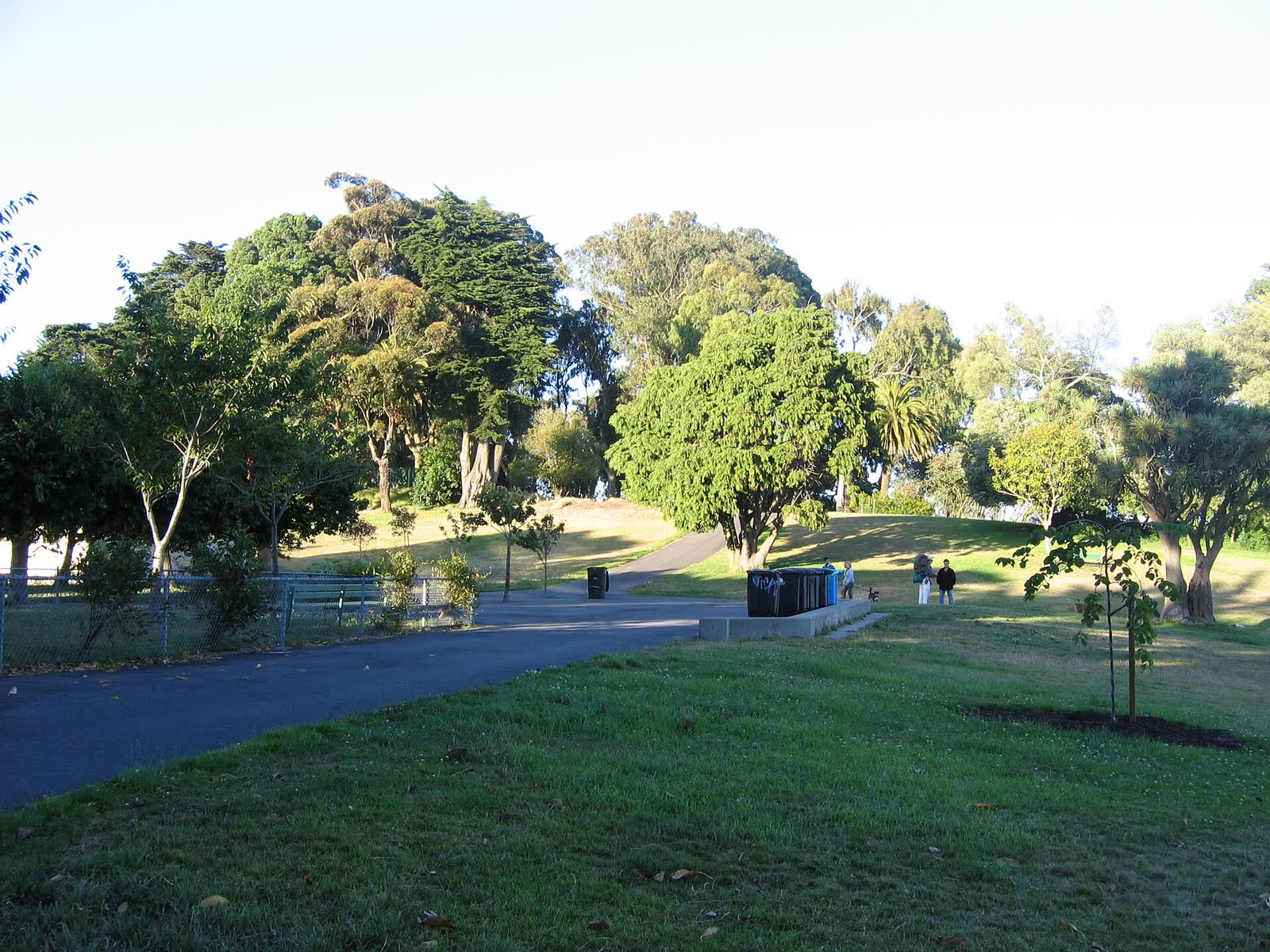
In 1965 the commission revoked the troupe’s permit on grounds of obscenity. KRON-TV’s silent news film from August 7, 1965, now at SF State, shows the troupe “performing scenes from their adaptation of the 16th-century play Il Candelaio in Pacific Height’s Lafayette Park,” and Davis being arrested. The rest is told in the 1965 arrest and the court case that followed.
Bill Graham, the troupe’s manager, staged benefits for its legal costs in late 1965 that launched his career as a promoter. That year Davis, Saul Landau and a racially mixed cast also made A Minstrel Show, or Civil Rights in a Cracker Barrel, and with SNCC sponsoring dates around the country, “the Troupe began its life as a touring company.”
Diggers, Vietnam and an Obie (1966-1968)

The Digger Archives say “The Diggers had evolved out of the radicalizing maelstrom that was the San Francisco Mime Troupe,” carrying free performance from the parks into the streets of the Haight. Peter Coyote joined the troupe in these years.
In 1967 it toured midwestern campuses with L’Amant Militaire, an old anti-war comedy updated to take on the Vietnam War, and the troupe won a special Obie in 1968. A Des Moines critic called the show “shocking”, “unpatriotic” and “blasphemous”, before confessing “I don’t know when I’ve enjoyed an evening of theater more.”
The adaptation, from Carlo Goldoni’s comedy, was by Joan Holden, and Reed Magazine’s obituary of Joan Holden says it “helped establish Joan as the artistic and political voice of the Mime Troupe.”
A collective of writers (1969-2000)
Davis left in 1969 or 1970 (accounts differ), and the company became collectively run: it “committed itself to being run by its workers.” The way it makes plays together is covered in how the troupe writes collectively.
Holden was its playwright from 1967 to 2000. “By 1970, she had written her first original play, the feminist melodrama The Independent Female, or A Man Has His Pride,” and her rule was “if you can’t slay the dragon, make him look silly.” Spain ’36 (1986) began when an old man in a Tenderloin hotel asked her to “write a play about me? I fought in the Spanish Civil War.”
The Tony and the touring years (1987 onward)
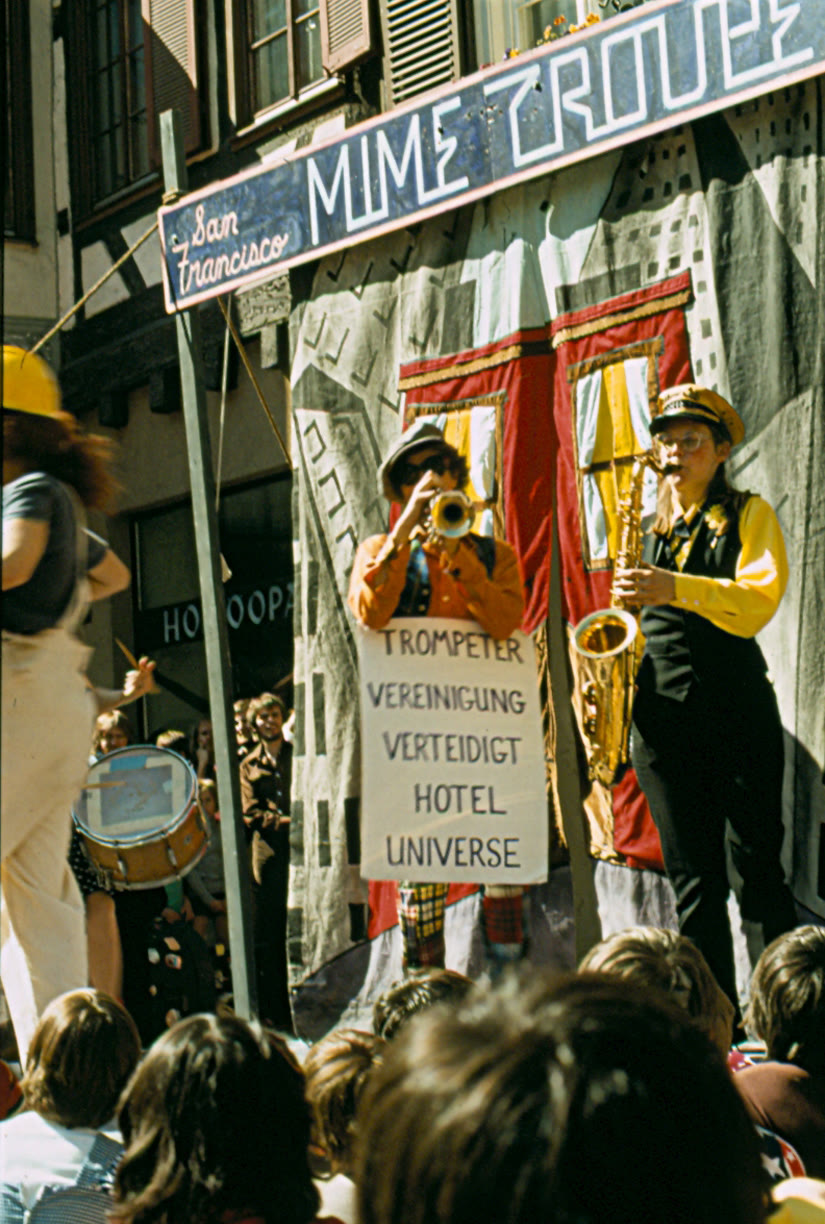
“In 1987, the Troupe’s Brechtian style of guerrilla theatre earned them a special Tony Award for Excellence in Regional Theater.” Obies also came for The Dragon Lady’s Revenge and for Seeing Double (1989). The troupe played festivals in Israel, Canada, Hong Kong, Korea, Belgium and Germany, yet “the Bay Area parks still remain the Troupe’s home stage.” Its holiday-weekend shows in Dolores Park go back to at least the 1980s, SFist reports.
An actor between two companies: Ed Holmes

One actor links the troupe to Antenna Theater. Ed Holmes told the Alameda Post in 2026: “Actually, I didn’t become a Mime Trouper until ’86. I survived 28 years with them until my knees, back, and ability to sit through another collective meeting gave out.” Before that, he said, came the Berkeley Mime Troupe, the Fratelli Bologna and “Chris Hardman’s Antenna Theater, avant garde experimental shows for five years.”
In 1985 Robert Hurwitt saw audients in Antenna’s Fairplay “following the lead of former Bologna Brother Ed Holmes,” the scene told in Fairplay’s sailors on leave. Holmes also performed in Antenna’s Russia, scored by Earwax Productions and Jim McKee. He was still appearing for Antenna in 1991, as Caveat Emptor’s emcee.
The two companies were contemporaries, not influences on each other. Hurwitt found Hardman “not in the usual apolitical mold”: “I’m a political person,” he said at Antenna’s sound studio in the Mission District, where the troupe also made its home. “I can’t just be abstract.” Yet the troupe played free to park crowds, while Antenna, as the Antenna Theater chronology shows, sent audiences through sets on headphones.
Satire in the 2000s, the fiftieth and the pandemic

Holmes “looked just like Vice President Dick Cheney,” SFist notes, and played him in four shows from 2001 to 2007, beside Velina Brown as Condoleezza Rice, in satires “in which a W. Bush character never once appeared.” Michael Gene Sullivan, who joined as an actor in 1988, became resident playwright in 2000, with scripts including GodFellas. The troupe turned fifty in 2009, and in the pandemic it turned to radio plays.
Losses and a new season
Joan Holden died on January 19, 2024, a day after her 85th birthday, and R.G. Davis “died on June 21 at his home in San Francisco. He was 92,” The New Fillmore reported in 2026. In 2025, the troupe says, it could not afford a full season, but in 2026 it toured Wreckage: A Musical Tragicomedy, free, through the Bay Area.
The history of the San Francisco Mime Troupe in dates
| Year | Event |
|---|---|
| 1959 | Founded by R.G. Davis; silent, late-night pieces |
| 1962 | Commedia in the parks (The Dowry) |
| 1963 | The parks commission lets the shows go on |
| 1965 | Permit revoked; Davis arrested in Lafayette Park; A Minstrel Show tours |
| 1967-1968 | L’Amant Militaire tours; a special Obie |
| 1969 or 1970 | Davis leaves; the company becomes a collective |
| 1986 | Spain ’36; Ed Holmes joins |
| 1987 | Special Tony Award for Excellence in Regional Theater |
| 2000 | Holden retires; Sullivan becomes resident playwright |
| 2009 | Fiftieth anniversary |
| 2024 | Joan Holden dies |
| 2026 | R.G. Davis dies; Wreckage tours the Bay Area |
Frequently asked questions
Who founded the San Francisco Mime Troupe?
R.G. Davis, in 1959, as an experimental project of the Actors’ Workshop. He left in 1969 or 1970 and died in June 2026, aged 92.
Did the Mime Troupe win a Tony?
Yes: a special Tony Award for Excellence in Regional Theater in 1987.
Who wrote its plays?
Since about 1970 the company has written collectively. Joan Holden was its playwright from 1967 to 2000, and Michael Gene Sullivan became resident playwright in 2000.
Are the Mime Troupe’s free shows in the park still running?
Yes. After a reduced 2025, the troupe toured Wreckage free through the Bay Area in summer 2026.