Bertolt Brecht and Epic Theatre: The Alienation Effect, the Learning Plays and the Berliner Ensemble
Bertolt Brecht wanted an audience that thinks rather than one that weeps along. His epic theatre interrupted its own stories with songs, captions and bright light, and his learning plays went further, doing without spectators altogether. This guide follows the theory from Augsburg to the Berliner Ensemble.
Quick answer
What is Bertolt Brecht’s epic theatre?
Epic theatre is Bertolt Brecht’s theatre of judgement. Instead of drawing spectators into a story, it interrupts the action with songs, captions and visible lights, so that the audience watches critically. His alienation effect made the familiar strange. He tested the ideas in the learning plays and put them into practice at the Berliner Ensemble from 1949.
From Augsburg to The Threepenny Opera
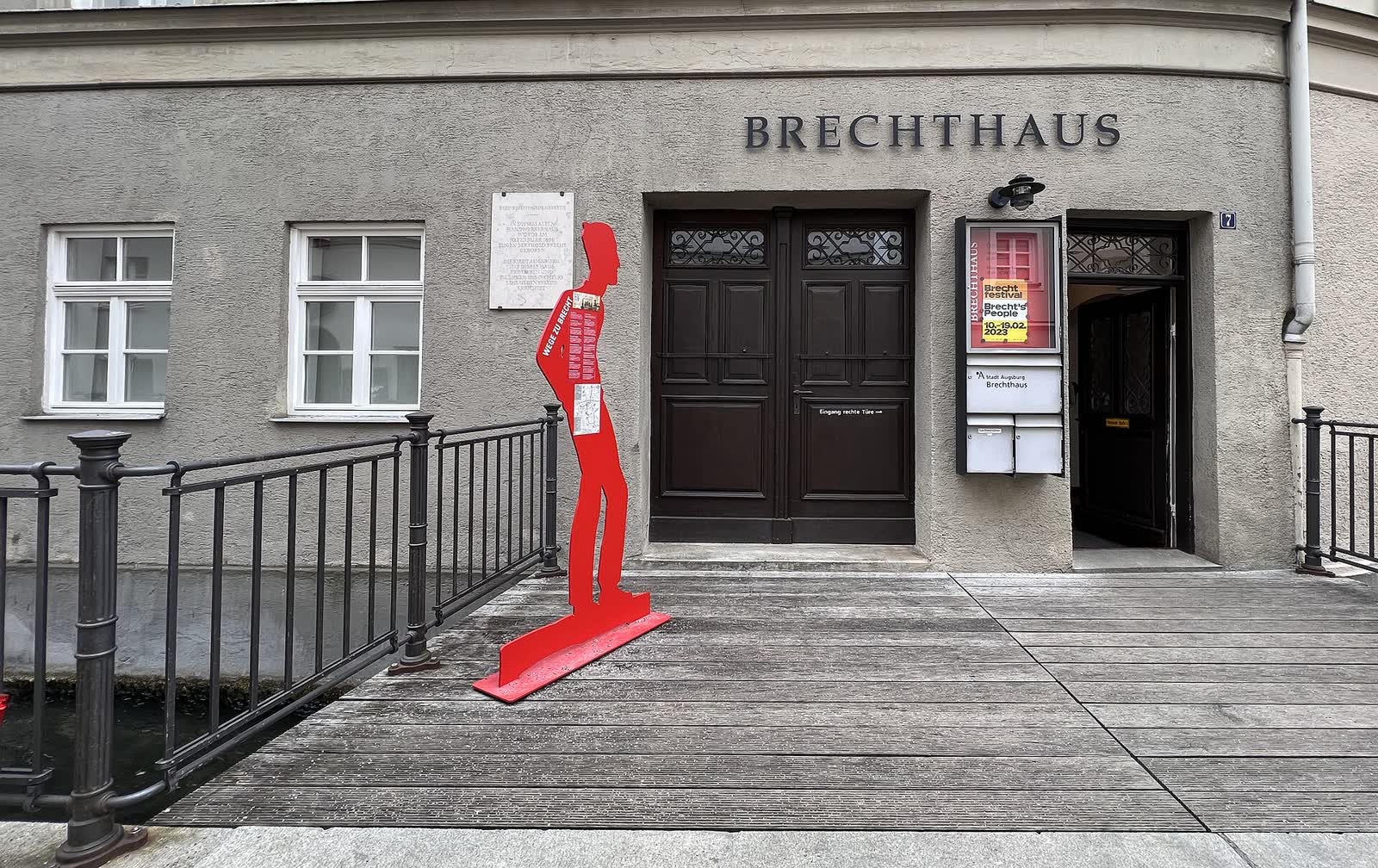
Brecht was born in Augsburg on February 10, 1898. The Brechthaus video guide gives him the line “It was here in this house, ‘Auf dem Rain 7’, that I was born.” EBSCO notes that “In 1926, Brecht embraced the socioeconomic theories of Karl Marx.”
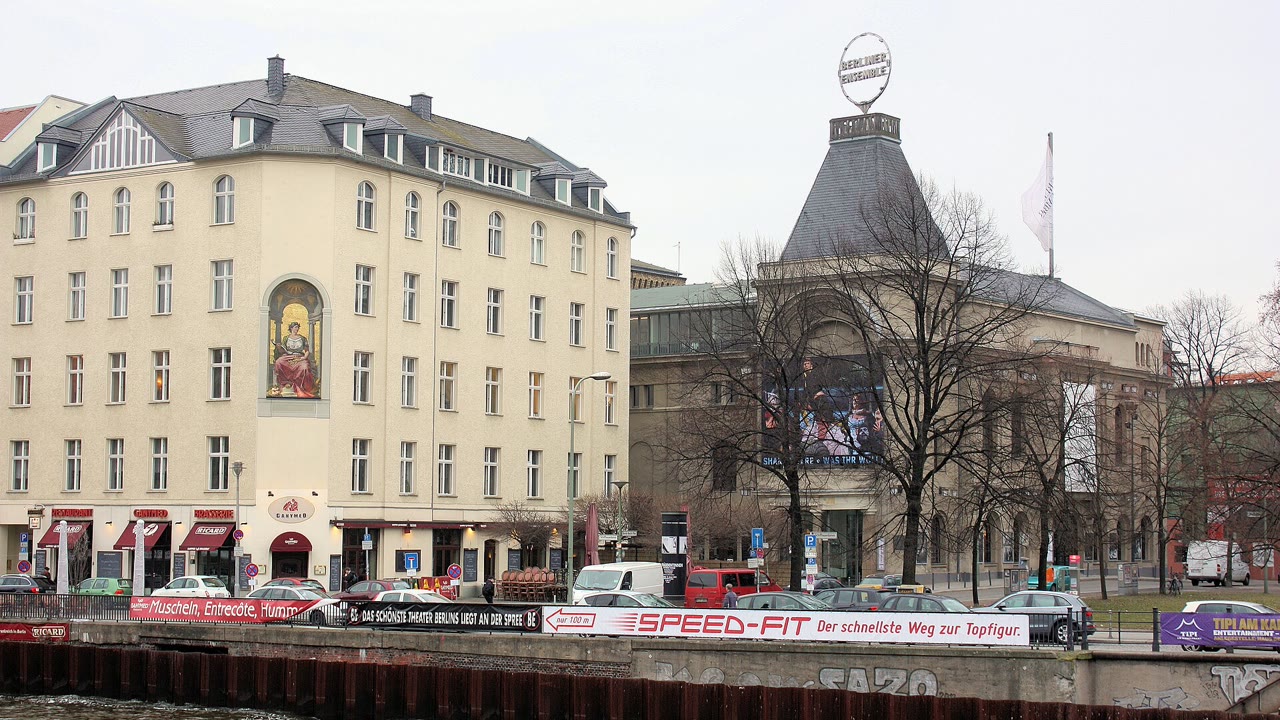
His breakthrough came at the Theater am Schiffbauerdamm in Berlin. In 1928 Ernst Josef Aufricht opened his tenure there with the world premiere of The Threepenny Opera by Brecht and Kurt Weill, which, in the Berliner Ensemble’s history of the Theater am Schiffbauerdamm, “became the greatest theatrical success of the Weimar Republic.”
What “epic” meant
The word was not Brecht’s invention. EBSCO says “the term was coined in the early 1920s,” and the director Erwin Piscator was already using captions, projections, musical numbers and narrators, calling his techniques “epic dramas.” Brecht’s view of Piscator is in our guide to Piscator, Brecht and the history of total theatre.
Brecht also called it instructive theatre, “since it sought to teach its audience.” In his 1930 notes to the opera Mahagonny he set out the difference as a two-column table. The version below is a working translation of the German, not a published one.
| Aspect | Dramatic form | Epic form |
|---|---|---|
| The spectator | Implicates the spectator in an action | Makes him an observer |
| Activity | Uses up his activity | Arouses his activity |
| Feeling | Allows him feelings | Forces decisions from him |
| What he gains | Experiences | Knowledge |
| Position | Placed inside the plot | Set against it |
| Emotion | Feelings are preserved | Driven on to insights |
A German course page at Case Western warns against a common misreading of the table: in practice Brecht used dramatic means as well as epic ones.
The Brecht alienation effect
The best-known device has an awkward English name. EBSCO describes the Verfremdungseffekt, or alienation effect, as something that “compelled audiences to acknowledge the play’s illusions.” Brecht flooded the stage with white light, left the lamps in view, used projected captions or handwritten signs, and asked actors “to remain disengaged from the characters they were playing.”
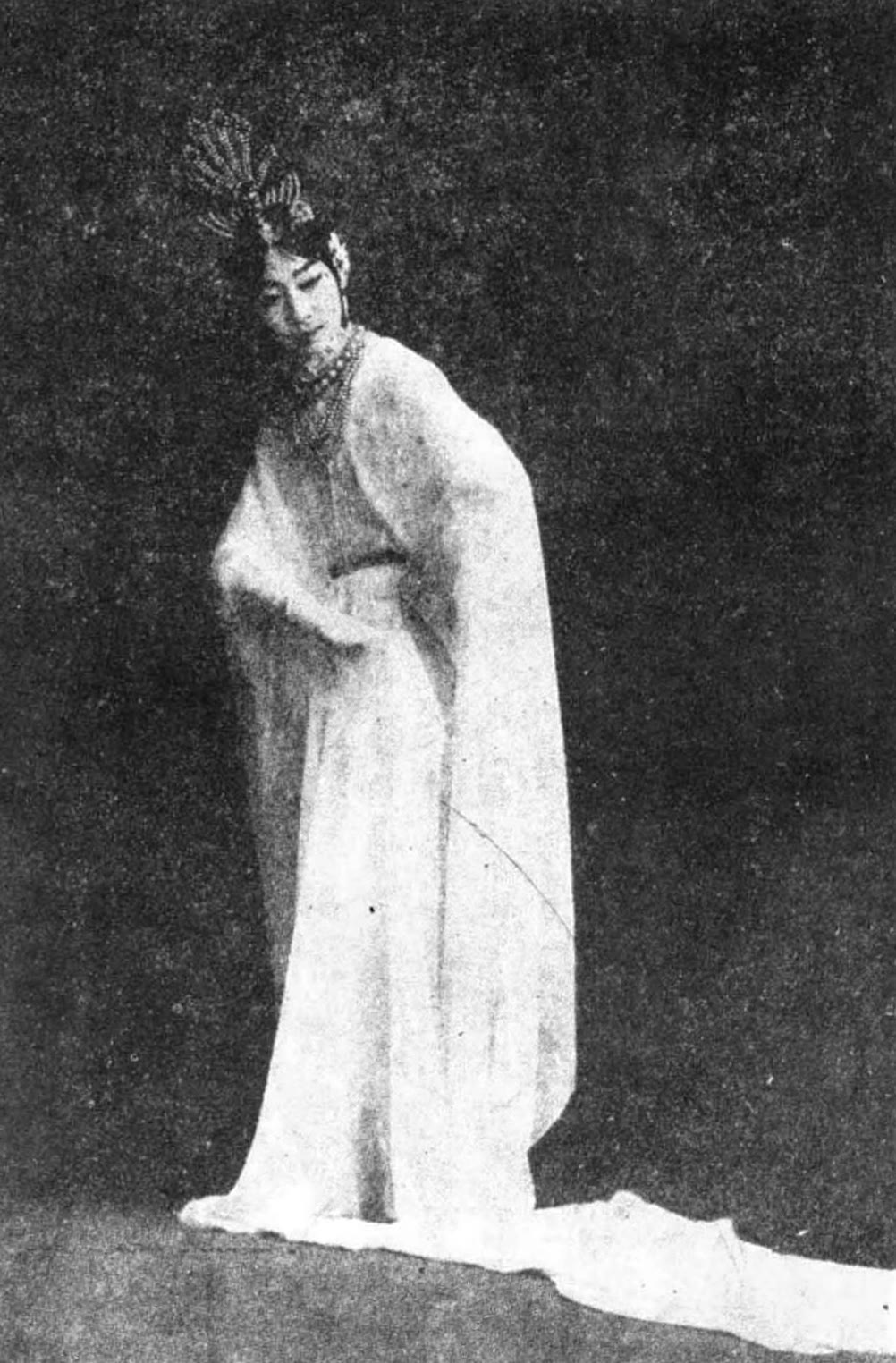
Letizia Fusini, in The Theatre Times, argues that “estrangement” is the better word, since alienation “is exactly what Brecht intended to prevent.” The term itself came late. Ronnie Bai’s article on Brecht and Mei Lanfang in Comparative Drama dates Brecht’s formal use of it to after he saw Mei Lanfang demonstrate Chinese theatre in Moscow in 1935, after which he wrote “Alienation Effects in Chinese Acting” (1936).
Brecht wrote that “The Chinese actor achieves the A-effect by being seen to observe his own movements.” Fusini adds that his ideas “were already fully developed” before the trip.
The Brecht learning plays: theatre without spectators
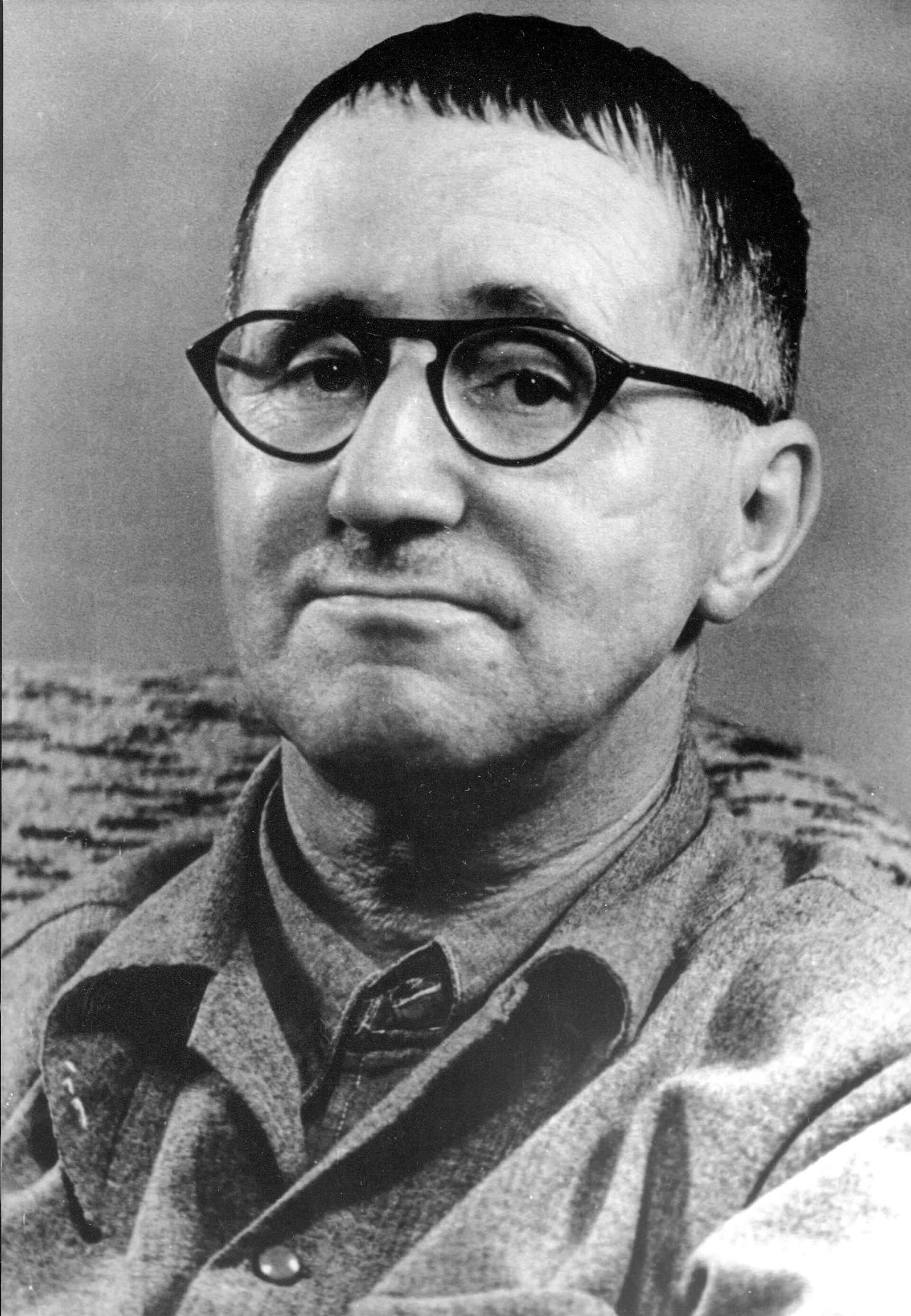
Between 1929 and 1935 Brecht wrote a set of learning plays, or Lehrstücke, which a 2019 study describes, quoting him, as “pedagogical experiments using theatrical elements but not requiring a real theatre.” Brecht put the idea plainly: “The learning-play instructs by being acted, not by being witnessed.”
In Sruti Bala’s translation of Reiner Steinweg’s collection of Brecht’s statements, the form “dissolves the system of actor and spectator. It knows only more actors, who are students at the same time.” Even here, Brecht insisted, “The exploration of the Verfremdungseffekt, the effect of alienation, is indispensable.”
Exile and HUAC
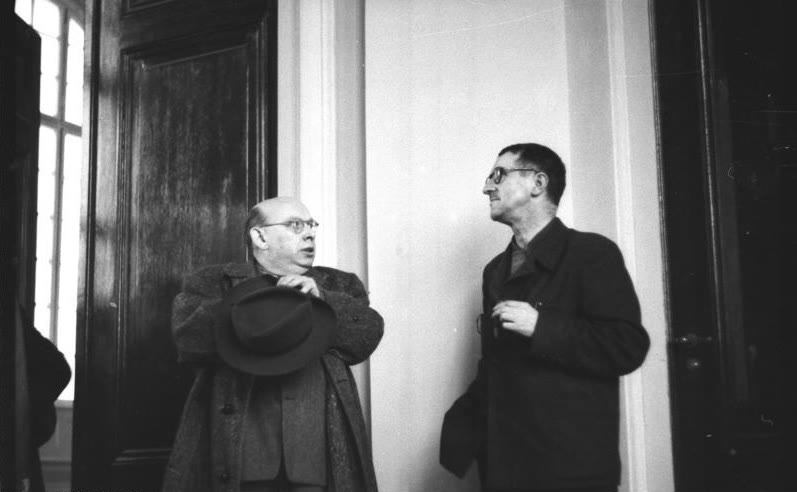
Under the Nazis Brecht was forced to leave Germany, and he wrote many of his best-known plays in exile, among them Life of Galileo and The Good Person of Szechwan. Mother Courage and Her Children was written at the end of the 1930s and first staged in 1941. In 1943 he worked with Fritz Lang and Hanns Eisler on Hangmen Also Die!, his only Hollywood script.
In October 1947 he was called before the House Un-American Activities Committee. Open Culture notes that he was “the only member of the group who chose to answer questions,” and he told the committee he had never been a party member. To Eisler he wrote: “I simply had to obey my six lawyers, who advised me to tell the truth and nothing else.”
A short Berliner Ensemble history
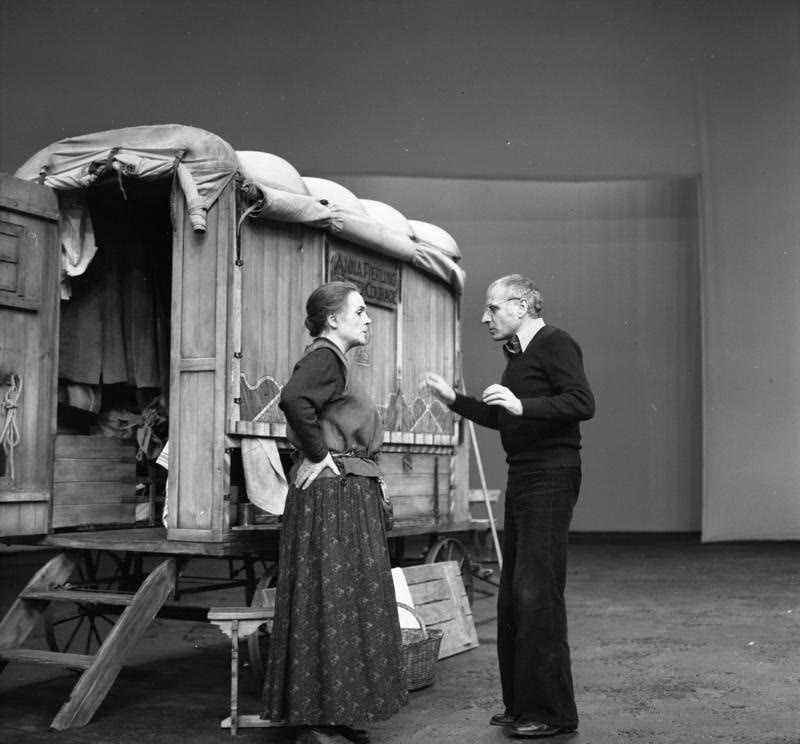
Brecht returned to Germany in 1949. The Berliner Ensemble was “originally founded in 1949 without a venue of its own,” housed at first at the Deutsches Theater, with Helene Weigel running the company and Brecht directing. Its first production, EBSCO says, was Mother Courage.
In 1954 the company took over the Theater am Schiffbauerdamm, where The Threepenny Opera had opened. Picasso’s dove of peace hung before the curtain, and the revolving stage ran “on 32 wheels from a Soviet T-34 tank” that Weigel had obtained from the occupying forces. That year Mother Courage won first prize for best play and best production at the Theatre Festival of Nations in Paris.
Brecht died in 1956. Weigel’s verdict on the company is kept on its history page: “We weren’t what they wanted, but they didn’t want to lose what they had with us either.”
An opposite route: Antenna Theater
No critic called Antenna Theater Brechtian. Chris Hardman named Brecht once, in Esquire in 1986, as his opposite: he imagined an audience “arriving at a moral position not as an observer in a Brecht show, where we’re analyzing the behavior of somebody else, but where we’d be suddenly analyzing our own behavior.” The same sentence anchors our post on Artaud’s Theatre of Cruelty and Antenna.
Antenna’s route was absorption. In Artery, the Walkman maze, each audient, Antenna’s word for a listener who acts, walked alone, guided by a voice on headphones. Esquire’s Steve Erickson had doubts: “One can argue that the audience is actually rendered more passive than active by a Hardman piece.” Hardman’s reply: “But they’re not wearing electrodes, after all.”
Critics found a distance of Antenna’s own. In 1983 Stephanie von Buchau welcomed the attempt “to involve our senses in the theatrical process while maintaining an objective distance,” and in 1985 Bernard Weiner worried that Russia’s “formalistic approach may be keeping the issues too ‘cool,’ too remote.” Brecht’s learning plays had already dropped the spectator, and Paul Lenti wrote of Artery that “Each individual becomes his own show.” That pairing is this Journal’s, not a claim of influence.
| Aspect | Brecht’s epic theatre | Antenna’s Walkman theatre |
|---|---|---|
| The audience | Made an observer | Not an observer, but the actor |
| Goal | Judgement and change | Judging your own behaviour |
| Means | Songs, placards, projections, visible lights | Headphones, masks, taped interviews, projections |
| Without spectators | The learning plays | Each audient alone in a maze |
Frequently asked questions
What is the alienation effect?
Brecht’s Verfremdungseffekt: devices that remind spectators they are watching a play, so that they judge it critically. Some writers prefer the translation estrangement.
What is a Brecht learning play?
A play written to teach its performers. In Brecht’s words it instructs by being acted, not by being witnessed.
When was the Berliner Ensemble founded?
In 1949, at first housed at the Deutsches Theater. It moved into the Theater am Schiffbauerdamm in 1954.
Was Antenna Theater Brechtian?
No critic said so. Hardman defined his aim against a Brecht show: he wanted audiences to analyse their own behaviour, not someone else’s.
More from the century’s experiments: Cabaret Voltaire and Zurich Dada, the Mills Tape Music Center in Oakland and Antenna Theater’s production chronology.