Futurist Synthetic Theatre: Marinetti’s Seconds-Long Plays and Russolo’s Noise Machines
In 1915 three Italian Futurists announced a theatre of plays lasting a few minutes, or a few seconds. Futurist synthetic theatre came with its own sound, Luigi Russolo’s noise machines, and its own openly stated purpose: war. Here are the manifestos, the machines and what survived of them.
Quick answer
What is Futurist synthetic theatre?
Futurist synthetic theatre was a form of very short performance announced in a 1915 manifesto by F.T. Marinetti, Emilio Settimelli and Bruno Corra. Its “syntheses” compressed a play into a few minutes or seconds, rejected plot and technique, and aimed to provoke the audience, alongside Luigi Russolo’s noise-making intonarumori.
Futurism takes the stage
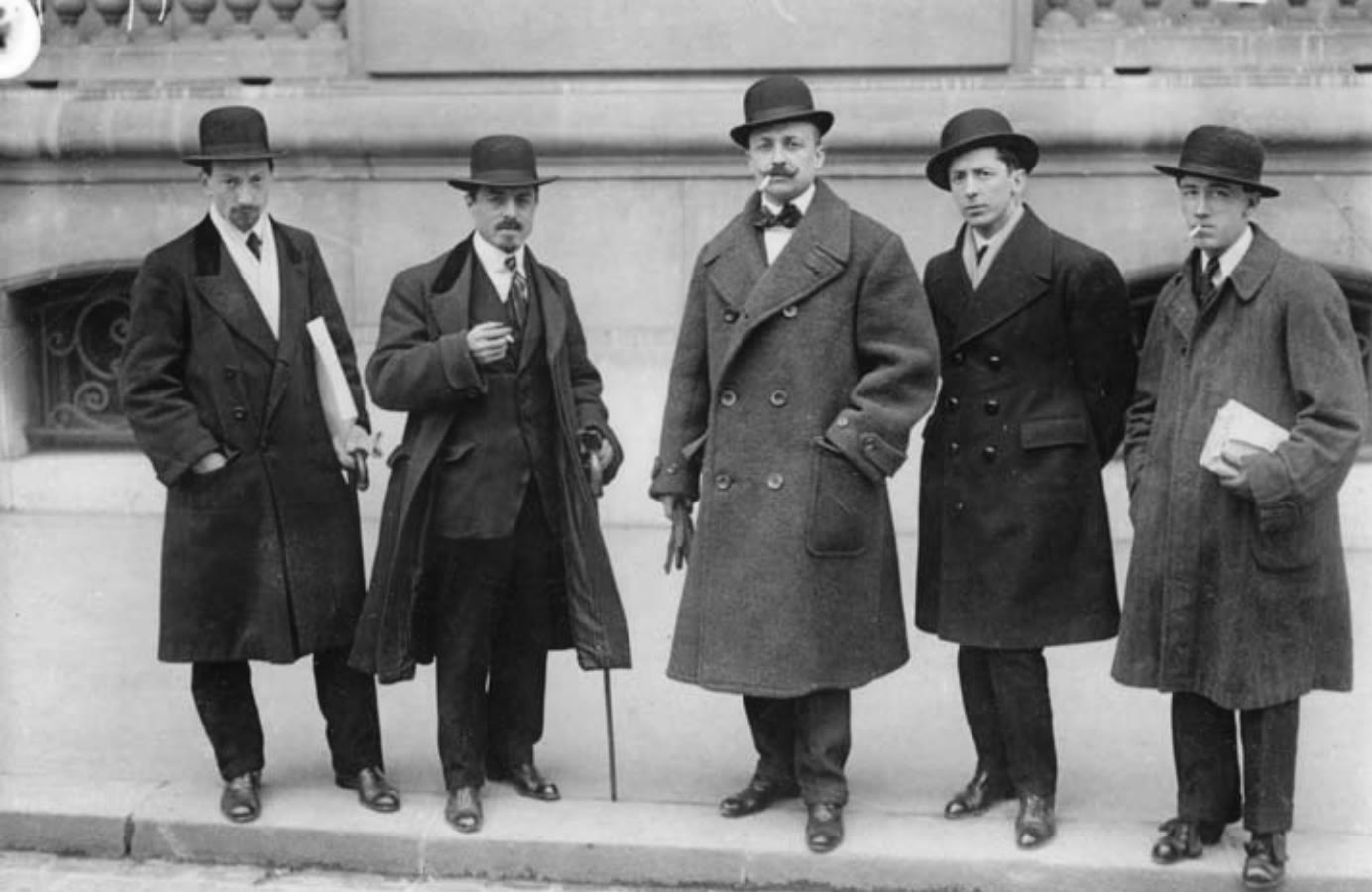
Futurism began as a manifesto. LTM Recordings’ notes record that in February 1909 F.T. Marinetti announced that Futurism would include “sound and noise in the armoury of the war against traditionalism,” and that he declared war “the sole hygiene of the world.”
The stage came quickly. “1913 was the year of the Futurist Evenings,” writes Elena Gigli in an essay held by the Castello di Rivoli museum; tied to exhibitions at Rome’s Teatro Costanzi, the Futurists “staged rapid, improvised future events.” That November their Variety Theatre manifesto, printed in the Daily Mail, praised variety as “the crucible in which the elements of a new sensibility that is being prepared are set to boil.”
The Futurist theatre manifesto of 1915
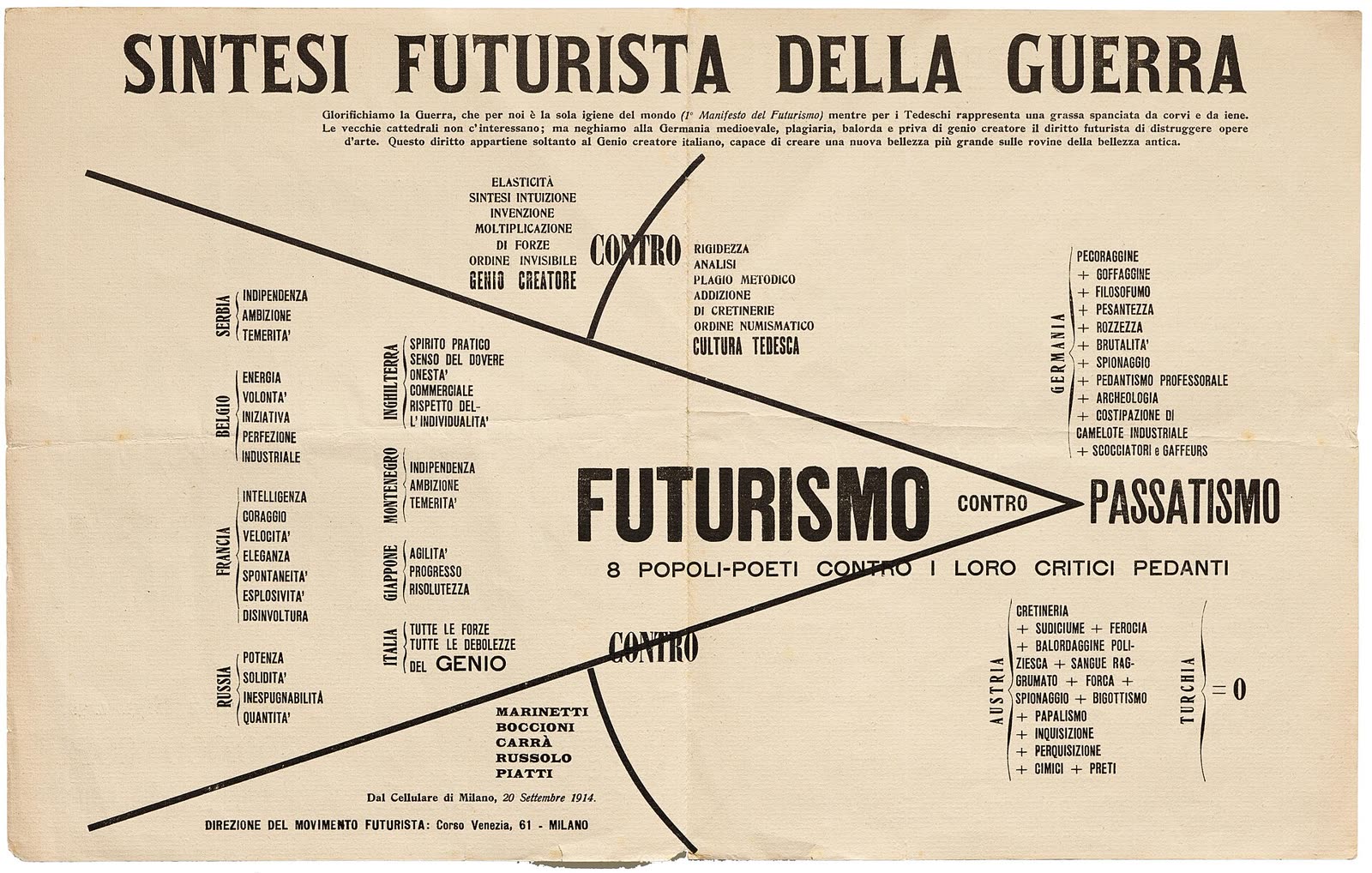
UbuWeb’s English text of the Futurist Synthetic Theatre manifesto is signed by Marinetti, Settimelli and Corra and dated 18 February 1915; Gigli’s essay dates it January 11, 1915. Its purpose is plain. “As we await our much prayed-for great war,” it begins, and it argues that “THE ONLY WAY TO INSPIRE ITALY WITH THE WARLIKE SPIRIT TODAY IS THROUGH THE THEATRE,” since “ninety percent of Italians go to the theatre.”
The old stage was “too prolix, analytic, pedantically psychological, explanatory, diluted, finicking, static.” The new one would be “Synthetic. That is, very brief,” compressing “into a few minutes, into a few words and gestures, innumerable situations, sensibilities, ideas, sensations, facts, and symbols.” Acts could be “only a few seconds long.”
The authors boasted that eleven syntheses had been staged in crowded theatres in eight cities, from Ancona to Rome. Their samples include Paolo Buzzi’s The Futurist Prize, in which an artificial man with a cork leg and a glass eye wins by acclamation before the curtain falls. Every night, they promised, the theatre would be “a gymnasium to train our race’s spirit” for the war.
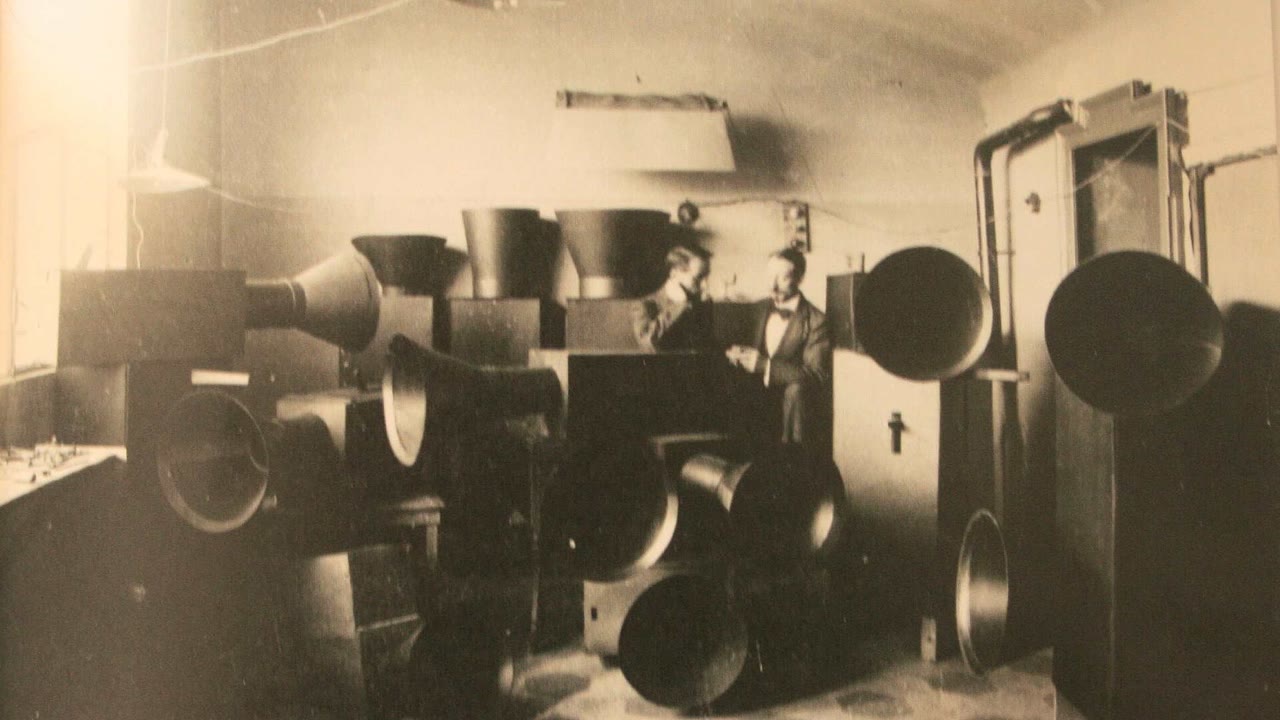
Luigi Russolo’s intonarumori and the art of noises
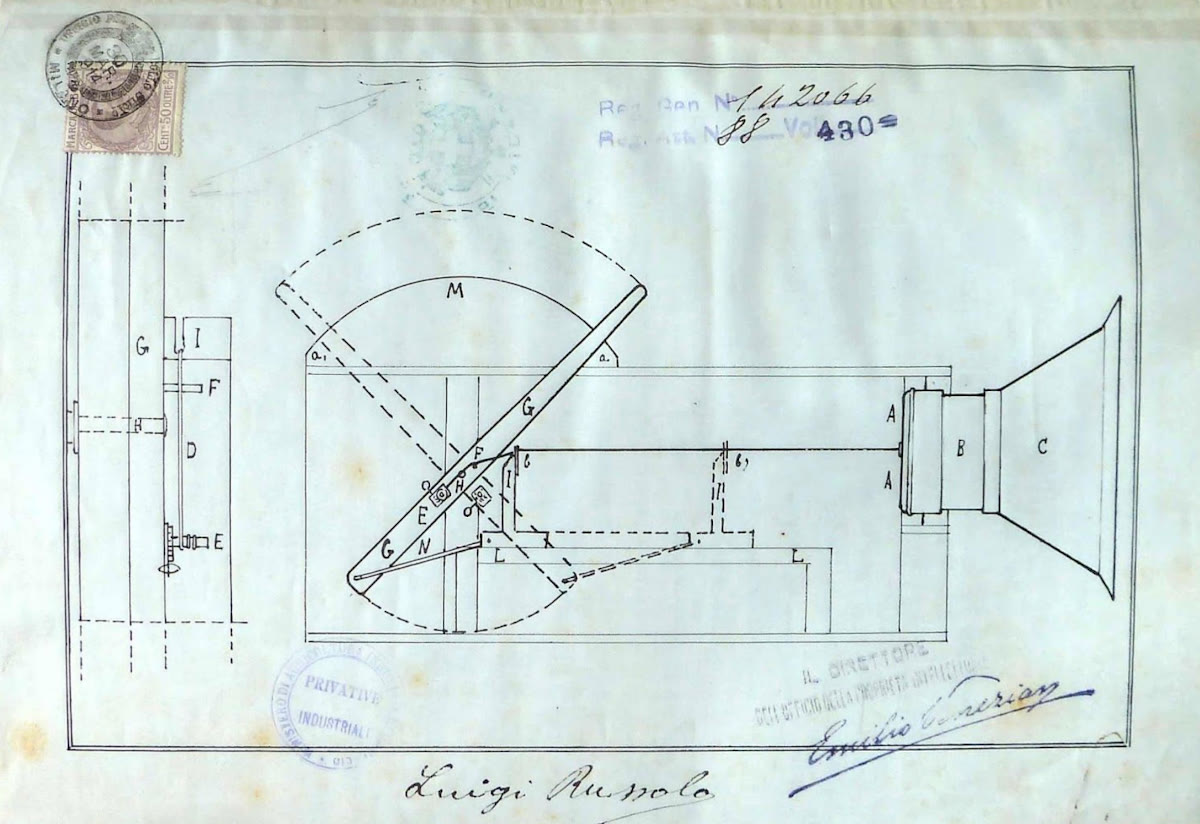
In March 1913 the painter Luigi Russolo published The Art of Noises as a letter to the composer Balilla Pratella. “Ancient life was all silence,” he wrote. “In the nineteenth century, with the invention of the machine, Noise was born.”
He proposed six families of noise, from rumbles and explosions to whistles, whispers, screeches, percussion and “Voices of animals and men.” He found more joy “in the combination of the noises of trams, backfiring motors, carriages and bawling crowds” than in Beethoven, and he was frank about his training: “I am not a musician.”
Exploders, cracklers and a riot in Milan
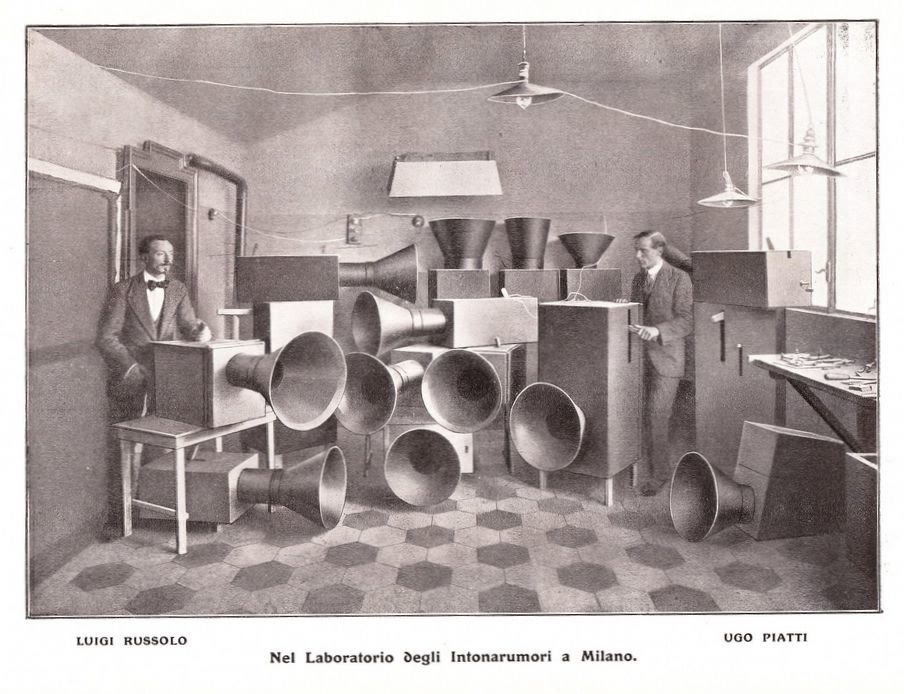
The first public demonstration, LTM says, came in June 1913 at the Teatro Storchi in Modena, where Russolo unveiled an exploder. By the spring of 1914 he and Ugo Piatti had built four types of intonarumori (the exploder, crackler, buzzer and scraper) and scores such as Awakening of a City.
The first massed concert, at the Teatro dal Verme in Milan on April 21, 1914, turned rough: “Missiles were thrown.” Marinetti compared it to “showing the first steam engine” to a herd of cows. In June 1914, according to a Cafe OTO listing, the noise players took a two-week residency at the London Coliseum, sharing the bill with acrobats and comedians.
Balla’s machines and Fireworks
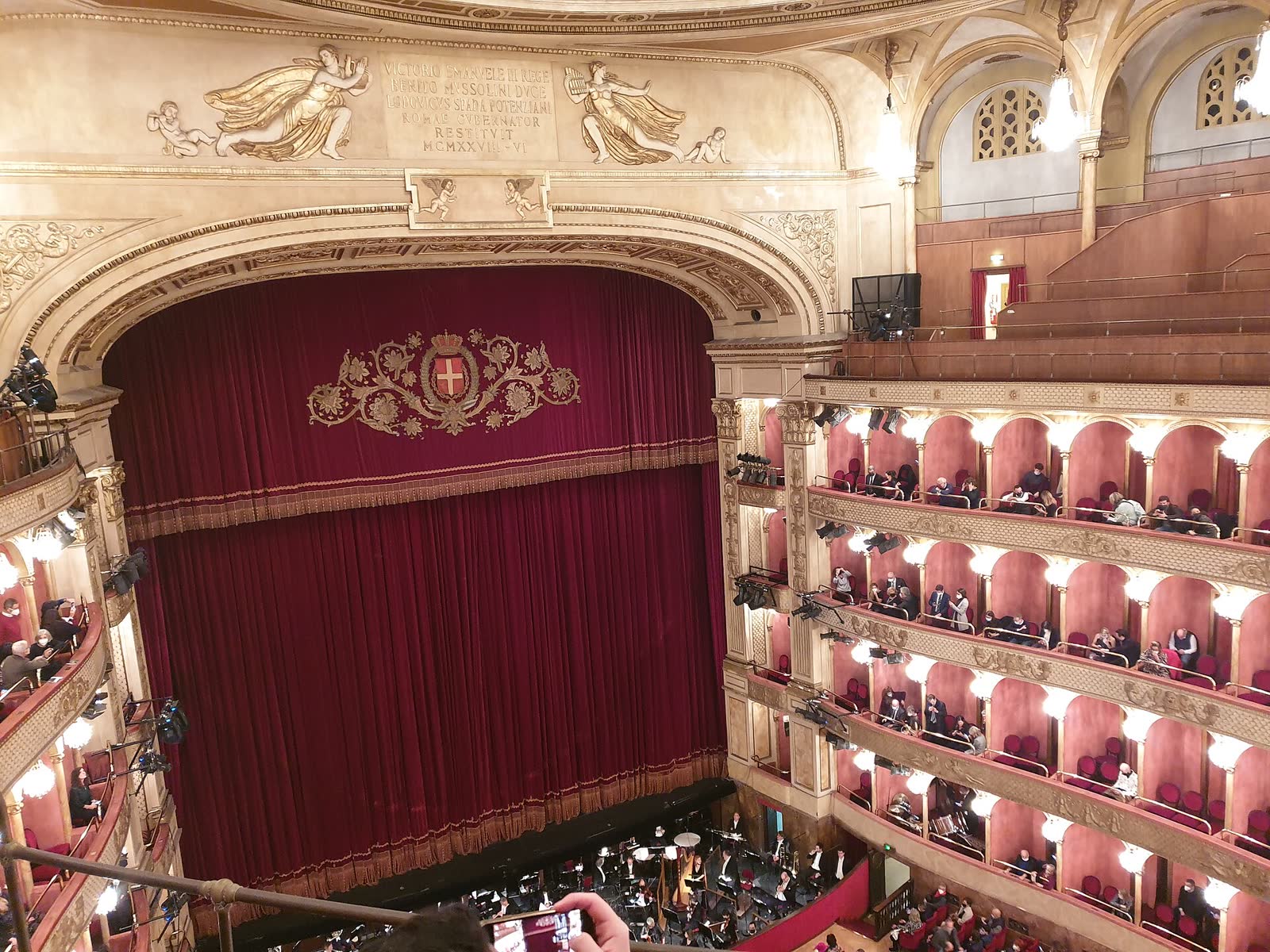
Giacomo Balla put noise on stage with people as machines. His Typesetting Machine, rehearsed once in Rome in 1916, called for twelve “machine-persons,” each making a sequence of noises. Gigli puts the difference neatly: Russolo “is the theoretician of noise-sound; Giacomo Balla went beyond theory to create pure sound and color-words.”
His Fireworks, set to Stravinsky for Diaghilev at the Teatro Costanzi in April 1917, had no dancers at all. The credits list “Performers: rhythms of colored lights,” and a preview by Sarfatti promised “neither painted sets nor people, but nothing other than shapes.” That idea runs through our history of theatre without actors.
For another painter who filled a stage with geometric forms, see Oskar Schlemmer’s Triadic Ballet, and for the larger dream of a complete stage, the history of total theatre.
What became of it
War did not wait for the theatre. In July 1914 Marinetti and other Futurists enlisted in a volunteer cyclist battalion, and Russolo suffered a serious head wound at Monte Grappa in 1917. Marinetti later joined Fascism.
In June 1921 Russolo staged a noise concert at the Théâtre des Champs-Élysées in Paris, from which a Dada faction led by Tristan Tzara was forcibly ejected; Tzara’s earlier nights are in Cabaret Voltaire and Zurich Dada. “No original intonarumori survive today,” LTM notes, “and most of Russolo’s Futurist scores are also lost.”
Noise intoners in San Francisco
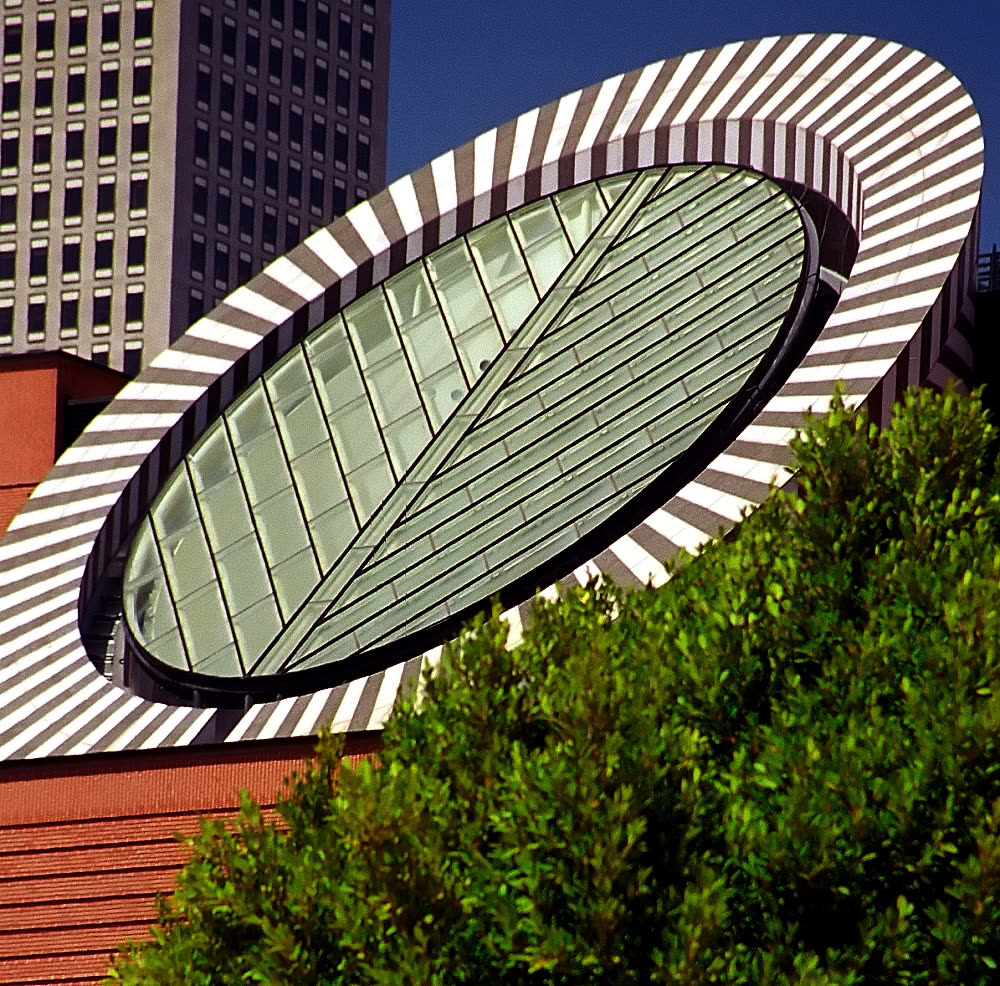
The sound came back in 2009. SFMOMA’s listing for Music for 16 Futurist Noise Intoners records a concert on October 16, 2009, with sixteen intonarumori recreated under Luciano Chessa, “a Bay Area-based composer and Russolo scholar.” They were reconstructions, not originals: EMPAC, which hosted their construction, says Chessa’s research made the ensemble “the first sonically accurate portrayal.”
New works for the instruments, by composers including Pauline Oliveros, were premiered at New York’s Town Hall as part of Performa 09.
Invading the audience: a parallel at Antenna Theater
No source says Antenna Theater drew on Futurism, so this is the Journal’s own comparison. The 1915 manifesto wanted stage action to “INVADE THE ORCHESTRA SEATS, THE AUDIENCE” and to sweep spectators “through a labyrinth of sensations.” Antenna’s walk-throughs later put each audient inside the action, and a critic compared the masks of Antenna’s Amnesia (1984) to Marinetti’s Futurism.
Bernard Weiner’s 1987 Chronicle review of Radio Interference describes a simultaneity the manifesto would have liked: “All the events are going on simultaneously, so not only can you see what your fellow ‘audients’ are doing in your own particular little environment, but you’re able to check out what the others are doing as they wander around. It’s like a 13-ring circus.”
The difference is the purpose. The Futurists built theatre as a gymnasium for war. Antenna’s Buy Some Time page names a “gigantic flaw in human nature”: that “we are definitively the only species that create machinery and poisons for the purpose of self-extermination.”
| Aspect | Futurist theatre, 1913-1917 | Antenna Theater, 1980s-1990s |
|---|---|---|
| Length | Syntheses a few seconds long | Scenes along a walk-through |
| Audience | To be invaded and provoked | Each audient inside the action |
| Simultaneity | Two settings at once | A “13-ring circus” of rooms |
| Machines | Noise intoners; machine-persons | Walkmans and headsets |
| On war | Theatre as training for war | War machinery as a human flaw |
Frequently asked questions
What were the intonarumori?
Hand-cranked noise instruments built by Luigi Russolo and Ugo Piatti from 1913 to produce explosions, howls, buzzes and hisses.
Do any original noise machines survive?
No original intonarumori survive. Sixteen reconstructions were played in San Francisco in 2009.
Why did the Futurists want theatre?
To prepare Italy for war. The 1915 manifesto argued that ninety percent of Italians went to the theatre, while only ten percent read books.
Was there Futurist theatre without actors?
Yes. Balla’s Fireworks (1917) listed its performers as rhythms of colored lights.
Next in this series: the Fluxus art movement, from Wiesbaden to the Flux-Labyrinth, and Antenna Theater’s production chronology.