Oskar Schlemmer’s Triadic Ballet: Costumes, Geometry and the Bauhaus Stage
More than a century after its premiere, the Triadic Ballet still looks strange: three dancers sealed inside geometric costumes, moving across yellow, pink and black stages with no story to tell. This guide follows Oskar Schlemmer’s Triadic Ballet from its first notes to its centenary, along with the Bauhaus stage he ran, and shows where the sources disagree.
Quick answer
What is the Triadic Ballet?
The Triadic Ballet is Oskar Schlemmer’s plotless dance in three acts, for three dancers in 18 sculptural costumes, first staged in Stuttgart in 1922. Its rigid geometric costumes decide how the dancers move. Schlemmer led the Bauhaus stage from 1923 to 1929, and the ballet survives in Gerhard Bohner’s 1977 reconstruction.
A painter who wanted to dance
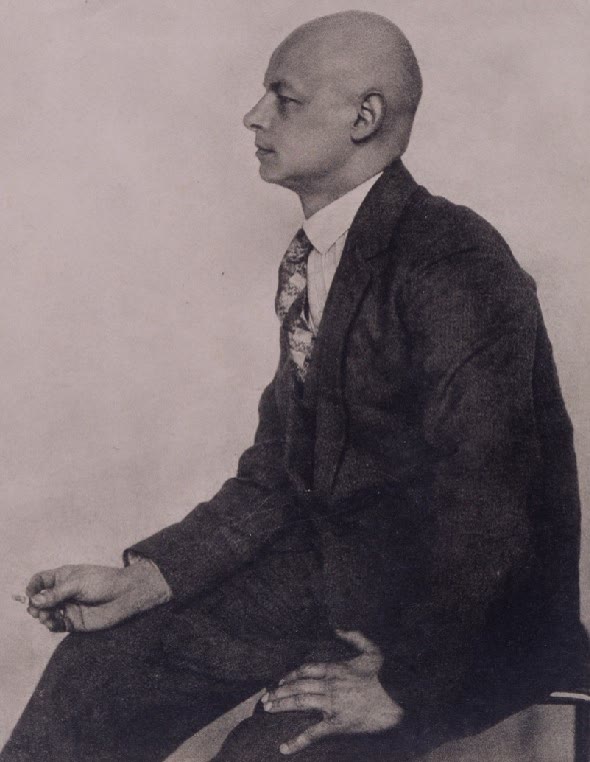
Schlemmer was born in Stuttgart on September 4, 1888. He trained in a marquetry workshop, became one of Adolf Hölzel’s master students in 1912, and served in the First World War from 1914 to 1918.
The ballet began early. In 1912 he wrote the first notes for a dance piece, Dance Vision, after meeting the husband-and-wife dancers Albert Burger and Elsa Hötzel. “Parts of his vision, with first triadic costumes, were performed during World War I in 1916,” the Schlemmer estate records, at a charity event for his regiment. No other work engaged him “so intensively, time and again, from 1912 up to 1941.”
Three acts, three dancers: Oskar Schlemmer’s Triadic Ballet in threes
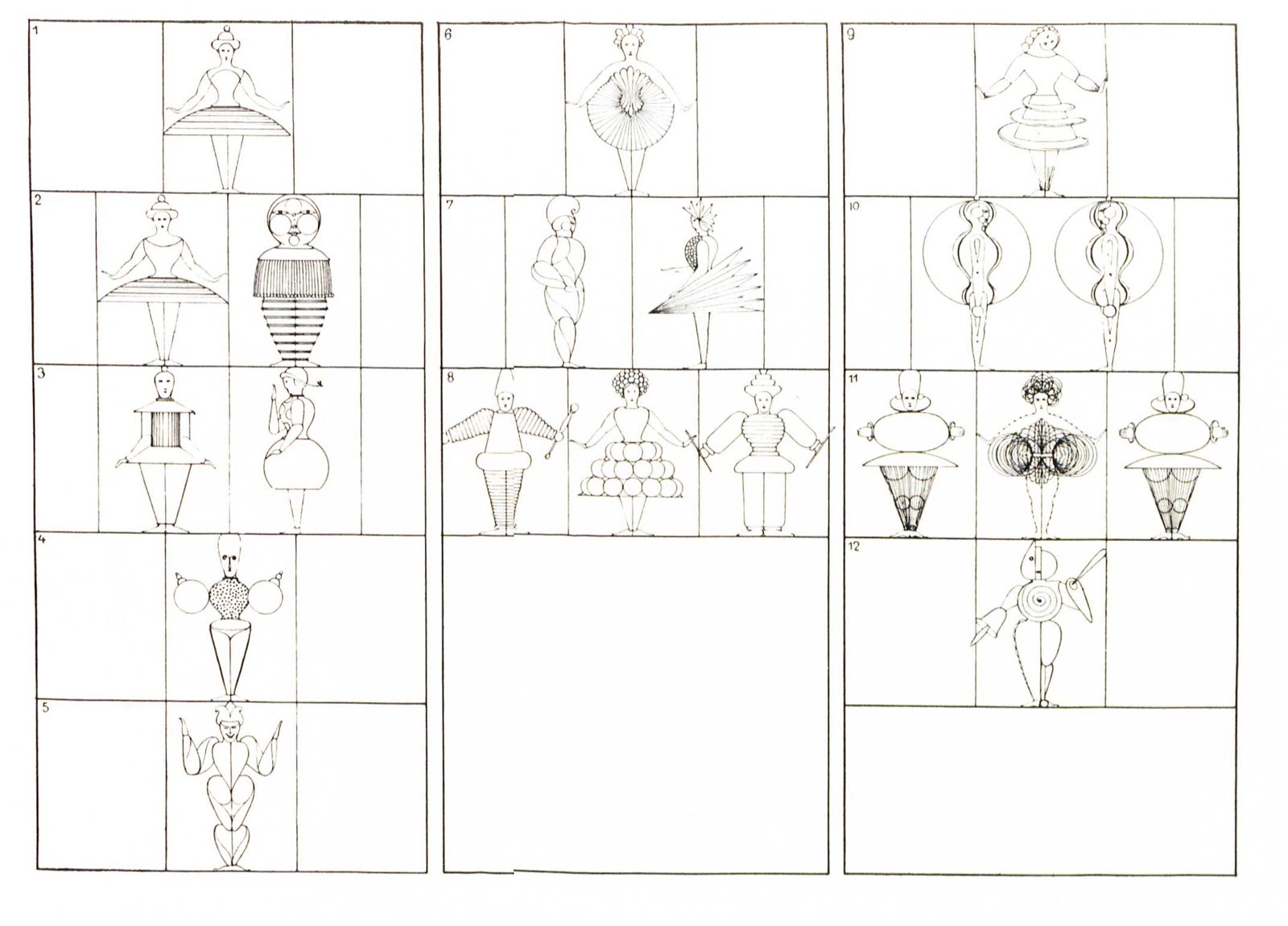
The estate calls the work “a symphonic dance of threeness, divided into three sections, performed by three dancers,” and the title comes from the musical term triad. A German history archive counts “3 acts, 3 participants (2 male, 1 female), 12 dances, and 18 costumes.” The three sections move from the humorous to the serious, and, in the estate’s words, “There is no underlying story.”
| Element | The three |
|---|---|
| Acts | Lemon yellow (serene-burlesque), pink (ceremonious and solemn), black (mystical-fantastic) |
| Dancers | One woman, two men |
| Dimensions | Height, depth, width |
| Basic shapes | Sphere, cube, pyramid |
| Totals | 12 dances, 18 costumes |
Triadic Ballet costumes: when the costume leads the dancer
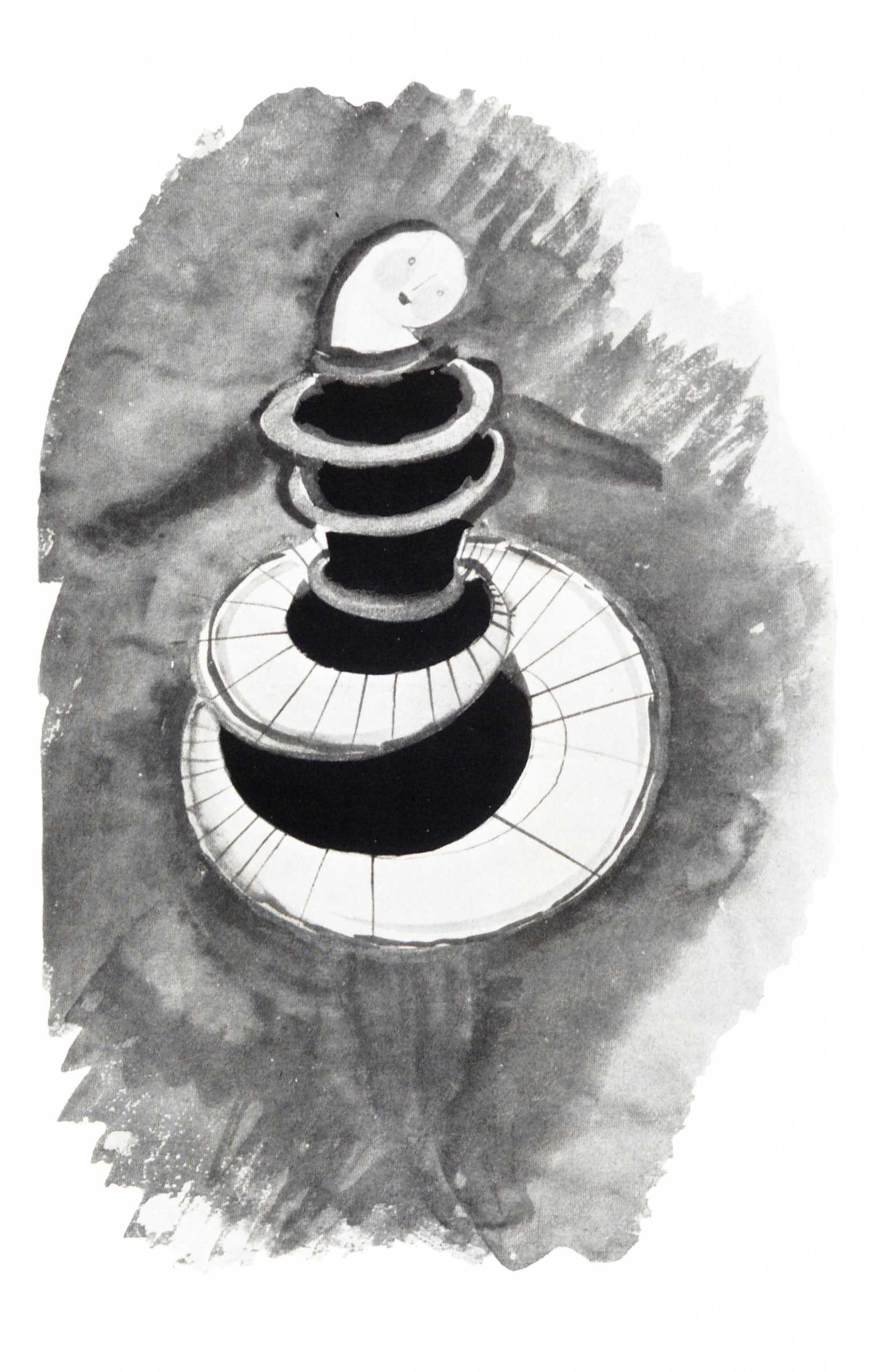
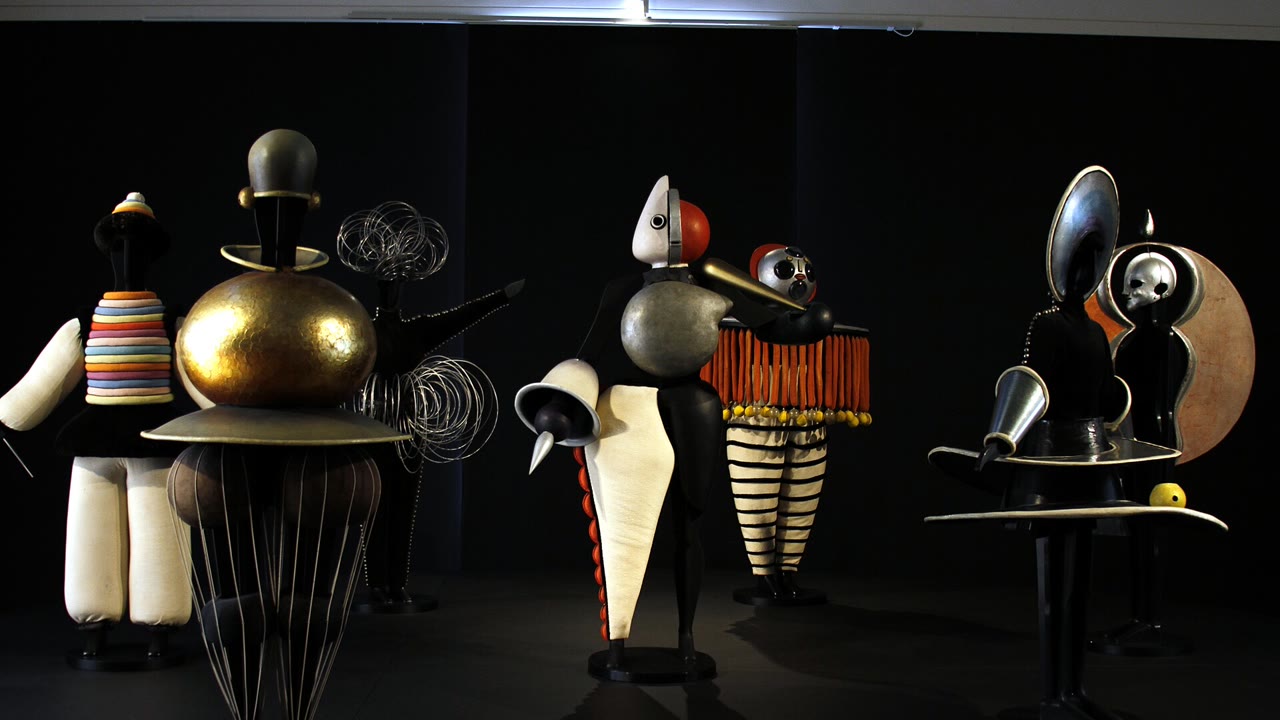
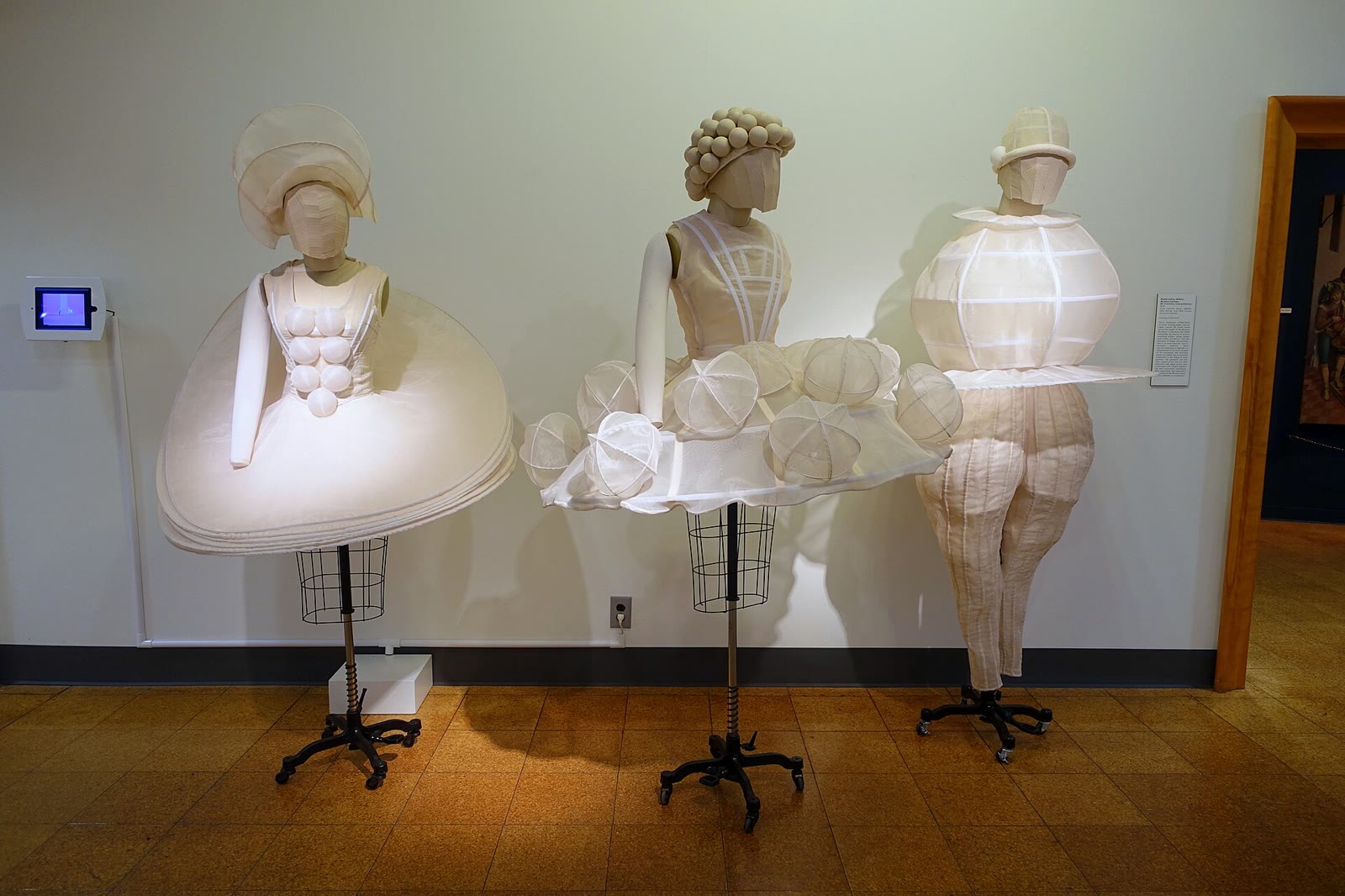
“In The Triadic Ballet, it is the costume and not the mobility of the dancer that determines the dance movement,” the Schlemmer estate’s account of the Triadic Ballet explains; the costumes are “ambulant architectures.” Seeing Dance describes the Triadic Ballet costumes as “Heavy and made from unusual materials such as foil, sheet steel, plywood, wire and rubber.”
Some figures have names. The wooden Diver is “armless, grotesquely deformed and comes with a strange oversized helmet,” and the Abstract, a role Schlemmer is said to have danced himself, has “a permanently outstretched white leg that cannot be bent.”
Schlemmer’s notes list his images: “Precision machinery, scientific apparatus of glass and metal, artificial limbs developed by surgery, the fantastic costumes of deep-sea divers and a modern soldier.” Yet Seeing Dance adds that “restricting movement per se was not Schlemmer’s prime aim.”
A fraught history, 1922 to 1932
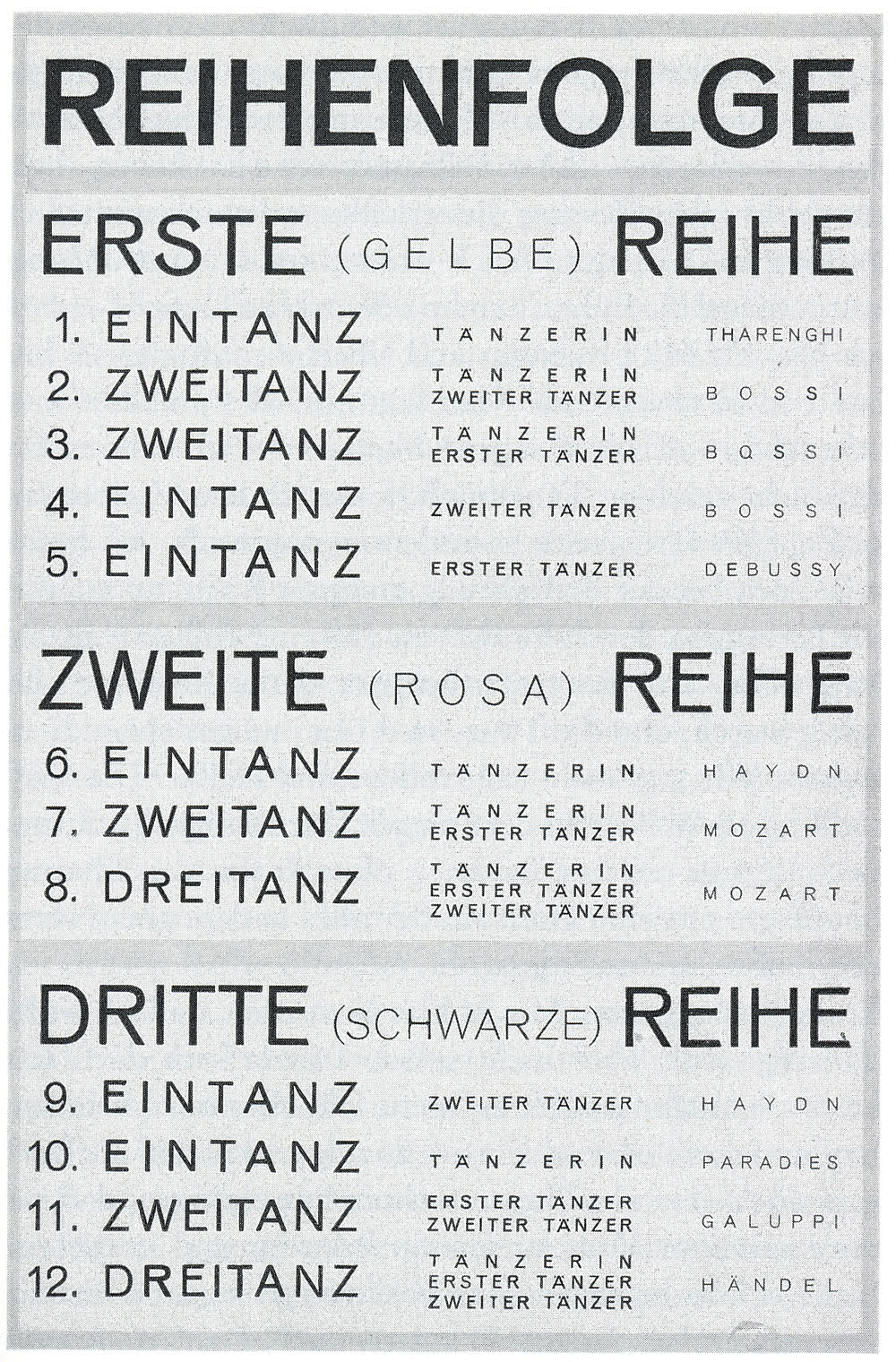
The complete trilogy premiered in Stuttgart in September 1922. The Schlemmer estate gives the date as September 22, while the Staatsgalerie Stuttgart, the Heinz Bosl Foundation and Seeing Dance give September 30, at the Württemberg State Theatre. The music was a collage from three centuries, and Schlemmer danced one of the roles under the pseudonym Walter Schoppe.
“As a dancer…I failed. I may be a dance director, but not a dancer,” he wrote to Otto Meyer-Amden. After the Bauhaus Week in Weimar in August 1923, Burger and Hötzel, who had financed the costumes, fell out with him, and the costumes were divided.
For a 1926 performance at Donaueschingen, Paul Hindemith wrote a score for mechanical organ. In July 1932, at Fernand Léger’s invitation, the ballet took sixth place at a choreography competition in Paris, its last performance in his lifetime.
The Bauhaus stage and the Bauhaus Dances
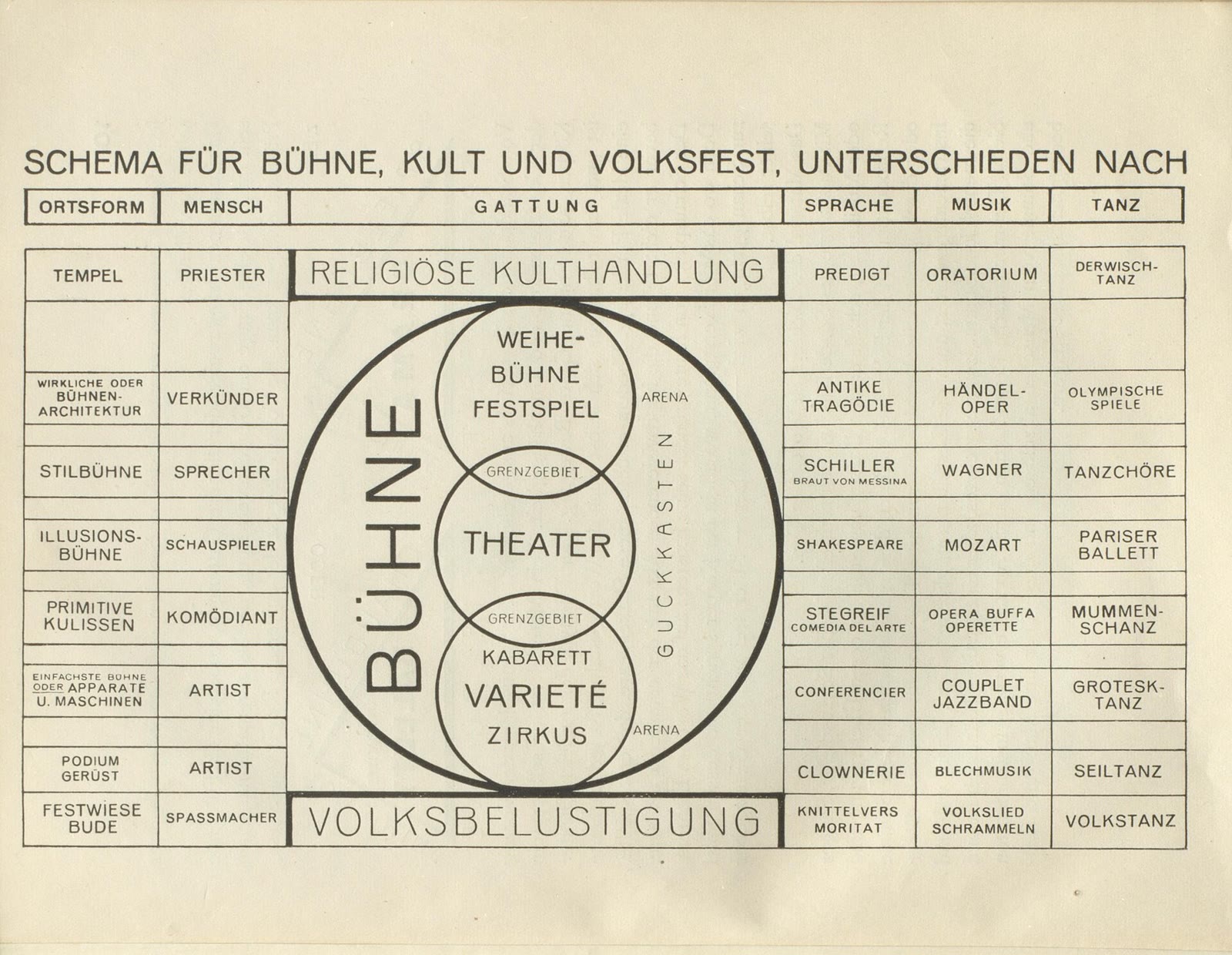
Walter Gropius appointed Schlemmer a master at the Weimar Bauhaus in 1921 (one source says he was invited in 1920). He ran the wall painting and stone sculpture workshops, and “From 1923 to 1929, he was the head of the stage workshop at the Bauhaus in Weimar and Dessau.” His theme was “the problem of the figure in space,” and the school’s ideal of a total work of art is set out in our guide to what total theatre is.
In Dessau he presented the Bauhaus Dances, made between 1927 and 1929, as “lecture dances” on the figure in architectonic space: among them Space Dance, Hoop Dance and Pole Dance. The Bauhaus stage toured Germany in 1928 and 1929, and Schlemmer left the school on July 11, 1929. Debra McCall revived Oskar Schlemmer’s Bauhaus dances in a 1982 reconstruction produced by the Kitchen.
Exile of the costumes and the reconstructions
Schlemmer was “summarily dismissed in May 1933,” and his work was denounced as degenerate art. In 1938 he sent the costumes to a Bauhaus exhibition at the Museum of Modern Art in New York “to shield these and other works from destruction by the Nazis in Germany,” and they stayed there until the 1960s. He died in Baden-Baden on April 13, 1943.
“Of the total of 18 costumes created, only nine survived the Second World War, seven of which are now on display at the Staatsgalerie Stuttgart,” notes the Akademie der Künste’s account of the restaging. The choreography is lost. After a 1968 television version, Gerhard Bohner made a reconstruction for the Akademie, premiered in Berlin on September 2, 1977: “My idea was to proceed as Schlemmer had, to go to the studio, to tie the pieces to my body, to try things out and find out in that way.”
Bohner’s version gave “85 performances at 32 venues around the world” until 1989, when a legal dispute with the Schlemmer family ended the series. It returned in 2014 with the Bavarian junior ballet, and the Staatsgalerie marked the centenary in 2022. Makers still recreate the costumes; those pictured are Rachel Ashley Wilkins’s versions.
Masks, plywood and taped voices: a Bay Area parallel
No source links Chris Hardman or Antenna Theater to Schlemmer, but the two men came to the stage by a similar road. Hardman trained as a sculptor, and he said that after seeing Bread and Puppet he realized theatre “was doing really visually interesting work that a visual artist could play a role in.” In 1986 the San Francisco Chronicle called him “a master mask-maker” known for “sharp-edged, geometrically based designs.”
His masks for Amnesia’s walk-through world of 1984 caught an Artweek critic’s eye: some were “biomorphically abstract,” and the TV Cameraman had a “Boccionian form” that suggested “an underwater welder fused with a flamethrower-toting storm trooper.”
The contrast is sharper than the likeness. Schlemmer’s ballet has no story and was watched from seats. Hardman said, “I can’t just be abstract,” and his masked figures carried taped voices while the audience walked into the set.
| Question | Schlemmer’s Triadic Ballet | Hardman’s Antenna Theater |
|---|---|---|
| Trained as | Painter and sculptor | Sculptor |
| The figure | A rigid costume that determines the movement | Sculptural masks, some biomorphically abstract |
| Story | None | Taped voices telling a story |
| Audience | Watches from seats | Walks into the set |
Masks as theatre are surveyed in what mask theatre is and Mummenschanz’s object masks. Other figures on this site’s stages include the voice from the booth in Richard Foreman’s Ontological-Hysteric Theater and the eyeball heads in the Residents’ band history.
Frequently asked questions
Why is it called the Triadic Ballet?
The title comes from the musical term triad, and the work is built in threes: three acts, three dancers, three colours, three dimensions and three basic shapes.
Where are the original costumes?
Nine of the eighteen survived the Second World War, after Schlemmer sent them to MoMA in New York in 1938. Seven are shown at the Staatsgalerie Stuttgart.
Is the Triadic Ballet still performed?
Yes, in Gerhard Bohner’s 1977 reconstruction, revived in 2014 by the Bavarian junior ballet company and toured since.
Antenna’s masked productions are listed in order in Antenna Theater’s full production chronology.