What Is a Happening in Art? Kaprow, Fluxus and the Bay Area
In 1959 a New York gallery gave its visitors written instructions and asked them to take part. One word in the title of that work gave a name to a whole kind of art. If you are asking what is a happening in art, this guide gives the definition, the events that shaped it, how it differs from Fluxus, and the version that flourished around San Francisco Bay.
Quick answer
What is a happening in art?
A happening is a live art event, usually staged by visual artists, that mixes actions, objects, sound and light in a built environment and often asks the audience to take part. Allan Kaprow coined the term with 18 Happenings in 6 Parts in New York in 1959. Happenings led to performance art.
A happening, defined

The Tate’s glossary entry on the happening puts it plainly: “Happenings were theatrical events created by artists in the late 1950s and early 1960s.” They “typically took place in an environment or installation created within the gallery and involved light, sound, slide projections and an element of spectator participation.”
Tate also places the form in a family line. “Happenings were the forerunners of performance art and in turn emerged from the theatrical elements of dada and surrealism.” Besides Kaprow, it names “Claes Oldenburg, Jim Dine, Red Grooms and Robert Whitman” as notable makers.
Before the name: Cage at Black Mountain, 1952
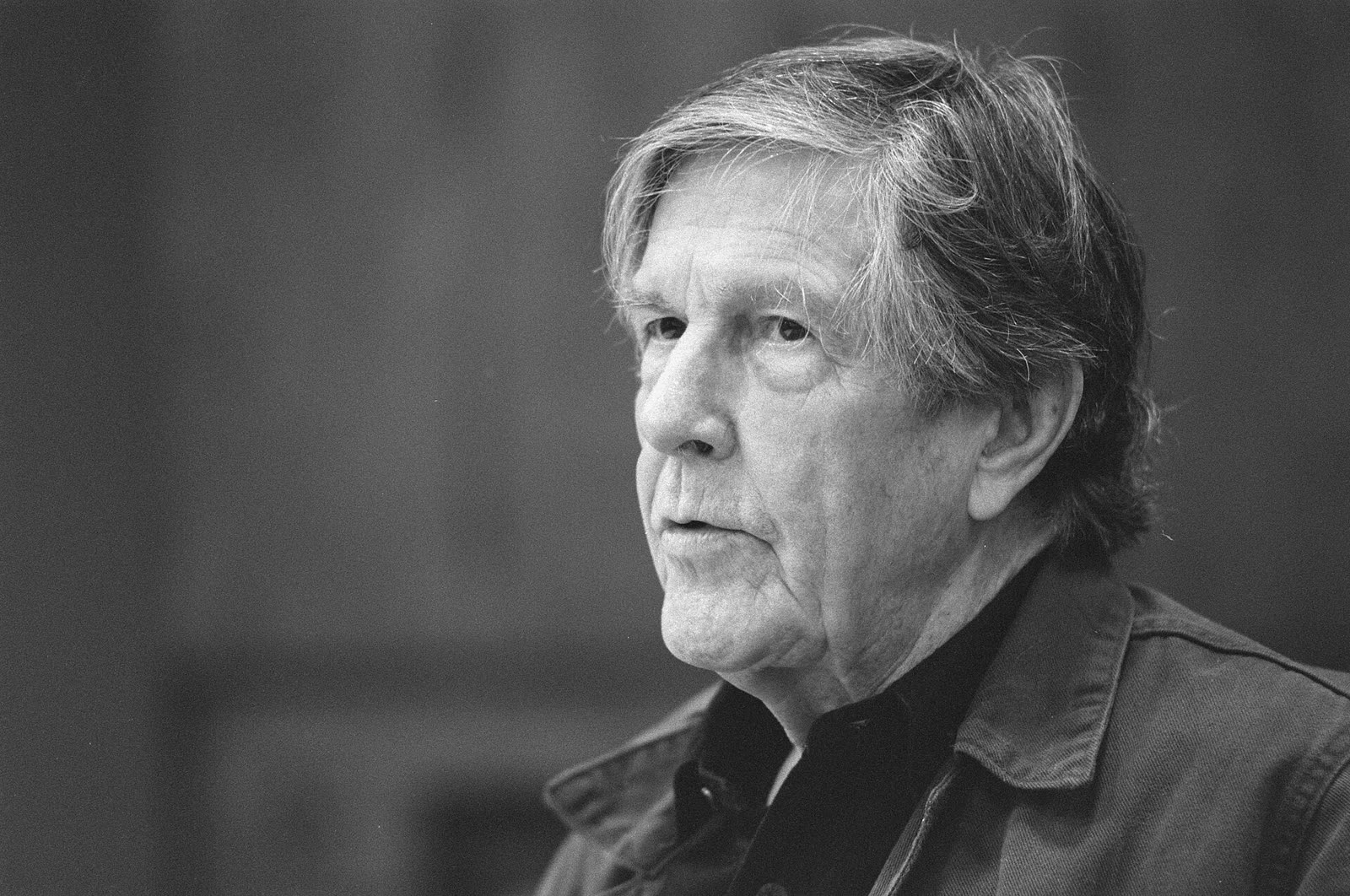
The event often called the first happening had no title. “In the summer of 1952, John Cage organized a collaborative theater event in the dining hall at Black Mountain College,” the Merce Cunningham Trust records, and it “is widely regarded as the first Happening.” It premiered on August 16, 1952, and “Cage structured the activity using time brackets arrived at by chance methods.”
Cunningham remembered the mix: “David Tudor played the piano, M.C. Richards and Charles Olson read poetry, Robert Rauschenberg’s white paintings were on the ceiling, Rauschenberg himself played records, and Cage talked.” The audience sat in the middle, facing each other. “Nothing was intended to be other than it was,” he said.
Allan Kaprow’s happenings: 18 Happenings in 6 Parts, 1959

Kaprow had studied “musical composition with John Cage at the New School for Social Research (1957-1958).” By 1958 his paintings had grown into room-sized installations he called Environments. He then moved to “creating an event determined, like Cage’s music, by a score that allowed for chance developments.”
According to Tate, the name “was first used by the American artist Allan Kaprow in the title of his 1959 work 18 Happenings in 6 Parts,” staged at the Reuben Gallery in New York in October 1959. His raw materials were “everyday objects (tires, cheap mirrors, aluminum foil, plastic strips), people (participants), and often sound.”
Scores, rooms and audience instructions
The best evidence for how the piece was built sits in the Getty Research Institute’s finding aid for the Allan Kaprow papers. Its folders for the 1959 work hold “Handwritten notes, scores, schemas and drawings,” a folder of “Audience instructions,” and sets of actions for three rooms. Part of an earlier score, A pastorale, made at George Segal’s farm in 1958, “was incorporated into 18 Happenings.”
Happenings and Fluxus: the event score

Fluxus ran alongside the happening but worked smaller. Tate says it was “Founded in 1960 by the Lithuanian/American artist George Maciunas” and was “characterised as a shared attitude rather than a movement.” The first Fluxus event was staged in 1961 at the AG Gallery in New York.
Its signature form was tiny. A Flux Concert piece “consisted of a one to two minute ‘event,’ a quintessential Fluxus art form invented by George Brecht and defined by the acting out of short scripts or ‘scores.’” Tate calls the approach “a democratic form of creativity open to anyone.”
| Aspect | Happening | Fluxus event | Performance art |
|---|---|---|---|
| Era | Late 1950s and early 1960s | From 1961 | Grew as happenings faded |
| Scale | Rooms and environments, many participants | One to two minute pieces | Usually one artist |
| Script | A score allowing chance developments | A short instruction score | Varies |
| Audience | An element of spectator participation | Often watches; anyone can perform a score | Watches the actions of the artist |
| Example | 18 Happenings in 6 Parts, 1959 | Flux Concert, The Kitchen, 1979 | (general) |
The Bay Area version
Most accounts stop in New York. The Getty finding aid and Berkeley’s own museum show a busy West Coast strand through the 1960s.
| Date | Event | Place |
|---|---|---|
| Aug 16, 1952 | Cage’s untitled event (Theatre Piece No. 1) | Black Mountain College, North Carolina |
| Oct 1959 | Kaprow, 18 Happenings in 6 Parts | Reuben Gallery, New York |
| 1961 | First Fluxus event | AG Gallery, New York |
| Mar 1964 | Kaprow, Paper: A Happening | UC Berkeley All Student Art Festival |
| 1965 | Halprin, Parades and Changes first performed | Place not recorded in our sources |
| Jan 1966 | Trips Festival | Longshoremen’s Hall, San Francisco |
| 1969-1970 | Kaprow’s Other Ways happenings; Dial; Good Morning! | Berkeley; San Francisco Art Institute; San Francisco State |
Kaprow in Berkeley and San Francisco
Kaprow staged Paper: A Happening at the UC Berkeley All Student Art Festival in March 1964. In 1969 he “codirected an educational program for the Berkeley public schools,” Project Other Ways, and the finding aid files a run of Berkeley happenings that spring, from Charity and Pose to Giveaway. Dial followed at the San Francisco Art Institute in May 1969 and Good Morning! at San Francisco State in May 1970.
Halprin’s Parades and Changes and the Trips Festival
Anna Halprin’s Parades and Changes was “First performed in 1965,” according to BAMPFA. “Halprin created a system in which interactive situations can arise, rather than choreographing them to occur,” so the piece “can never be performed the same way twice.”
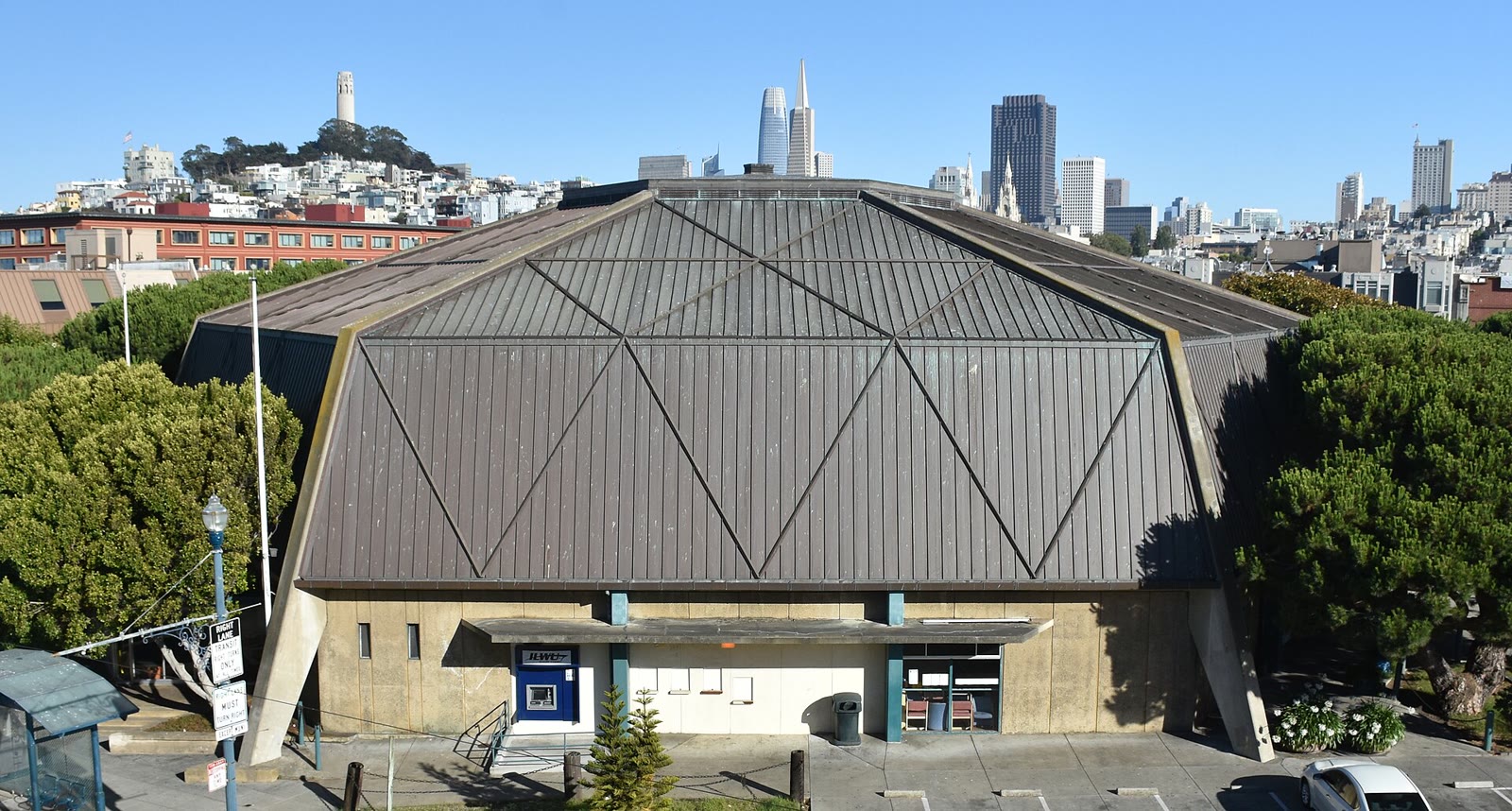
In January 1966 Stewart Brand planned an event of “music, light shows, acrobatics, and the active participation of the audience” at Longshoremen’s Hall. Bill Graham ran it while managing the Mime Troupe, a company covered in our guide to what street theatre is and how it grew.
After the happening: performance art and walk-through theater

Happenings “proliferated through the 1960s but gave way to performance art in which the focus was increasingly on the actions of the artist.” The next chapter in the Bay Area is San Francisco’s 1970s performance art scene, and a related idea, the ensemble-made show, is explained in our guide to devised theatre.
Critics kept reaching for the old word. Reviewing Artery, the Walkman maze a critic called a happening, Paul Lenti wrote in 1983: “In many ways Artery seems like a happening from the ’50s or ’60s.” Chris Hardman answered from his own side of the line: “I work in theater and that is how I see Artery.”
In 1985 Robert Hurwitt described Adjusting the Idle and its hundreds of participants, some drumming on an engine block, others on solo drives: “It was almost as much fun to watch the bewildering swirl of chaotic creativity as it was to participate.” And in 1989 Antenna’s The Grid, an audio tour of the Wexner Center, opened on the same day as John Cage’s Essay there.
Frequently asked questions
Who invented the happening?
Allan Kaprow named it with 18 Happenings in 6 Parts at the Reuben Gallery in October 1959. John Cage’s untitled 1952 event at Black Mountain College is widely regarded as the first.
How is a happening different from a Fluxus event?
A Fluxus event is a one to two minute piece that acts out a short written score, a form credited to George Brecht. Happenings were larger environments with many participants.
What replaced happenings?
Performance art. Tate says happenings gave way to work in which the focus was increasingly on the actions of the artist.
Were there happenings in the Bay Area?
Yes. The Getty finding aid files Kaprow scores for Berkeley in 1964 and 1969 and San Francisco in 1969 and 1970, and Anna Halprin’s Parades and Changes was first performed in 1965.
For the forms Antenna invented after the happening, see Walkmanology and Antenna’s other new theater forms.