
24th Hour Cafe: Snake Theater’s Masked Truck-Stop Melodrama (1978)
In autumn 1978, up a stairwell at 145 Leavenworth Street in San Francisco, Snake Theater built a desert truck stop on a checkerboard floor. 24th Hour Cafe told an old story, a waitress and two rivals, with oversized masks, cardboard customers and very few spoken words. It sits among Snake Theater’s productions, 1972 to 1980, the company that came before Antenna Theater.
Quick answer
What was 24th Hour Cafe?
24th Hour Cafe was a 1978 play by Snake Theater, the Bay Area company that preceded Antenna Theater. Masked actors told the story of a truck-stop waitress and two truck drivers in a desert diner. It played at 145 Leavenworth Street in San Francisco, then toured California with California Arts Council support.
The third play of the California Series

Snake called its 1978 work the California Series: “plays which explored experiences particular to West Coast life primarily performed in locations integral to their purposes.” The spring play was Somewhere in the Pacific, the sunset play on Fort Cronkhite beach. The summer play, Her Building, was performed in front of Sausalito City Hall.
Snake’s own page says “The fall production, 24TH HOUR CAFE, was performed in San Francisco and then toured California, sponsored by the California Arts Council.” The company chronology says summer instead. Videotapes dated October 14, October 29 and November 12, 1978, and Artforum’s February 1979 review, point to an autumn run in San Francisco.
Unlike Snake’s location plays on the beach and at City Hall, this one played indoors, behind a proscenium. Its location was imaginary: a truck stop somewhere in the desert.
| Season | Play | Place |
|---|---|---|
| Spring | Somewhere in the Pacific | The beach at Fort Cronkhite, Marin County |
| Summer | Her Building | In front of Sausalito City Hall |
| Autumn | 24th Hour Cafe | 145 Leavenworth Street, San Francisco, then a California tour |
A waitress, two truck drivers and the desert

The plot fits in one line, and the archive records give it: “A truck stop waitress creates a love triangle in hopes that one of the men involved will take her out of the desert and away from the job she loathes.” The same records say: “Written and directed by Chris Hardman and Laura Farabough.”
Both statements hold. Snake’s history notes that “After 1977, all SNAKE productions were a collaboration of these four artistic directors”: Hardman, Farabough, Lary Graber, the musical director, and Evie Lewis, the choreographer. The tapes also name Jon Bielinski (spelled Belinski on one label), with no roles given.
Hal Fischer, reviewing it for Artforum, called it “the retelling of the eternal triangle melodrama in the dialect of the American Southwest.” A desert truck stop, he wrote, was “one of the last places where the macho American myths of morality, violence and desolation are played out.” He named three films in the same territory: Petrified Forest, Five Easy Pieces and Three Women.
Inside 145 Leavenworth

The show began on the stairs. Fischer noticed four white dinner plates propped against a stairwell window and took them for chance, until the second landing produced “a maroon succulent with silver Deco prongs.”
Inside, scrim circled the room, “tinted a dingy, desert reddish brown.” Six more squat succulents sat on stage, and a checkerboard floor marked out the truck stop.
Then came darkness, the chirping of crickets, and a man crossing the stage with “a glowing hot-plate.” What followed, by Fischer’s count, was forty-five minutes of frenetic activity.
Masks, cardboard and metal trucks

Fischer called the method “a kind of live animation.” The actors wore “oversized masks that suggest brute dumbness”: the waitress had stylized hair and a vacant face, the drivers reptilian features. She moved in cartoon gestures while plates came flying in from the wings, and the drivers walked on their hands, rising now and then to battle with acetylene torches or tire wrenches.
| Device | What it did |
|---|---|
| Masks | Oversized; a vacant waitress, reptilian truck drivers |
| Cardboard diners | Customers with tape mouths the waitress attached to plates of food |
| Dirt coffee | Poured into the diners’ cups |
| Metal trucks | Cast trucks, carried on by their drivers and parked by the diner |
| Placards | Lovemaking shown as a sequence of pictures |
| Subtitles | Twenty-four, projected near the top of the proscenium |
| Pit musicians | Two, handling music and dialogue |
The props did the talking. The cardboard diners had “retractable tape mouths,” and the waitress served them “dirt coffee.” Lovemaking, Fischer wrote, was “two-dimensional,” told in pictographic placards.
Robert Hurwitt later described the house style: “As in Schumann’s work, Snake’s pieces featured the choreographed movement of actors wearing larger-than-life masks,” with set pieces and props that became sharp visual puns. For the wider tradition, see our guide to mask theatre and how masks change acting. A tape labelled “Snake Theatre – Making Masks,” dated May 16, 1978, also survives.
Music, subtitles and very few words

Two pit musicians handled the music and most of the dialogue, with only incidental sounds from the actors. Twenty-four subtitles flashed on a screen above the stage gave extra narration, and the drivers’ lines arrived as sexual double entendre.
“Dialogue is, nevertheless, a minor aspect of this performance, secondary to the dazzling array of visual motifs,” Fischer wrote. The scenario reminded him of a 1930s Hollywood musical, its plot a thread tying one visual effect to the next. For the larger dream of a stage where every art works at once, see what total theatre means, from Wagner to Robert Wilson.
What Artforum made of it
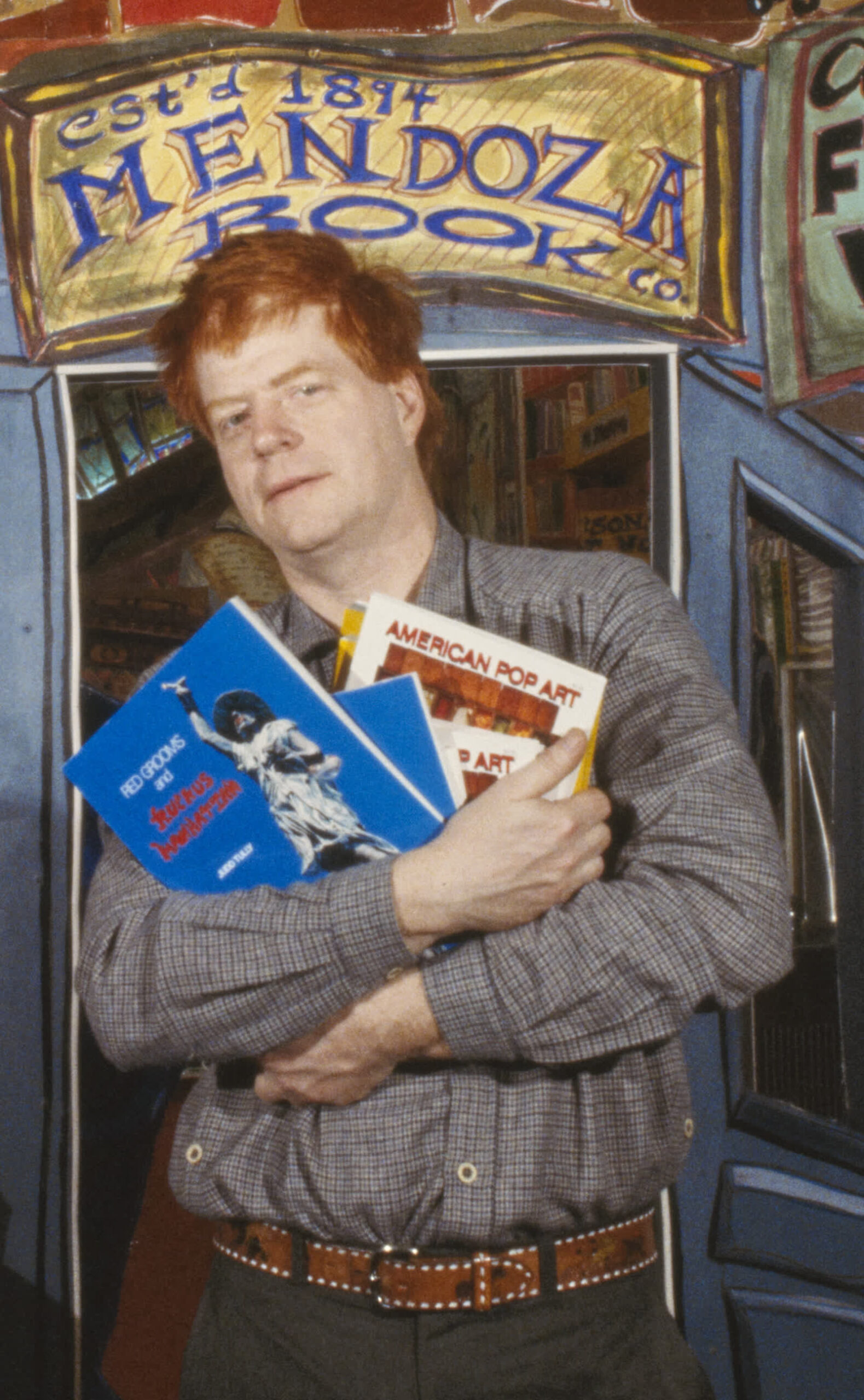
Fischer read Snake as visual art, comparing its grotesque streak to the painters Red Grooms and Jim Nutt; how critics read Snake Theater as visual art follows that thread. His closing line is less often quoted. The show, he wrote, “is equally successful for its presentation, albeit through caricature and exaggeration, of some enduring aspects of the American myth.”
That year Snake won the Bay Area Drama Critics Circle award for New Directions In Theater. Two decades later, Chris Hardman’s own list of Snake highlights still included “The 24th Hour Café.”
On tape: the Demystavision recordings
The play survives on video. Demystavision, with the videographers Bill Bathurst, Ron Blanchette and Jed Handler, taped it on three dates, and the tapes are now held by the Museum of Performance + Design. The Internet Archive record of the 24th Hour Cafe tape names the venue as the Leavenworth Theatre, and the Calisphere record of the October 14, 1978 performance carries the plot and credits.
Snake’s next location play, Auto, moved to an abandoned Mohawk gas station at 3060 Bridgeway in Sausalito, performed on summer weekends in July and August 1979, according to the labels on its videotapes. Both appear in the full Snake and Antenna chronology.
Frequently asked questions
What was 24th Hour Cafe about?
A truck-stop waitress who starts a love triangle, hoping one of two truck drivers will take her out of the desert and away from a job she loathes.
Who made it?
Snake Theater. The tape records credit the writing and direction to Chris Hardman and Laura Farabough, and Snake’s productions after 1977 were collaborations of four directors, with Lary Graber and Evie Lewis.
Where and when was it performed?
At 145 Leavenworth Street in San Francisco in autumn 1978, on tapes dated October and November, then on a California tour sponsored by the California Arts Council. The company chronology says summer.
How long was it?
About 45 minutes, by Artforum’s count, with music and dialogue from two pit musicians and 24 projected subtitles.