
What Is a Sound Collage? From Train Records to Theatre Soundtracks
Cut a recording into pieces, set the pieces against each other, and you have the start of a sound collage. The technique began with radio and records, grew up on magnetic tape, and by the 1980s was running under masked actors on Bay Area stages. So what is a sound collage, exactly, and how did it reach the theatre?
Quick answer
What is a sound collage?
A sound collage is a work built by cutting, layering and juxtaposing recorded sounds, such as voices, music and noise, into something new. Unlike a smooth medley, its parts are meant to clash and stay recognizable. It grew from radio and tape experiments: Walter Ruttmann’s Weekend (1928), Pierre Schaeffer’s railway study (1948) and the tape studios that followed.
Collage, montage, musique concrète: the words

One popular definition calls sound collage “a recording technique in which sampled sound materials are combined to create a rough layering effect, culminating in a new piece of art,” and notes that it “follows the tradition of visual collage stemming from the late 19th century.” Encyclopedias pair it with montage, a film word for putting things together.
What separates a collage from a medley is friction. In a collage, one standard account says, “clashes of key, timbre, texture, meter, tempo, or other discrepancies are important in helping to preserve the individuality of the constituent elements.” You are meant to hear the seams.
Musique concrète is the closest cousin: Pierre Schaeffer’s name for music built from recorded sounds. His first piece is described as made with “the techniques of sound collage.”
A short history of the sound collage
| Year | Work | Made from |
|---|---|---|
| 1906 | Charles Ives, Central Park in the Dark | Layered melodies and quotations, for live orchestra |
| 1928 | Walter Ruttmann, Weekend | Words, music and sounds, for radio |
| 1948 | Pierre Schaeffer, Étude aux chemins de fer | Recorded trains on looping records |
| 1952 | John Cage, Williams Mix | Tape collage |
| 1961-1966 | San Francisco Tape Music Center (Sender, Subotnick, Oliveros) | Magnetic tape, sound on sound |
| 1965 | Steve Reich, It’s Gonna Rain, performed at the Center | A recorded voice |
| 1968 | The Beatles, Revolution 9 | Tape collage on a pop album |
Radio and records

After Charles Ives layered live melodies in 1906, the first electronic collage was made for radio. The filmmaker Walter Ruttmann assembled Weekend in 1928, “a collage of words, music and sounds.”
Twenty years later Pierre Schaeffer, known as the father of musique concrète, was working in a radio studio given over to experiment. His Étude aux chemins de fer (1948) was “assembled from recordings of trains,” cut “onto several vinyl records, some of which had lock grooves allowing them to play in a continuous loop.”
Tape and the San Francisco Tape Music Center

Magnetic tape could be cut, joined and recorded over, and John Cage built Williams Mix from it in 1952. In San Francisco, the composition student Ramon Sender began working with tape in 1961 on “a two-channel Ampex tape recorder,” a machine that “allowed Sender to record sound on top of sound.” A concert series called Sonics followed in December 1961.
In the summer of 1962 Sender and Morton Subotnick founded the San Francisco Tape Music Center. Its composers treated the machines as instruments: Oliveros “hand-wound a tape recorder while in its recording mode,” so the pitch bent with her hand. According to Bandcamp Daily’s history of the San Francisco Tape Music Center, it “could partner with organizations like the San Francisco Mime Troupe, the Actor’s Workshop, and more.”
At 321 Divisadero it shared a building with Anna Halprin’s Dancers’ Workshop and the radio station KPFA, and Terry Riley debuted In C there in November 1964. In the mid-1960s, with a Rockefeller Foundation grant, the Center moved to Mills College in Oakland, where Oliveros stayed a year as its first director.
The fullest account is the University of California Press history of the Tape Music Center, edited by David W. Bernstein.
The voice as found sound
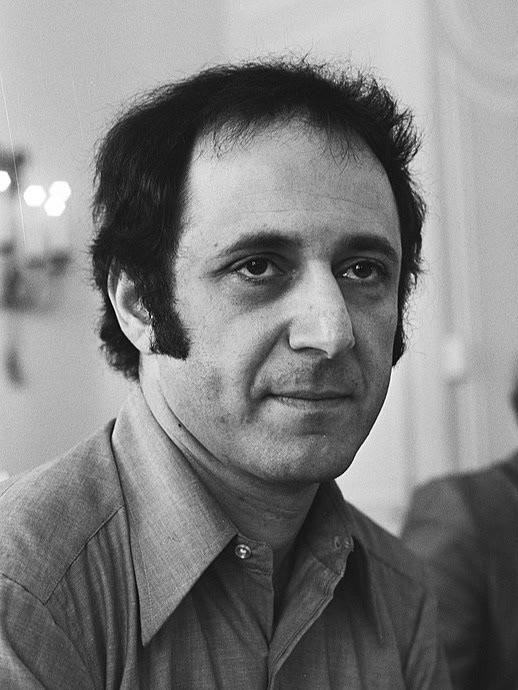
A recorded voice, cut and repeated, is found sound too, and Steve Reich performed It’s Gonna Rain and Livelihood at the Tape Music Center on January 27, 1965.
The voice as material is the bridge to the stage. If one recorded voice can be cut and arranged like music, so can the voices of dozens of ordinary people talking about their lives. That differs from theatre scripted from interviews, where actors speak the words: in a sound collage the recordings themselves are heard.
Sound collage in the theatre: Antenna’s soundtracks
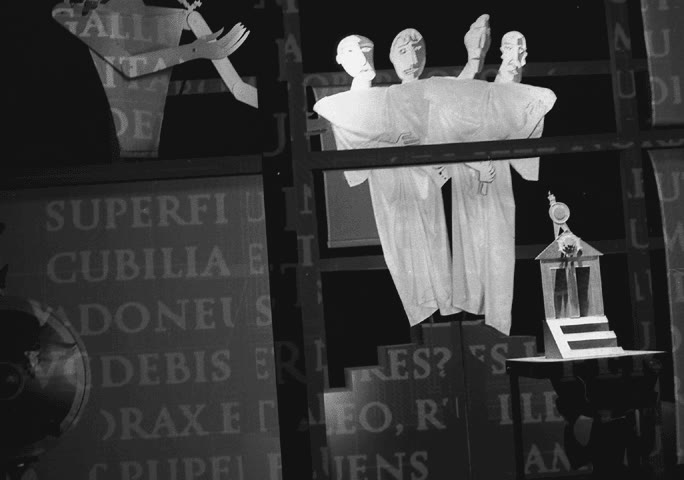
“Sound collage” was mostly the critics’ term for Antenna Theater’s soundtracks, but it fits. For Vacuum, the 1981 play built from questionnaires, Antenna “solicited hundreds of responses from housewives, salesmen and other ordinary citizens about their experiences with vacuum cleaners,” Bernard Weiner wrote in the San Francisco Chronicle. On stage, “These original taped interviews are overlaid on the stage action,” with masked actors as the stand-ins.
For Russia (1985), Will Torphy of Artweek credited interviews “Actually conducted by Lee Jenkins and then masterfully edited into the show’s sound score by Jim McKee.” Weiner heard found material in that mix too: “we hear the famous tape of the kidnapped Patty Hearst denouncing her father.”
| Year | Show | The critic’s words |
|---|---|---|
| 1981 | Vacuum | “taped interviews are overlaid on the stage action” |
| 1985 | Russia | interviews “masterfully edited into the show’s sound score by Jim McKee” |
| 1988-1993 | Etiquette of the Undercaste | “multilayered voice tracks”; “stereophonic montage of voices”; “collage-style soundtrack” |
| 1991 | Caveat Emptor | “the sound collage (by David Torgersen, with music by Roy Marcom)” |
| 1997 | Pandemonium | “montage of music and commentary drawn from dozens of taped interviews” |
| 2002 | High School | “a collage of interviews with students and some faculty” |
Three critics reached for the same idea with Etiquette of the Undercaste. Steven Winn heard “multilayered voice tracks,” Paul Moor “a stereophonic montage of voices,” and Misha Berson wrote in the Seattle Times that “the collage-style soundtrack, based on interviews Antenna conducted with dozens of ‘real’ people, sure gets you thinking.”
Scott Rosenberg used the plain term for Caveat Emptor, Antenna’s 1991 stage show: “the sound collage (by David Torgersen, with music by Roy Marcom) washing the action with celestial choirs and martial fanfares.” In 1997 Peter Stack heard Pandemonium through radio receivers as “a fascinating montage of music and commentary drawn from dozens of taped interviews.”
The method lasted into the 2002 High School, whose walkman soundtrack was “a collage of interviews with students and some faculty.” Robert Hurwitt praised its “rich stereo mix of student jibes, observations and commentary,” edited by David Torgersen. Antenna also took its tapes on air, in The New Season, Antenna’s radio soundtrack for television, and later in ECOtime, Chris Hardman’s one-minute radio shorts.
Making a sound collage today
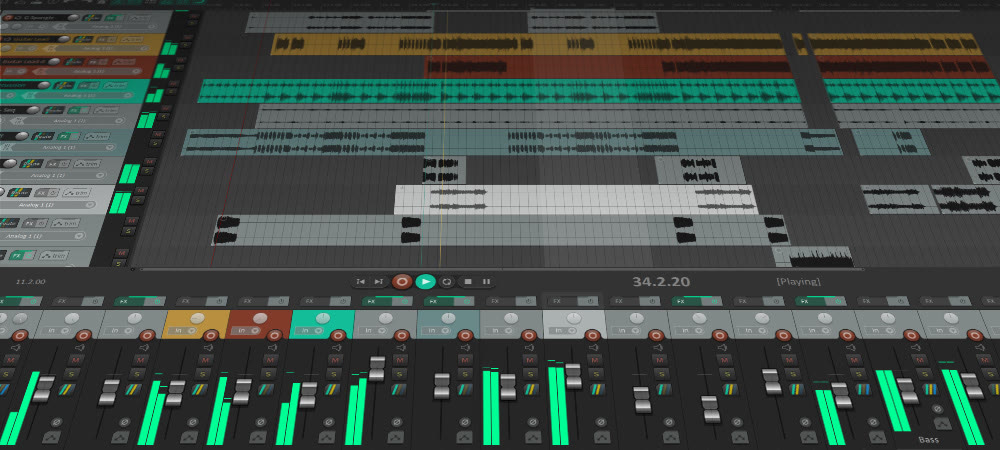
The razor blade has given way to the audio workstation, but the steps are much the same. Choose a theme, gather many sounds that relate to it, then cut, layer and loop them until the clashes say something.
For the recording side, see how binaural recordings put sound inside your head, and for sound placed in a room rather than a story, our guide to sound installations, where recorded sound fills a space.
Frequently asked questions
Is a sound collage the same as musique concrète?
They overlap. Musique concrète is Pierre Schaeffer’s name for music built from recorded sounds, and his railway study is described as made with the techniques of sound collage.
Who made the first sound collage?
Charles Ives layered melodies and quotations in Central Park in the Dark (1906). Walter Ruttmann’s radio piece Weekend (1928) is credited as the first electronic collage.
What was the San Francisco Tape Music Center?
A studio and concert space founded in 1962 by Ramon Sender and Morton Subotnick, with Pauline Oliveros among its composers. Terry Riley’s In C debuted there in 1964.
Can theatre use sound collage?
Yes. Antenna Theater’s soundtracks were cut from interviews, music and effects, and critics called them a sound collage and a collage-style soundtrack.
For the wider picture, see Walkmanology and Antenna’s other new theater forms.