Slotted Cardboard Sculpture: How Slot-Together Art Works, from Gabo to a Whale on the Beach
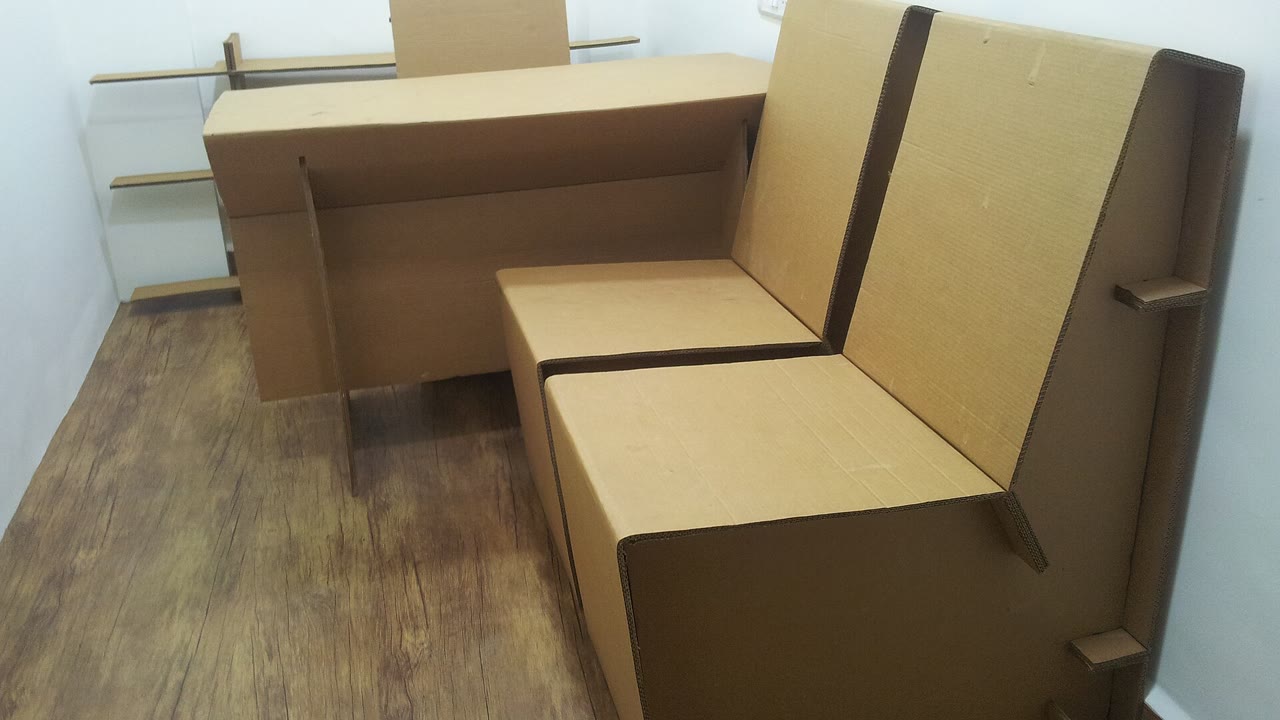
Cut a slit into one piece of card, cut a matching slit into another, push them together, and two flat shapes stand up as one. That is the whole trick behind slotted cardboard sculpture, a classroom favourite with a long history in art and design, from a 1915 plywood head to a theatre company that built a giant whale the same way, in wood.
Quick answer
What is a slotted cardboard sculpture?
A slotted cardboard sculpture is built from flat cardboard shapes with narrow slits cut into their edges, so the pieces lock into each other without glue or tape. Each slit meets a slit in another piece, usually at a right angle, and friction holds the joint. The same method works in plywood, card and stone.
How a slot joint works
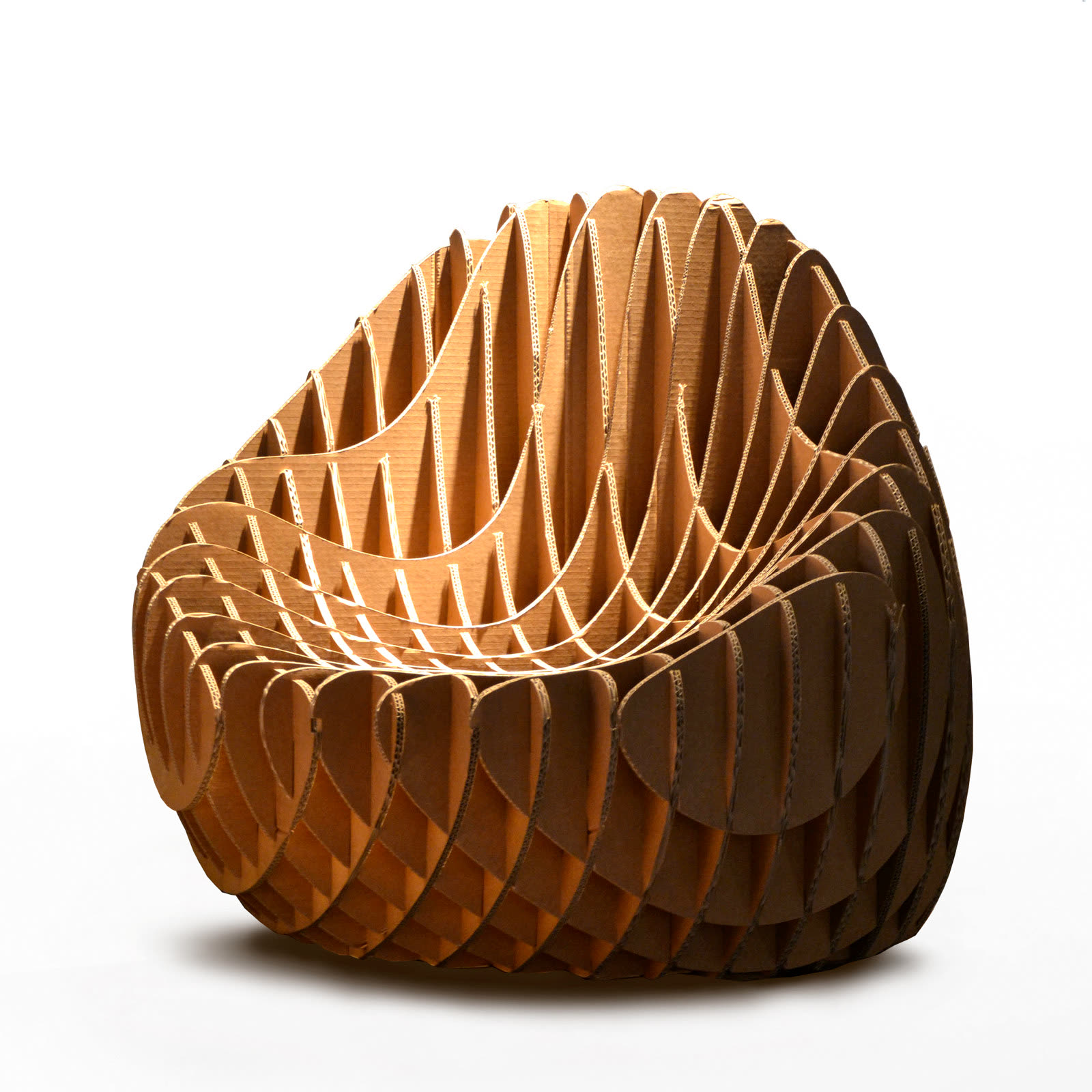
A slot joint is two notches that meet. Each piece is cut partway in from one edge, the cuts face each other, and the pieces slide together. Nothing else holds them: the board presses on both sides of each slit.
Nottingham Contemporary’s flat-pack sculpture activity gives the method in three sentences: “Find some card (you can use cardboard packaging) and draw shapes. Cut them out and add slits. Explore how you can slot them together to construct 3D sculptures.”
The Artful Parent adds one rule above the rest: “Be sure to always attach the shapes slot-to-slot for firm joins.” As a rough guide, cut each slot about as wide as the board is thick, so the joint is snug.
A short history of slotted construction
No single inventor of slot-together construction is documented, but museum and design records trace how notched parts moved between studio, toy box and classroom.
| Year | Maker | Work | Material |
|---|---|---|---|
| 1915 | Naum Gabo | Constructed Head No. 1 | Plywood |
| 1940s | Isamu Noguchi | Interlocking sculptures | Slate, marble |
| 1952 | Charles and Ray Eames | House of Cards | Printed card |
| 1983 onward | Antenna Theater | Amnesia sets, Slotology | Plywood, birch |
| 2005 | Antenna Theater | A Body of Water whale | Wood |
| 2023 | Charles Clough | Slotted Sculptures | Expanded PVC |
Gabo’s plywood head, 1915
The Städel Museum in Frankfurt holds Naum Gabo’s Constructed Head No. 1, made in three-layered plywood in 1915 in Kristiania, now Oslo. The museum notes that “Gabo’s idea of allowing volume to be created purely by intersecting areas suspended a centuries-old tradition.” Tate describes his later “stereometric” technique of interlocking sheets of card, wood and steel.
Noguchi’s notched stone, 1940s
Isamu Noguchi took the idea into stone. The Whitney Museum’s record of Noguchi’s Work Sheets for Sculpture (1945) explains that he cut the pieces from black craft paper, built small maquettes, then “translated them into thin, flat pieces of slate or marble”. The joint is the familiar one: “The pieces of his interlocking sculptures were notched so that they could be assembled without screws or other supports.”
The Eames House of Cards, 1952
Charles and Ray Eames brought the notch into the playroom. Their 1951 kit, The Toy, still joined its paper panels with dowels and pipe cleaners. Herman Miller’s story of the Eames toys and the House of Cards explains what changed: “The notches more elegantly solve the problem of connections: no more dowels or wire frames, and no tools.” The cards came in decks of 54, each with six slots.
Today: Diane Simpson and Charles Clough
Nottingham Contemporary teaches the technique through one artist: “Diane Simpson’s sculptures are constructed from everyday materials that slot together.” In 2023 Two Coats of Paint described Charles Clough’s Slotted Sculptures, prints of his paintings on expanded PVC: “He cuts out two shapes, slots the pieces, and attaches them such that they intersect at a 90-degree angle.”
From cardboard to plywood: Antenna’s Slotology
One point first: Antenna Theater’s slotted work was wood, not cardboard. The only cardboard slot in its archive is a critic’s comparison in a review of Enola Alone and its model London church. In 1985 Robert Hurwitt wrote that Chris Hardman’s pieces could be “as minimalist as a set of flat plywood sculptures,” meaning Hardman’s plywood look-alikes in Moving Sculptures.
“Without using fasteners of any kind”
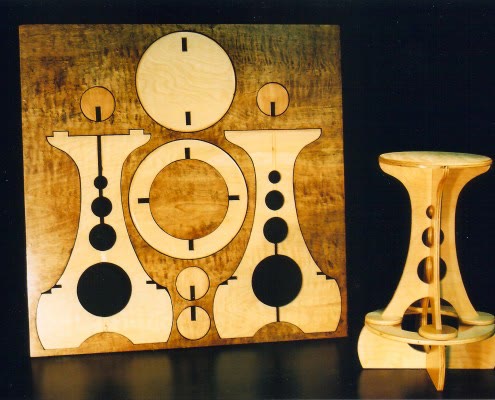
Antenna’s 2006 page for A Body of Water named the technique and explained it: “For many years ANTENNA has produced sets, sculptures, and furniture using our SLOTOLOGY technique: making 3 dimensional structures by slotting wood parts together without using fasteners of any kind.”
The furniture was shown in 2005 and 2006: Antenna’s board page lists the S F Art Furniture show and the American Craft Council Exhibition, dated 2006, while its gallery page lists two 2005 shows. See the slotted fish and Slotology furniture of Transforming Art, which also showed anaglyph art in red and blue 3-D, and Antenna’s exhibitions and artifacts.
The jigsaw rule: use the whole panel
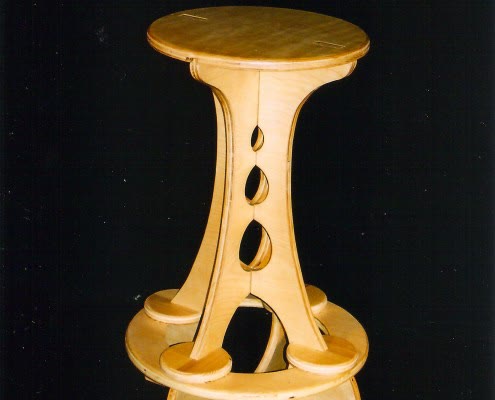
The same page states a principle classroom guides never mention: “The sculptures also use every part of the wood panel which they were cut from making it possible to lay all of the pieces flat and form the shape of the original board, like a big jigsaw puzzle.” Every part is planned on one sheet before the first cut.
A slotted whale on Ocean Beach
The largest example was A Body of Water in 2005, a seaside sculpture garden on Ocean Beach in San Francisco, walked to an audio drama about the ocean. Antenna’s chronology describes the centrepiece: “The major visual was a giant whale which was slotted together as were the sea flora surrounding it.”
Sets that travel
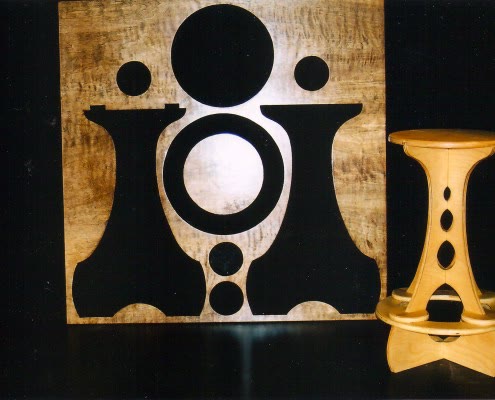
Why would a theatre company build this way? Antenna gave the answer itself: “Objects made with slot together construction have allowed us to assemble and disassemble productions quickly and travel compact.”
The clearest case is Amnesia’s slotted plywood sets, which Antenna’s 2010 production list describes: “The interactive sets are created entirely of slotted wood pieces, highly colored.” Painted flat parts that build a world sit close to object theatre, where things take the stage. Transforming Art toured too, reaching the gallery in our Bay Model Visitor Center history in 2004.
Slotted cardboard sculpture vs slotted wood
| Aspect | Cardboard (classroom) | Plywood or birch (Antenna) |
|---|---|---|
| Tools | Scissors or a craft knife | Saws; pieces cut from a single panel |
| Joint | Slits joined slot-to-slot | Slots, with no fasteners of any kind |
| Scale | Tabletop | Furniture, room-sized sets, a beach whale |
| Why use it | No glue or tape; easy to change | Quick to assemble, take down and tour |
| Waste | Offcuts | Every part of the panel used |
The joint is the same on a classroom table and on a beach. For a first project, cardboard is the right material: it cuts with scissors and a bad slot costs nothing.
Frequently asked questions
What is a slotted sculpture?
A sculpture built from flat pieces that are notched so they lock together, with no glue or screws. Noguchi’s 1940s stone pieces were notched so they could be assembled without screws or other supports.
How do you make a slotted cardboard sculpture?
Draw shapes on card, cut them out, add slits and slot them together. Craft guides advise always joining the shapes slot-to-slot for firm joins.
Who invented slot-together construction?
No single inventor is documented. Naum Gabo’s 1915 plywood head built volume from intersecting planes, and the Eameses’ 1952 House of Cards made notched cards a toy.
Why would a theatre company use slotted sets?
Antenna Theater said slot-together construction let it assemble and disassemble productions quickly and travel compact.
How big can slotted sculpture get?
Antenna’s A Body of Water (2005) put a giant slotted whale and slotted sea flora on Ocean Beach in San Francisco.
Slotology was one of many ways Hardman reworked the stage; the rest are gathered in Antenna’s new theater forms and the ideas behind them.